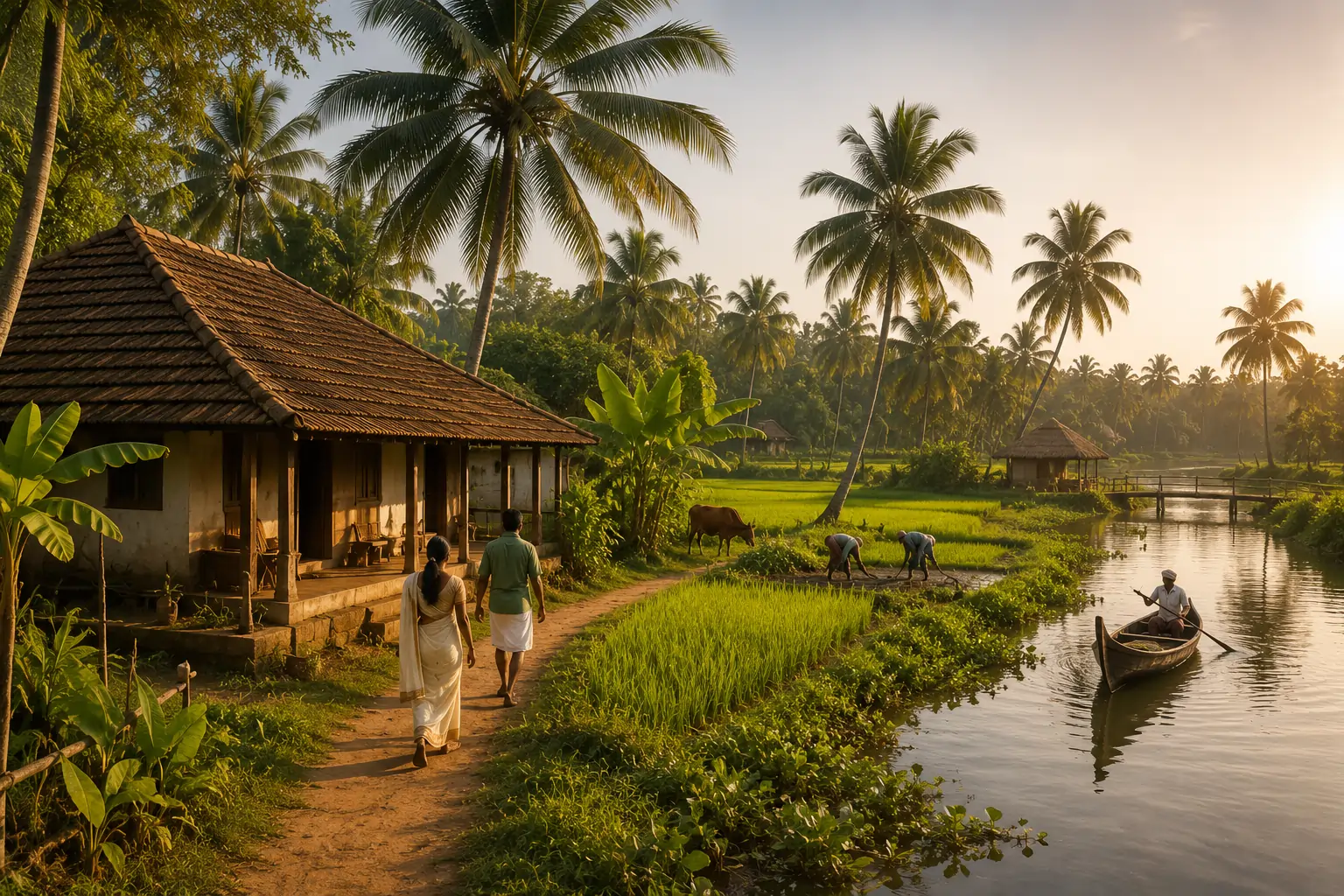
Kerala is famous for its backwaters, beaches, and Ayurveda resorts. Yet the most honest version of the state has always lived somewhere quieter: in the paddy fields of Palakkad, the fishing hamlets of Munroe Island, the spice-scented hillsides of Idukki, and the weaving villages of Kannur. Village tourism in Kerala is the practice of stepping away from curated itineraries and spending time inside these communities, where daily rhythms have changed little over generations.
This guide covers what it actually involves, where to experience it, what you will do, and why the sector is growing rapidly as a preferred alternative to conventional sightseeing.
Quick Fact: Kerala attracted more than 2.22 crore tourists in 2024, a 21 percent increase from pre-pandemic levels. A growing share of these visitors are specifically choosing village and farm-based experiences over standard resort tourism.
What Is Village Tourism in Kerala?
It is an immersive form of travel where visitors participate in the everyday life of rural communities rather than observing it from a distance.
The model is built around community participation. Farmers, artisans, fishermen, weavers, and home cooks are the primary service providers. Tourism revenue flows directly to them rather than to outside operators, making village tourism one of Kerala's most equitable and sustainable travel formats.
What sets it apart from conventional rural tourism is depth of engagement. Visitors do not watch a cultural performance from a theatre seat. They plant seedlings in a paddy field, learn to cast a fishing net, or sit with a Theyyam artist while costume preparation begins hours before the ritual. The experience is participatory by design.
Top Village Tourism Destinations in Kerala
Kumbalangi, Kochi
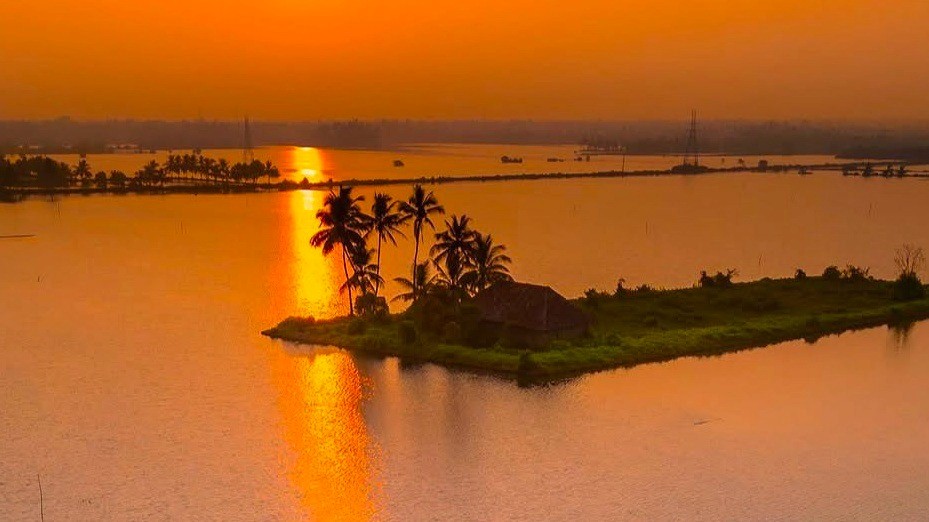
Kumbalangi, located 12 kilometres from Kochi, is India's first model tourism village. Developed in 2003, it is built around mangrove-fringed backwaters, paddy fields, and traditional livelihoods including coir-making, crab farming, and Chinese fishing net operation. Visitors join fishing expeditions at dawn, learn to make coir mats, and eat freshly prepared seafood in family homes.
Munroe Island, Kollam
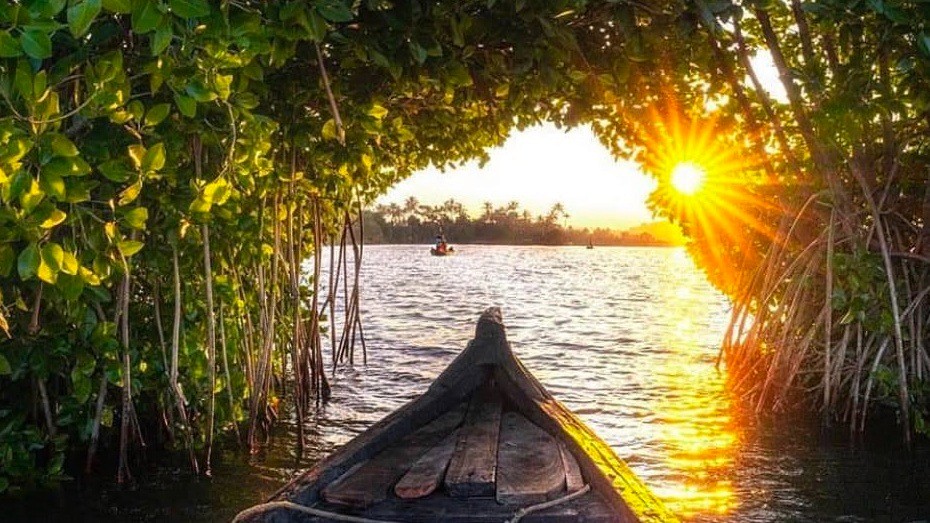
A cluster of eight small islands at the confluence of Ashtamudi Lake and the Kallada River, Munroe Island offers slow, sustainable travel with minimal tourist congestion. Canoe rides through narrow canals reveal households, paddy terraces, and coir-processing yards at close range. Eco-friendly homestays run by local families provide accommodation, and meals are prepared from the household garden. Munroe Island suits travellers who want to experience Kerala village life without any commercial overlay.
Kavvayi, Kannur
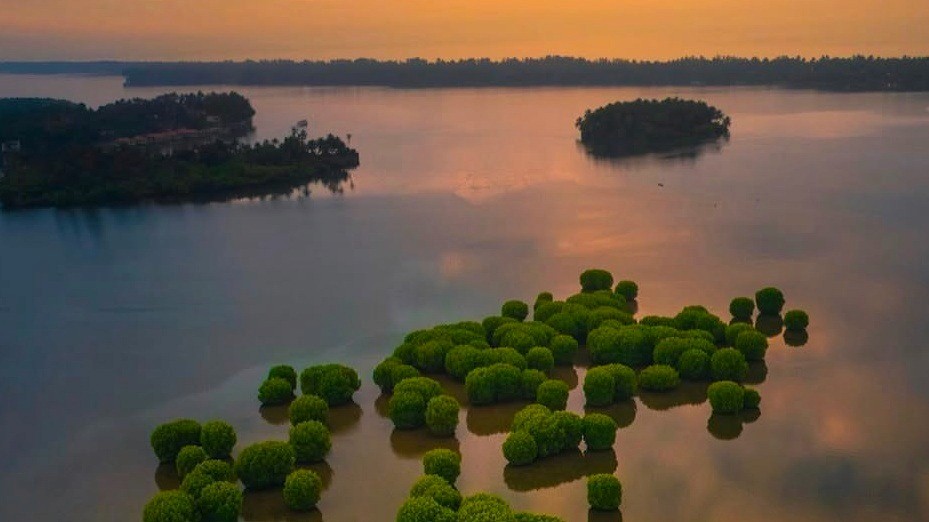
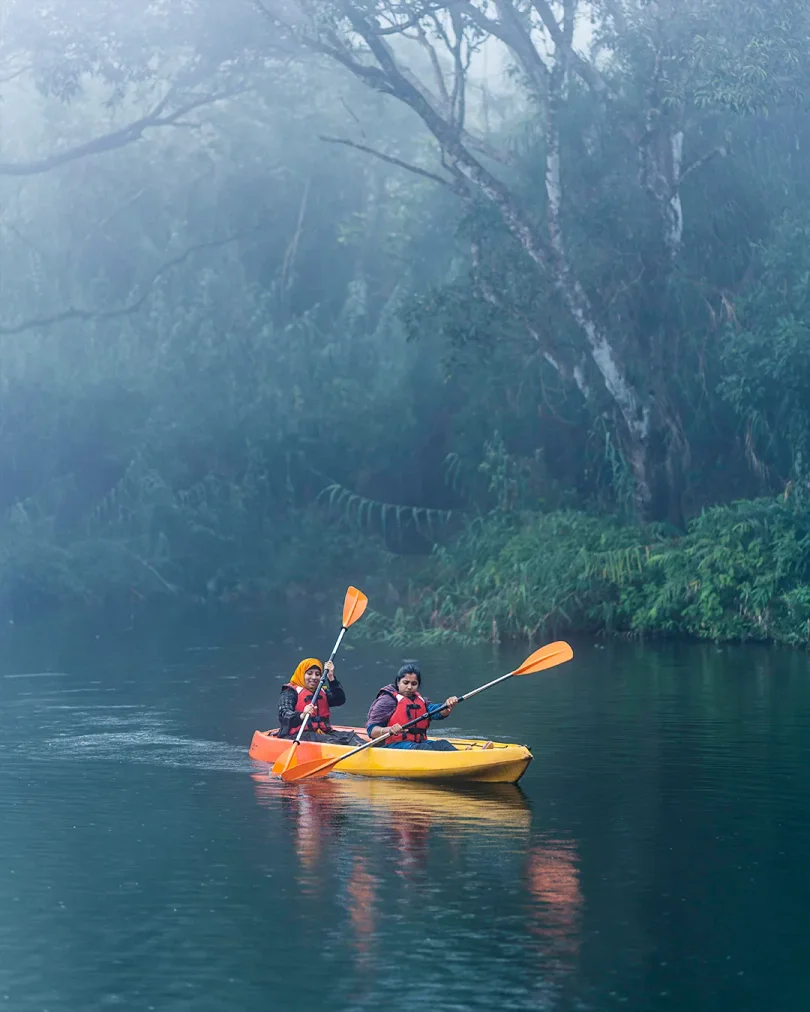
Kavvayi is an island village in Kannur district, accessible by ferry, surrounded by a river system that has been called one of North Kerala's best-kept secrets. Guided kayaking through the waterways covers paddy-bank villages, bird-rich wetlands, and small fishing communities. The area is also connected to Theyyam ritual culture, which is native to Kannur and Kasaragod. A nighttime boat procession during festival season makes Kavvayi one of the most visually distinctive village tourism experiences in northern Kerala.
Kuttikkanam, Idukki
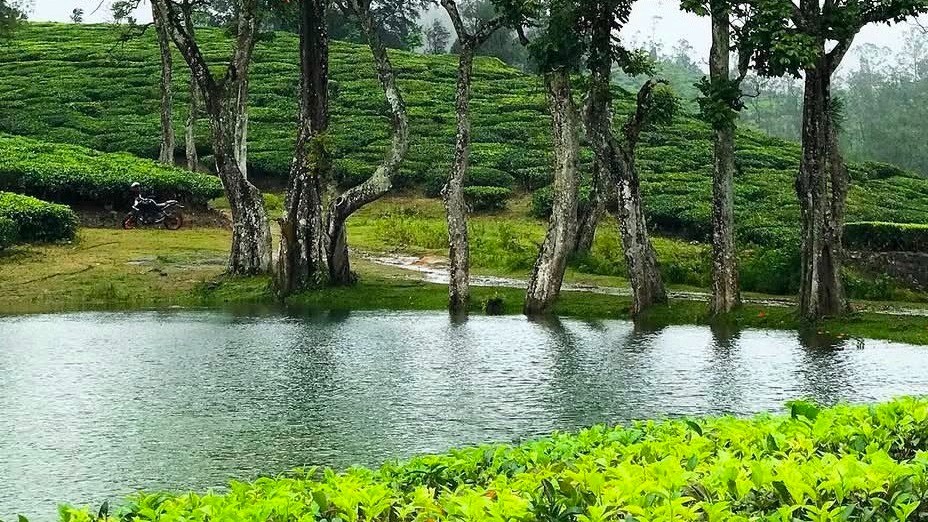
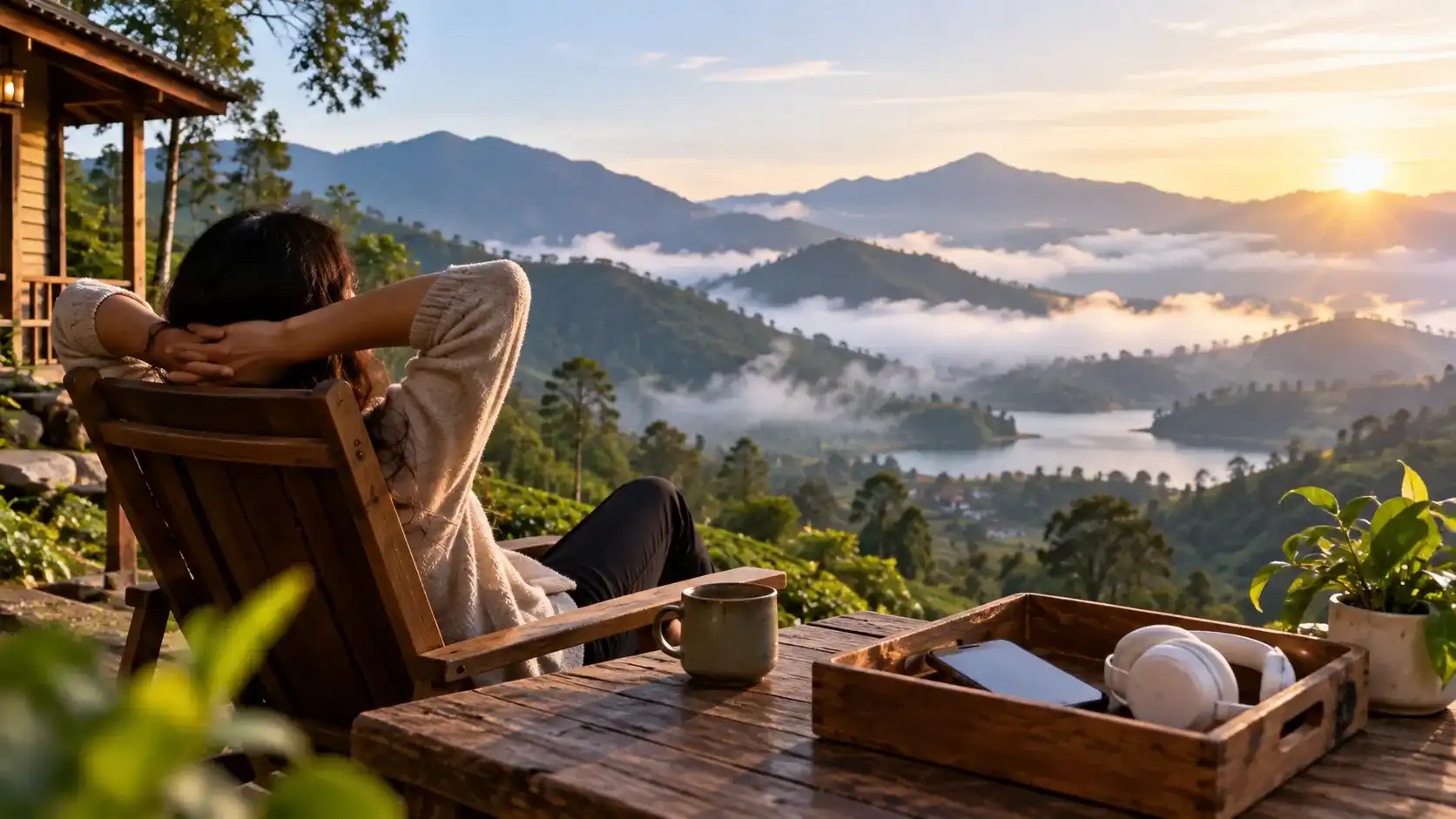
Kuttikkanam sits in the high ranges of Idukki district, roughly 100 kilometres from Kochi, at an elevation that keeps temperatures cool and mornings frequently mist-covered. The area is classic Kerala plantation country: tea, cardamom, pepper, and coffee estates cover the hillsides, interspersed with small farm settlements that retain the agricultural rhythms of hill country village life. Village tourism in Kuttikkanam centres on plantation walks, spice garden visits, plantation stays, and interaction with communities whose livelihoods are tied directly to the land. It is a markedly different experience from backwater village tourism, shaped instead by altitude, forests, and the quiet industry of estate farming.
Kalliasseri and Kunhimangalam, Kannur
These two villages were among the first included in the RT Mission's formal village tourism circuit in Kannur. Kalliasseri is a centre for handloom weaving, where visitors can observe and participate in the operation of traditional looms producing Kerala's distinctive kasavu and cotton textiles. Kunhimangalam is known for bell metal craft, one of Kerala's most ancient manufacturing traditions, where bronze alloy is cast into lamps, cooking vessels, and ritual objects using techniques unchanged for centuries.
Palakkad Village Farmsteads
Palakkad's broad agricultural plains, paddy terraces, and heritage farmhouses represent Kerala's agrarian heartland. Agro-tourism units here offer sowing and harvesting participation, bullock cart rides across paddy fields, cattle-feeding sessions, and cooking lessons using freshly harvested produce. With the RT Mission having trained 952 farm tourism units across Kerala, Palakkad contributes a substantial share of this network and is increasingly popular with families seeking educational, land-connected travel.
What Do You Actually Do During Village Tourism?
Village tourism in Kerala is activity-led. Depending on the destination and season, experiences typically include:
Paddy field work: transplanting, weeding, and harvesting rice by hand alongside farming families
Fishing: casting nets from country boats, operating Chinese fishing nets, or joining predawn trawler trips
Coir and handloom crafts: processing coconut husk into coir rope, operating traditional handlooms
Spice and plantation walks: guided tours through cardamom, pepper, coffee, and tea estates with explanations of cultivation and processing
Traditional cooking: preparing Kerala sadya, appam, puttu, fish curry, and toddy-infused dishes in village kitchens
Ayurvedic herb garden visits: learning to identify medicinal plants still used in household remedies
Bullock cart and country boat rides through village roads and backwater canals
Attendance at local rituals: Theyyam, Pooram, harvest festivals, and temple processions where community access is extended
Interacting with traditional artisans: bell metal workers, potters, bamboo weavers, and mat makers
Why Village Tourism in Kerala Is Growing
Travel behaviour is shifting globally. Surveys consistently show that younger travellers, particularly those under 35, prefer experiences over amenities and seek connection with local communities rather than distance from them. Kerala's village tourism offering is well-positioned against this trend.
Several structural factors are accelerating growth:
Kerala's Responsible Tourism Mission has created a formalised, quality-monitored network of village experience providers, giving travellers a reliable framework for access.
Farm tourism units trained by the RT Mission now number 952, with 103 officially listed on the mission's website, providing a scalable supply of authentic experiences.
The state has invested in training multilingual guides and forming Local Youth Tourism Clubs, improving the quality and consistency of village tourism delivery.
International travel media coverage of Kerala's village tourism model has increased awareness, particularly among European and Australian travellers who have historically led the responsible tourism segment.
Kerala's positioning within Indian domestic tourism is driving travellers away from overcrowded hill stations and beaches toward lesser-known village destinations.
Best Time to Experience Village Tourism in Kerala
October to February: Post-monsoon months when paddy harvests are active, weather is mild, and the landscape is at its greenest. This is the peak period for most village tourism activities across the state.
March to May: Suitable for hill-country and plantation village tourism in places like Kuttikkanam and Munnar, where summer heat in the lowlands drives visitors upward. Spice harvests and plantation activities are active during parts of this window.
June to September: Monsoon season adds a different quality to the Kerala village experience. Paddy sowing is underway, the landscape is intensely green, and rain-fed village rhythms have their own character. Some activity options are limited, but travellers comfortable with rain will find this the most visually atmospheric time to visit.
Plan Your Kerala Village Escape at Misty Mountain Plantation Resort, Kuttikkanam
Village tourism offers something that no standard itinerary can replicate: direct contact with the people, practices, and landscapes that define the state's actual character. From the backwater hamlets of Kollam to the paddy terraces of Palakkad, from the villages of Kannur to the plantation hillsides of Idukki, the rural Kerala experience is available across the state in multiple forms, each shaped by its geography and community.
For travellers who want to begin with one of the most complete and immersive versions of this experience, the high ranges of Idukki are an ideal starting point. Kuttikkanam combines plantation village life, beautiful scenery, and a well-developed base of responsible tourism accommodation that makes the first village tourism experience both accessible and deeply authentic.
Wake up inside a working spice and tea plantation in the high ranges of Idukki. Kuttikkanam offers village tourism at its most immersive: misty mornings, plantation walks, farm-to-table meals, and the unhurried rhythm of Kerala hill country life. Misty Mountain Experience puts you right at the heart of it.
Book your stay at Misty Mountain Experience, Kuttikkanam, and experience authentic village life where the mountains meet the mist.
Frequently Asked Questions
What is village tourism in Kerala?
It is an experiential travel format where visitors participate in the daily life of rural communities, including farming, fishing, traditional crafts, and local cooking.
Which are the best villages to visit in Kerala for rural tourism?
The most well-established destinations in Kerala include Kumbalangi (Kochi) for backwater and fishing village experiences, Munroe Island (Kollam) for canal-side rural life, Kavvayi (Kannur) for kayaking and North Kerala culture, Kuttikkanam (Idukki) for plantation and hill country village life, and the villages of Kalliasseri and Kunhimangalam in Kannur for weaving and bell metal craft.
Is village tourism suitable for families with children?
Yes. It is particularly well-suited for families with children. Activities like bullock cart rides, paddy field visits, fishing net casting, spice garden walks, and cooking demonstrations are engaging for younger travellers and offer educational value that standard resort tourism cannot provide. Most village stays are safe, low-risk environments with host families present throughout.
What is the best time for village tourism in Kerala?
October to February is generally the best period, coinciding with post-monsoon greenery, active paddy harvests, and comfortable weather across most of the state. Plantation and hill-country village experiences in places like Kuttikkanam are also enjoyable from March to May. Monsoon season (June to September) offers a distinct, atmospheric experience for adventurous travellers, though some activities are weather-dependent.
How is village tourism different from regular Kerala tourism?
Standard Kerala tourism typically involves sightseeing from a houseboat or resort, with communities observed at a distance. Village tourism is participatory. Travellers work alongside farmers, eat in household kitchens, attend local rituals as guests of the community, and stay in family-run homestays rather than branded properties. The experience is shaped by the community's calendar and daily rhythms rather than a tourist operator's schedule.