Image of Property

The Complete Guide to Western Ghats Trekking in Kerala: Easy to Difficult Trails

Scroll to explore

Kerala's share of the Western Ghats is one of the most spectacular stretches of wilderness in all of Asia. Recognised by UNESCO as a biodiversity hotspot, this ancient mountain range runs along the eastern flank of the state like a green spine, sheltering dense shola forests, high-altitude grasslands, cascading waterfalls, and tea estates that seem to vanish into the clouds. For anyone drawn to the outdoors, western ghats trekking in Kerala is not just an activity. It is a complete immersion into one of the planet's most ecologically rich landscapes.

This guide covers everything you need to plan your trek, from beginner-friendly trails through plantation country to multi-day summit expeditions that test even experienced hikers. Whether you are a first-timer looking for a gentle forest walk or a seasoned trekker chasing the high ridgelines above Munnar, Kerala's trails have something compelling at every level of difficulty.

Why Trek the Western Ghats in Kerala?

The Western Ghats in Kerala differ from most trekking destinations in India in one important way: the terrain is remarkably varied within very short distances. In a single day, you can walk through rubber and cardamom plantations, cross into dense rainforest, emerge onto open grassland, and reach a summit with views stretching into Tamil Nadu. The absence of extreme altitude means there is no acclimatisation required, and the network of forest trails spans every district from Kasaragod in the north to Thiruvananthapuram in the south.

The biodiversity here is genuinely extraordinary. The Western Ghats contain over 5,000 species of flowering plants, hundreds of bird species including several endemics, and large mammal populations including elephants, leopards, and the Nilgiri tahr. Trekking in this landscape is as much a wildlife experience as a physical one.

Best Time for Western Ghats Trekking in Kerala

The trekking season runs primarily from October to May, with the peak window falling between November and February when the skies are clear, temperatures are cool, and trail conditions are at their safest. The post-monsoon months of October and November offer lush green scenery combined with manageable weather, making them increasingly popular with experienced trekkers who want the landscape at its most vivid without the peak-season crowds.

The southwest monsoon, which arrives in June and typically lasts through September, brings heavy and sustained rainfall that makes many trails dangerously slippery, especially at higher elevations. Several forest sections close formally during this period. If you do visit during the monsoon, stick to low-altitude plantation walks and always trek with a local guide who knows the terrain.

Easy Trails: Perfect for Beginners and Families

Chembra Peak Heart Lake Trail, Wayanad

The Chembra Peak trek in Wayanad is one of Kerala's most beloved trekking experiences, and the trail to the heart-shaped lake midway up the mountain is ideal for beginners. The heart-shaped lake, known locally as Hridaya Saras, is a naturally occurring formation that never dries up even during the driest summer months. The trail passes through rolling tea estates, fragrant forest sections, and open grasslands before reaching the lake, rewarding trekkers with sweeping views of the Wayanad plateau along the way.

Key details:

  • Difficulty: Easy to moderate (trail to heart lake); moderate to difficult to summit

  • Distance: Approximately 9 to 10 km round trip to the lake

  • Duration: 3 to 4 hours to the lake and back

  • Altitude: 2,100 metres at peak; lake is roughly 1,500 metres

  • Permit: Required from Meppadi Forest Office; guide is mandatory

  • Best time: October to February

  • Entry fee: Rs. 150 per person approximately; guide fee extra

The trail is well-marked and the gradients are gentle for the first half, making it suitable for families with older children and first-time trekkers. Start early in the morning to avoid the afternoon heat and to catch the mist that hangs over the grasslands in the cooler hours.

Dhoni Hills, Palakkad

Dhoni Hills near Palakkad is one of the most accessible entry points for anyone new to western ghats trekking. The trail winds through dense forest and offers views of the plains below, with the walk itself being short enough to complete comfortably in a half-day. The area is well within the Western Ghats foothills and sees far fewer crowds than the more famous trails further south. Bird watchers will find the forest edges particularly rewarding here.

Key details:

  • Difficulty: Easy

  • Duration: 2 to 3 hours round trip

  • Best time: November to March

  • Good for: Families, beginners, bird watching

Kodikuthimala, Idukki District

Kodikuthimala offers a quiet, weekend-friendly trek through plantation country with gentle slopes and reliable mist in the mornings. The trail passes through coffee and spice estates and is an excellent introduction to the high-altitude plantation landscape that characterises much of the central Western Ghats in Kerala. It is particularly well suited to travellers staying in the Kuttikkanam and Peermade belt who want a structured walking experience close to their accommodation.

Moderate Trails: For Fit Trekkers Seeking More

Banasura Hills, Wayanad

Located near the Banasura Sagar Dam, this trek offers one of the more rewarding moderate routes in northern Kerala. The trail moves through a varied landscape of rocky paths, open grassland, and dense forest before delivering panoramic views of the Western Ghats and the reservoir below. The dam itself, one of the largest earthen dams in India, provides a dramatic visual backdrop as you gain elevation. The route is suitable for anyone with reasonable fitness and is a good stepping stone before attempting harder summits.

Key details:

  • Difficulty: Moderate

  • Duration: 4 to 5 hours round trip

  • Best time: October to February

  • Good for: Intermediate trekkers, photography enthusiasts

Meesapulimala, Munnar

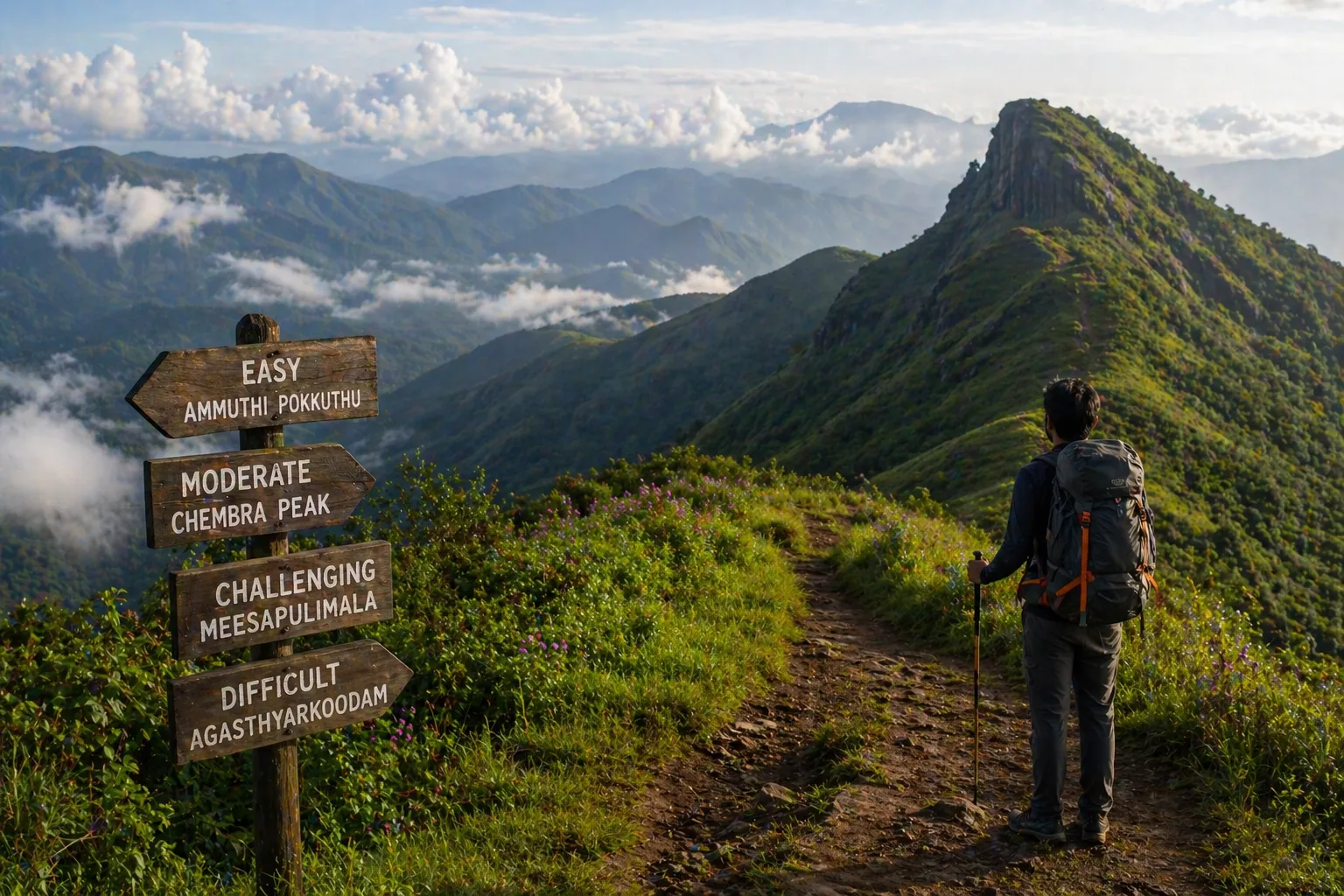
Meesapulimala stands at 2,640 metres above sea level and is the second-highest peak in the Western Ghats. The trek begins from Rhodo Valley in Munnar and passes through high-altitude grasslands, shola forests, and mountain streams. The terrain is open and rolling in the upper sections, offering 360-degree views from the summit on clear days. The rhododendron bloom between January and March adds a spectacular layer of colour to an already dramatic landscape.

Key details:

  • Difficulty: Moderate to challenging

  • Distance: Approximately 15 km round trip

  • Duration: Full day; start by 7 AM

  • Altitude: 2,640 metres

  • Permit: Required from KFDC office in Munnar

  • Best time: September to March; peak bloom January to March

  • Entry fee: Rs. 100 to Rs. 300 per person plus guide charges

Prior trekking experience is recommended for Meesapulimala. The upper sections involve sustained climbing and the summit temperatures drop sharply, so carry layered clothing even if the lower trail feels warm.

Chimmini Wildlife Sanctuary Trails, Thrissur

Chimmini Wildlife Sanctuary is part of the Western Ghats biodiversity corridor and offers guided jungle treks through dense forest with genuine wildlife encounter potential. The sanctuary is home to elephants, sambar, sloth bears, and an extraordinary range of bird species. The trekking routes here vary in length but the guided full-day option is well worth the time for anyone who wants a proper immersive forest experience rather than just a mountain trail.

Difficult Trails: For Experienced Trekkers Only

Agasthyakoodam, Thiruvananthapuram

Agasthyakoodam is the most storied and challenging trek in Kerala. Standing at 1,868 metres within the Agasthyamala Biosphere Reserve, this peak is accessible only for a limited two-month window each year, officially from January to March. The trek covers approximately 21 km one way and is done as a two-day expedition, with trekkers camping overnight before summiting on day two. The trail passes through pristine rainforest teeming with rare medicinal plants and wildlife, and the air itself is said to carry therapeutic properties from the density of flora around the route.

Key details:

  • Difficulty: Challenging

  • Distance: Approximately 21 km one way (two-day trek)

  • Altitude: 1,868 metres

  • Permit: Mandatory; issued by the Wildlife Warden's office in Thiruvananthapuram

  • Season: January to March only

  • Cost: Approximately Rs. 1,000 to Rs. 1,500 per person inclusive of permit and guide

  • Camping: Overnight camp at designated site before summit day

This trek requires solid physical fitness, good stamina, and ideally some prior multi-day trekking experience. Advance permits must be arranged well before your trip, especially for the peak January and February season when demand is high.

Vellari Mala, Kozhikode District

Vellari Mala is regarded as one of Kerala's most difficult day treks. The route is known for steep and relentless climbing through dense forest, and trekkers are rewarded with dramatic waterfalls including the spectacular Olichuchattam falls along the way. This is strictly for experienced hikers and overnight camping is generally required to complete the route properly. The absence of large crowds makes it a genuinely wild and untouched experience for those willing to put in the effort.

Chokramudi Peak, Munnar

Chokramudi, located in the Idukki district near Munnar, is a technically demanding summit that involves steep ascents through dense shola forests and challenging weather. The peak sits at a considerable elevation and offers commanding views across the border into Tamil Nadu on clear days. Forest Department permission is required and trekkers should engage certified local guides who know the trail conditions, as the route can be significantly more arduous during certain months.

Where to Stay: Misty Mountain Plantation Resort, Kuttikkanam

For trekkers exploring the central Western Ghats, particularly the trails around the Idukki district, Kuttikkanam is one of the most strategically placed and scenically rewarding base locations in the region. Sitting at around 3,500 feet above sea level in the Sahyadri hills, this quiet hill town gives you proximity to trails in Munnar, Vagamon, and Peermade while offering genuine highland atmosphere that many more touristy destinations have lost.

Misty Mountain Plantation Resort is the standout accommodation choice here. Spread across 600 acres of immense and diverse landscape that was once the summer palace grounds of the Regent Queen of Travancore, the property offers something quite rare: a resort that is itself a nature destination. The estate encompasses tea, coffee, cardamom, and pepper plantations alongside subtropical forests, a check-dam lake, and natural waterfalls, all threaded together by walking trails and jeep tracks.

What makes Misty Mountain particularly well suited to trekking travellers is the breadth of outdoor activities available on the property itself:

  • Plantation walks through tea estates 

  • Off-road jeep safari through the estate's forest and plantation sections

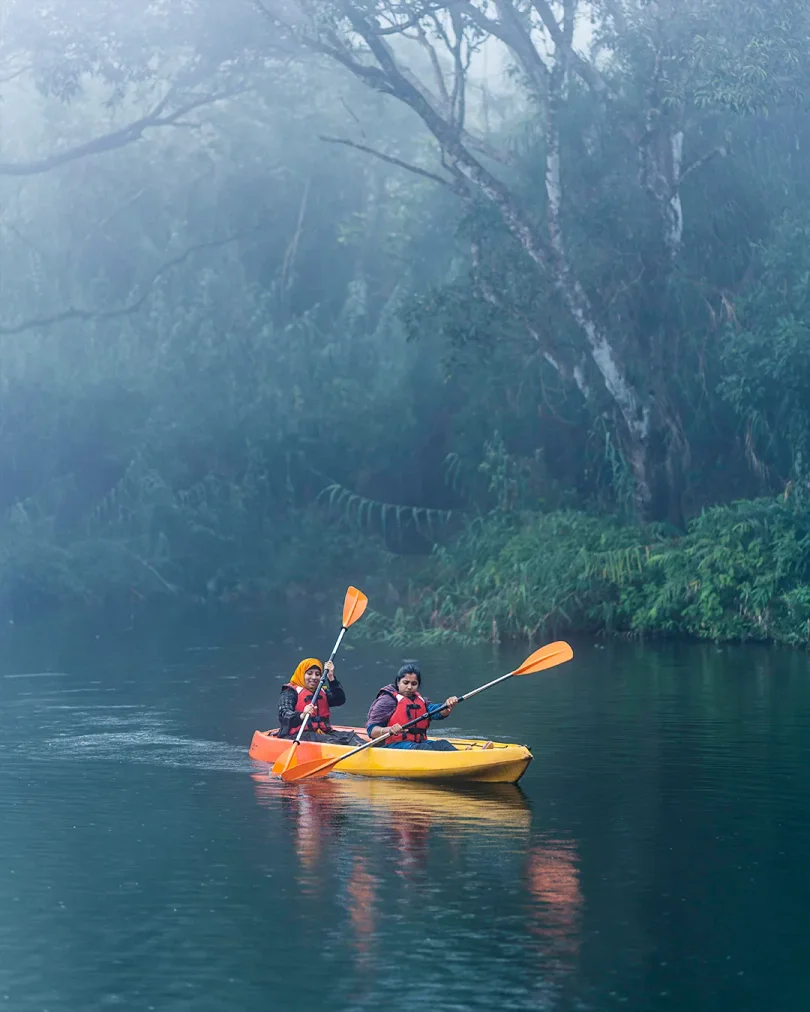
  • Kayaking on the check-dam lake

  • Fishing in the lake and river areas

  • Cycling through the plantation trails

  • Tea factory visit and interactive tea-making experience

  • Nature walks with the resident naturalist covering the property's unique flora and fauna

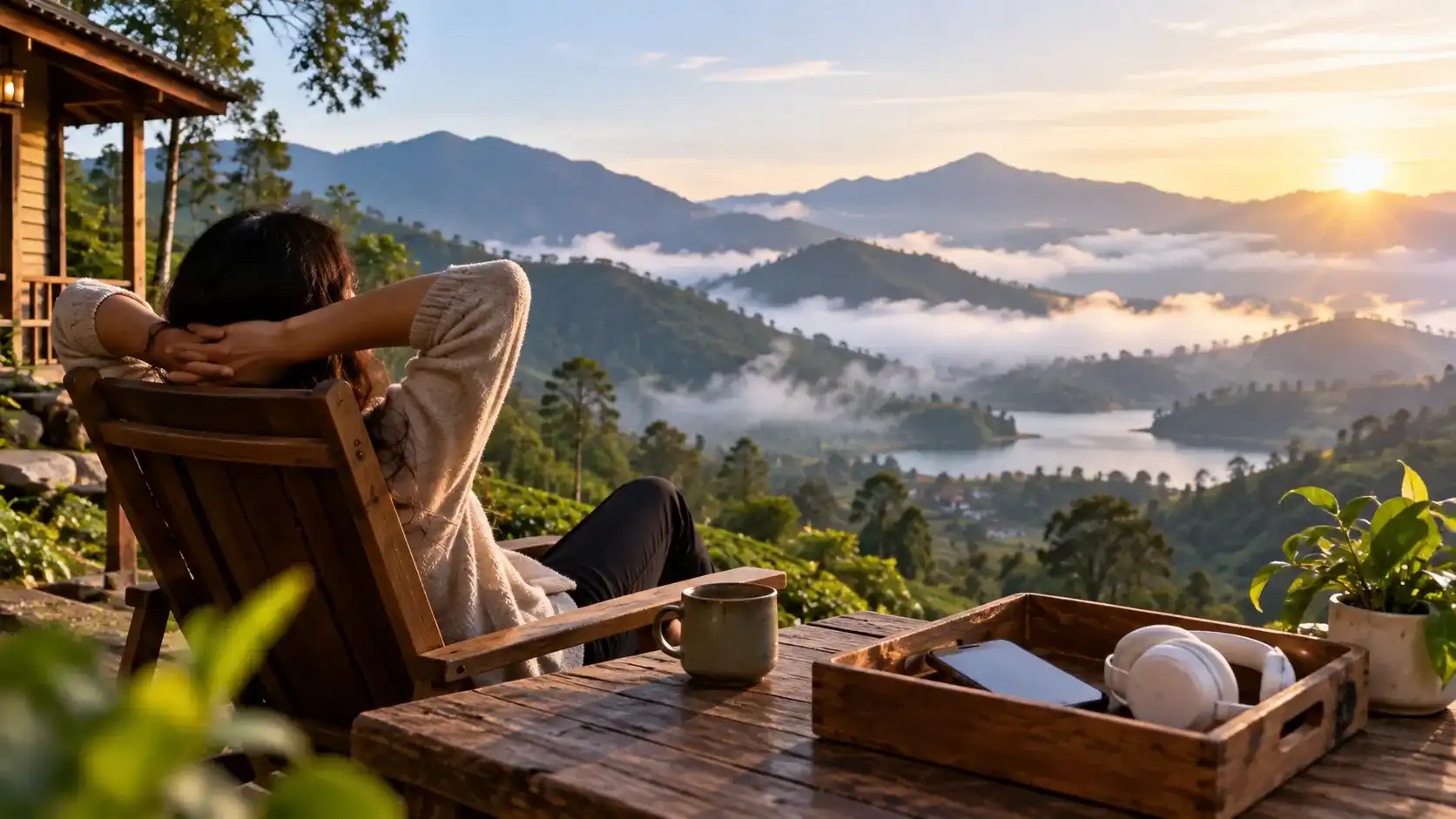
Beyond the outdoor activities, the resort is well appointed for rest and recovery after a long day on the trail. Accommodation options include rustic yet comfortable wooden chalets and stone cottages, most with private balconies. The two in-house restaurants, Elam and Teyla, serve quality food spanning South Indian and continental options, with fresh local ingredients and traditional cooking that guests consistently praise. The property also features an outdoor fireplace, free WiFi, barbecue facilities, indoor games, and 24-hour front desk service. The combination of on-property adventure, luxury comfort, and proximity to the region's best trekking routes makes Misty Mountain Plantation Resort an ideal operational base. 

Essential Trekking Tips for the Western Ghats

Permits and Permissions

Many of Kerala's best trekking areas fall within protected forest zones, wildlife sanctuaries, and tiger reserves. Permits are not optional in these areas. Key locations requiring advance permits include:

  • Agasthyakoodam: Wildlife Warden's office, Thiruvananthapuram

  • Periyar Tiger Reserve: Online booking via Kerala Forest Department portal

  • Parambikulam National Park: Forest Department booking mandatory

  • Meesapulimala: KFDC office, Munnar

  • Chembra Peak: Meppadi Forest Office, Wayanad

In Munnar and surrounding areas, some trails have less formal regulation, but this is changing as the Forest Department responds to the pressures of increased visitor numbers. Always check current requirements before your trip.

What to Pack

  • Sturdy trekking shoes with ankle support and good grip

  • Moisture-wicking clothing and a light waterproof layer

  • Minimum 2 litres of water per person; more for longer routes

  • High-energy snacks: nuts, dry fruits, energy bars

  • Basic first-aid kit including blister treatment and antiseptic

  • Insect repellent (leeches are common on forest trails, especially post-rain)

  • Trekking poles for steep descents

  • Headlamp with spare batteries for early starts

  • Warm layer for high-altitude treks above 2,000 metres

Responsible Trekking

The Western Ghats are a fragile ecosystem under significant pressure from increasing visitor numbers. Carry all waste out of the forest, do not feed wildlife, stay on marked trails, and avoid loud noise in forest sections. Hiring a local guide not only improves safety but directly supports communities that depend on responsible tourism for their livelihoods.

The Western Ghats Await

Western ghats trekking in Kerala is among the most rewarding outdoor experiences in South Asia. Whether you are walking the gentle tea estate paths around Kuttikkanam on a misty December morning or pushing hard toward the summit of Agasthyakoodam through pristine biosphere forest, every trail in this mountain range delivers something memorable. The biodiversity, the scenery, the cool highland air, and the deep quiet of these ancient hills combine to make every trek feel like a genuine journey rather than just a physical workout.

Start with a trail that matches your current fitness level, respect the forest and its regulations, and build your experience progressively. The Western Ghats reward patience and preparation. Come back enough times and you will find that this landscape, like all great wilderness, never repeats itself.

Plan Your Western Ghats Trekking Adventure

Ready to experience western ghats trekking in Kerala first-hand? Misty Mountain Plantation Resort in Kuttikkanam is the perfect base for your highland adventure. With 600 acres of plantation estate, guided nature trails, kayaking, jeep safaris, and comfortable accommodation surrounded by the Sahyadri hills, it offers everything a trekking traveller needs in one destination. Contact the resort today to check availability, explore their outdoor activity packages, and plan your stay around the best trail seasons in the region. Your Western Ghats adventure begins here.


People Also Search:

Best Resort in Kuttikkanam, Kuttikkanam Resorts, Peermade Resorts, Misty Mountain Resort

Kerala's share of the Western Ghats is one of the most spectacular stretches of wilderness in all of Asia. Recognised by UNESCO as a biodiversity hotspot, this ancient mountain range runs along the eastern flank of the state like a green spine, sheltering dense shola forests, high-altitude grasslands, cascading waterfalls, and tea estates that seem to vanish into the clouds. For anyone drawn to the outdoors, western ghats trekking in Kerala is not just an activity. It is a complete immersion into one of the planet's most ecologically rich landscapes.

This guide covers everything you need to plan your trek, from beginner-friendly trails through plantation country to multi-day summit expeditions that test even experienced hikers. Whether you are a first-timer looking for a gentle forest walk or a seasoned trekker chasing the high ridgelines above Munnar, Kerala's trails have something compelling at every level of difficulty.

Why Trek the Western Ghats in Kerala?

The Western Ghats in Kerala differ from most trekking destinations in India in one important way: the terrain is remarkably varied within very short distances. In a single day, you can walk through rubber and cardamom plantations, cross into dense rainforest, emerge onto open grassland, and reach a summit with views stretching into Tamil Nadu. The absence of extreme altitude means there is no acclimatisation required, and the network of forest trails spans every district from Kasaragod in the north to Thiruvananthapuram in the south.

The biodiversity here is genuinely extraordinary. The Western Ghats contain over 5,000 species of flowering plants, hundreds of bird species including several endemics, and large mammal populations including elephants, leopards, and the Nilgiri tahr. Trekking in this landscape is as much a wildlife experience as a physical one.

Best Time for Western Ghats Trekking in Kerala

The trekking season runs primarily from October to May, with the peak window falling between November and February when the skies are clear, temperatures are cool, and trail conditions are at their safest. The post-monsoon months of October and November offer lush green scenery combined with manageable weather, making them increasingly popular with experienced trekkers who want the landscape at its most vivid without the peak-season crowds.

The southwest monsoon, which arrives in June and typically lasts through September, brings heavy and sustained rainfall that makes many trails dangerously slippery, especially at higher elevations. Several forest sections close formally during this period. If you do visit during the monsoon, stick to low-altitude plantation walks and always trek with a local guide who knows the terrain.

Easy Trails: Perfect for Beginners and Families

Chembra Peak Heart Lake Trail, Wayanad

The Chembra Peak trek in Wayanad is one of Kerala's most beloved trekking experiences, and the trail to the heart-shaped lake midway up the mountain is ideal for beginners. The heart-shaped lake, known locally as Hridaya Saras, is a naturally occurring formation that never dries up even during the driest summer months. The trail passes through rolling tea estates, fragrant forest sections, and open grasslands before reaching the lake, rewarding trekkers with sweeping views of the Wayanad plateau along the way.

Key details:

  • Difficulty: Easy to moderate (trail to heart lake); moderate to difficult to summit

  • Distance: Approximately 9 to 10 km round trip to the lake

  • Duration: 3 to 4 hours to the lake and back

  • Altitude: 2,100 metres at peak; lake is roughly 1,500 metres

  • Permit: Required from Meppadi Forest Office; guide is mandatory

  • Best time: October to February

  • Entry fee: Rs. 150 per person approximately; guide fee extra

The trail is well-marked and the gradients are gentle for the first half, making it suitable for families with older children and first-time trekkers. Start early in the morning to avoid the afternoon heat and to catch the mist that hangs over the grasslands in the cooler hours.

Dhoni Hills, Palakkad

Dhoni Hills near Palakkad is one of the most accessible entry points for anyone new to western ghats trekking. The trail winds through dense forest and offers views of the plains below, with the walk itself being short enough to complete comfortably in a half-day. The area is well within the Western Ghats foothills and sees far fewer crowds than the more famous trails further south. Bird watchers will find the forest edges particularly rewarding here.

Key details:

  • Difficulty: Easy

  • Duration: 2 to 3 hours round trip

  • Best time: November to March

  • Good for: Families, beginners, bird watching

Kodikuthimala, Idukki District

Kodikuthimala offers a quiet, weekend-friendly trek through plantation country with gentle slopes and reliable mist in the mornings. The trail passes through coffee and spice estates and is an excellent introduction to the high-altitude plantation landscape that characterises much of the central Western Ghats in Kerala. It is particularly well suited to travellers staying in the Kuttikkanam and Peermade belt who want a structured walking experience close to their accommodation.

Moderate Trails: For Fit Trekkers Seeking More

Banasura Hills, Wayanad

Located near the Banasura Sagar Dam, this trek offers one of the more rewarding moderate routes in northern Kerala. The trail moves through a varied landscape of rocky paths, open grassland, and dense forest before delivering panoramic views of the Western Ghats and the reservoir below. The dam itself, one of the largest earthen dams in India, provides a dramatic visual backdrop as you gain elevation. The route is suitable for anyone with reasonable fitness and is a good stepping stone before attempting harder summits.

Key details:

  • Difficulty: Moderate

  • Duration: 4 to 5 hours round trip

  • Best time: October to February

  • Good for: Intermediate trekkers, photography enthusiasts

Meesapulimala, Munnar

Meesapulimala stands at 2,640 metres above sea level and is the second-highest peak in the Western Ghats. The trek begins from Rhodo Valley in Munnar and passes through high-altitude grasslands, shola forests, and mountain streams. The terrain is open and rolling in the upper sections, offering 360-degree views from the summit on clear days. The rhododendron bloom between January and March adds a spectacular layer of colour to an already dramatic landscape.

Key details:

  • Difficulty: Moderate to challenging

  • Distance: Approximately 15 km round trip

  • Duration: Full day; start by 7 AM

  • Altitude: 2,640 metres

  • Permit: Required from KFDC office in Munnar

  • Best time: September to March; peak bloom January to March

  • Entry fee: Rs. 100 to Rs. 300 per person plus guide charges

Prior trekking experience is recommended for Meesapulimala. The upper sections involve sustained climbing and the summit temperatures drop sharply, so carry layered clothing even if the lower trail feels warm.

Chimmini Wildlife Sanctuary Trails, Thrissur

Chimmini Wildlife Sanctuary is part of the Western Ghats biodiversity corridor and offers guided jungle treks through dense forest with genuine wildlife encounter potential. The sanctuary is home to elephants, sambar, sloth bears, and an extraordinary range of bird species. The trekking routes here vary in length but the guided full-day option is well worth the time for anyone who wants a proper immersive forest experience rather than just a mountain trail.

Difficult Trails: For Experienced Trekkers Only

Agasthyakoodam, Thiruvananthapuram

Agasthyakoodam is the most storied and challenging trek in Kerala. Standing at 1,868 metres within the Agasthyamala Biosphere Reserve, this peak is accessible only for a limited two-month window each year, officially from January to March. The trek covers approximately 21 km one way and is done as a two-day expedition, with trekkers camping overnight before summiting on day two. The trail passes through pristine rainforest teeming with rare medicinal plants and wildlife, and the air itself is said to carry therapeutic properties from the density of flora around the route.

Key details:

  • Difficulty: Challenging

  • Distance: Approximately 21 km one way (two-day trek)

  • Altitude: 1,868 metres

  • Permit: Mandatory; issued by the Wildlife Warden's office in Thiruvananthapuram

  • Season: January to March only

  • Cost: Approximately Rs. 1,000 to Rs. 1,500 per person inclusive of permit and guide

  • Camping: Overnight camp at designated site before summit day

This trek requires solid physical fitness, good stamina, and ideally some prior multi-day trekking experience. Advance permits must be arranged well before your trip, especially for the peak January and February season when demand is high.

Vellari Mala, Kozhikode District

Vellari Mala is regarded as one of Kerala's most difficult day treks. The route is known for steep and relentless climbing through dense forest, and trekkers are rewarded with dramatic waterfalls including the spectacular Olichuchattam falls along the way. This is strictly for experienced hikers and overnight camping is generally required to complete the route properly. The absence of large crowds makes it a genuinely wild and untouched experience for those willing to put in the effort.

Chokramudi Peak, Munnar

Chokramudi, located in the Idukki district near Munnar, is a technically demanding summit that involves steep ascents through dense shola forests and challenging weather. The peak sits at a considerable elevation and offers commanding views across the border into Tamil Nadu on clear days. Forest Department permission is required and trekkers should engage certified local guides who know the trail conditions, as the route can be significantly more arduous during certain months.

Where to Stay: Misty Mountain Plantation Resort, Kuttikkanam

For trekkers exploring the central Western Ghats, particularly the trails around the Idukki district, Kuttikkanam is one of the most strategically placed and scenically rewarding base locations in the region. Sitting at around 3,500 feet above sea level in the Sahyadri hills, this quiet hill town gives you proximity to trails in Munnar, Vagamon, and Peermade while offering genuine highland atmosphere that many more touristy destinations have lost.

Misty Mountain Plantation Resort is the standout accommodation choice here. Spread across 600 acres of immense and diverse landscape that was once the summer palace grounds of the Regent Queen of Travancore, the property offers something quite rare: a resort that is itself a nature destination. The estate encompasses tea, coffee, cardamom, and pepper plantations alongside subtropical forests, a check-dam lake, and natural waterfalls, all threaded together by walking trails and jeep tracks.

What makes Misty Mountain particularly well suited to trekking travellers is the breadth of outdoor activities available on the property itself:

  • Plantation walks through tea estates 

  • Off-road jeep safari through the estate's forest and plantation sections

  • Kayaking on the check-dam lake

  • Fishing in the lake and river areas

  • Cycling through the plantation trails

  • Tea factory visit and interactive tea-making experience

  • Nature walks with the resident naturalist covering the property's unique flora and fauna

Beyond the outdoor activities, the resort is well appointed for rest and recovery after a long day on the trail. Accommodation options include rustic yet comfortable wooden chalets and stone cottages, most with private balconies. The two in-house restaurants, Elam and Teyla, serve quality food spanning South Indian and continental options, with fresh local ingredients and traditional cooking that guests consistently praise. The property also features an outdoor fireplace, free WiFi, barbecue facilities, indoor games, and 24-hour front desk service. The combination of on-property adventure, luxury comfort, and proximity to the region's best trekking routes makes Misty Mountain Plantation Resort an ideal operational base. 

Essential Trekking Tips for the Western Ghats

Permits and Permissions

Many of Kerala's best trekking areas fall within protected forest zones, wildlife sanctuaries, and tiger reserves. Permits are not optional in these areas. Key locations requiring advance permits include:

  • Agasthyakoodam: Wildlife Warden's office, Thiruvananthapuram

  • Periyar Tiger Reserve: Online booking via Kerala Forest Department portal

  • Parambikulam National Park: Forest Department booking mandatory

  • Meesapulimala: KFDC office, Munnar

  • Chembra Peak: Meppadi Forest Office, Wayanad

In Munnar and surrounding areas, some trails have less formal regulation, but this is changing as the Forest Department responds to the pressures of increased visitor numbers. Always check current requirements before your trip.

What to Pack

  • Sturdy trekking shoes with ankle support and good grip

  • Moisture-wicking clothing and a light waterproof layer

  • Minimum 2 litres of water per person; more for longer routes

  • High-energy snacks: nuts, dry fruits, energy bars

  • Basic first-aid kit including blister treatment and antiseptic

  • Insect repellent (leeches are common on forest trails, especially post-rain)

  • Trekking poles for steep descents

  • Headlamp with spare batteries for early starts

  • Warm layer for high-altitude treks above 2,000 metres

Responsible Trekking

The Western Ghats are a fragile ecosystem under significant pressure from increasing visitor numbers. Carry all waste out of the forest, do not feed wildlife, stay on marked trails, and avoid loud noise in forest sections. Hiring a local guide not only improves safety but directly supports communities that depend on responsible tourism for their livelihoods.

The Western Ghats Await

Western ghats trekking in Kerala is among the most rewarding outdoor experiences in South Asia. Whether you are walking the gentle tea estate paths around Kuttikkanam on a misty December morning or pushing hard toward the summit of Agasthyakoodam through pristine biosphere forest, every trail in this mountain range delivers something memorable. The biodiversity, the scenery, the cool highland air, and the deep quiet of these ancient hills combine to make every trek feel like a genuine journey rather than just a physical workout.

Start with a trail that matches your current fitness level, respect the forest and its regulations, and build your experience progressively. The Western Ghats reward patience and preparation. Come back enough times and you will find that this landscape, like all great wilderness, never repeats itself.

Plan Your Western Ghats Trekking Adventure

Ready to experience western ghats trekking in Kerala first-hand? Misty Mountain Plantation Resort in Kuttikkanam is the perfect base for your highland adventure. With 600 acres of plantation estate, guided nature trails, kayaking, jeep safaris, and comfortable accommodation surrounded by the Sahyadri hills, it offers everything a trekking traveller needs in one destination. Contact the resort today to check availability, explore their outdoor activity packages, and plan your stay around the best trail seasons in the region. Your Western Ghats adventure begins here.


People Also Search:

Best Resort in Kuttikkanam, Kuttikkanam Resorts, Peermade Resorts, Misty Mountain Resort