Top 10 Historic Places in Kerala to Visit

Top 10 Historic Places in Kerala to Visit

Scroll to explore

Kerala is often celebrated for its backwaters, spice-scented forests, and Ayurvedic traditions. But tucked behind those tea gardens and coastal shores lies a history as layered and compelling as any in India. The state was once a nerve centre of the ancient world's spice trade, attracting Arab merchants, Chinese admirals, Portuguese navigators, Dutch traders, and British colonisers, each leaving their mark in stone, timber, and mortar.

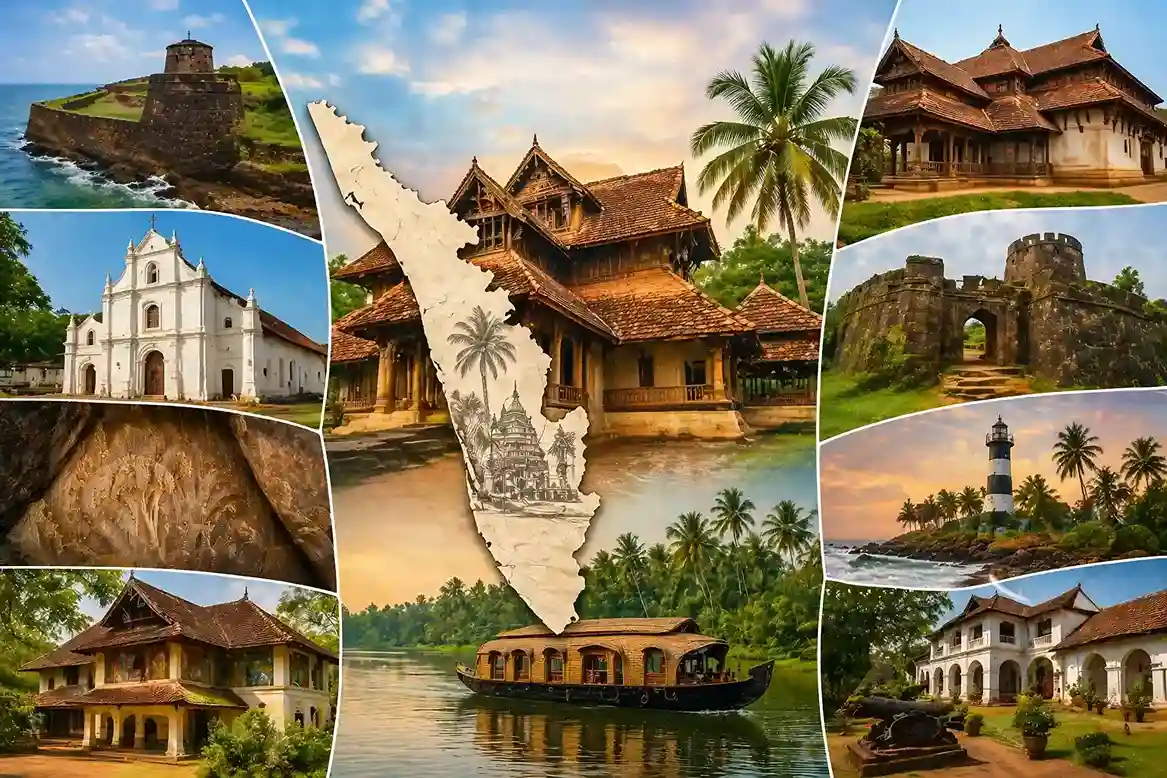
From cave walls etched by Neolithic hands to a summer palace abandoned in the mist-wrapped hills of Idukki, Kerala's historic places span centuries and civilisations. This list brings together the top 10 historic places in Kerala to visit, chosen for their depth of history, architectural distinction, and the stories they still have to tell.

1. Padmanabhapuram Palace

Location: Near Thuckalay, 64 km from Thiruvananthapuram

Timings: 9:00 AM to 4:30 PM (Closed Mondays)

If there is one palace that defines Kerala's architectural genius, it is Padmanabhapuram. Built around 1601 CE by Iravi Varma Kulasekhara Perumal, ruler of Venad, and later expanded magnificently by Marthanda Varma in the 18th century, this sprawling complex served as the capital of the erstwhile Travancore kingdom from around 1600 CE until the late 1700s.

The palace sits within a granite fortress covering 186 acres and comprises a complex of fourteen interconnected palaces spread over 6.5 acres. What makes Padmanabhapuram truly extraordinary is that it is built almost entirely in wood, following the traditional principles of Taccusastra, the ancient Kerala science of carpentry. 

The result is a masterwork of interlocking timber joints, carved rosewood ceilings, mica-panelled windows, and murals depicting scenes from Hindu epics. The Durbar Hall, the Saraswati temple, the 300-year-old clock tower that still keeps time, and a medicinal bed crafted from 64 types of herbal wood are among the palace's most celebrated features.

Padmanabhapuram is on the UNESCO tentative list for World Heritage recognition, and it is easy to see why. A visit here is among the most rewarding of any historic places in Kerala.

2. Bekal Fort

Location: Kasaragod district, northern Kerala

Timings: 8:00 AM to 6:00 PM

Standing at the edge of the Arabian Sea in Kasaragod, Bekal Fort is the largest fort in Kerala and one of the most dramatically situated in all of India. Built in the 1650s by Sivappa Naik of the Ikkeri dynasty as a strategic military outpost, the fort subsequently passed through the hands of Haider Ali, Tipu Sultan of Mysore, and finally the British East India Company.

The fort's keyhole shape, massive laterite walls, and subterranean observation tunnels speak of serious military engineering. From the top of the observation tower, visitors are rewarded with a panoramic sweep of the Arabian Sea on one side and a lush Kerala landscape on the other. 

An ancient temple dedicated to Lord Anjaneya stands within the fort's precincts. The adjacent Bekal Beach, with its dramatic backdrop of the fort walls meeting the sea, has made this one of the most photographed locations in the state. It is no surprise that the fort has served as a filming location for some of India's most celebrated movies.

3. Fort Kochi and St. Francis Church

Location: Kochi, Ernakulam district

Timings: St. Francis Church: 8:00 AM to 6:00 PM

Fort Kochi is less a single monument and more a living, breathing city that wears its history on every facade. The Portuguese arrived here in 1500 CE, establishing trade relations and fortifying the coastline. The Dutch ousted them in 1663. The British then took control in 1795. Each chapter left architecture, cemeteries, warehouses, and institutions that remain remarkably intact today.

The jewel of Fort Kochi is St. Francis Church, built in 1503 and widely regarded as the oldest European church in India. It was here that Vasco da Gama, the Portuguese explorer who first opened the sea route between Europe and India, was originally buried in 1524 after dying in Kochi. His remains were later transported to Portugal, but the tombstone and the church's history make this a remarkable pilgrimage for anyone interested in the age of exploration. 

The Dutch and British subsequently used the church themselves, and it passed between denominations over the centuries before becoming a Church of South India congregation. The Chinese fishing nets along the waterfront, another legacy of centuries of maritime trade, add yet another layer to Fort Kochi's remarkable story.

4. Edakkal Caves

Location: Wayanad district, atop Ambukutty Mala, near Ambalavalayal

Timings: 9:00 AM to 4:30 PM

High in the hills of Wayanad, roughly 1,200 feet above sea level, the Edakkal Caves contain something that few heritage sites in India can claim: petroglyphs, or rock engravings, believed to date back to the Neolithic and Chalcolithic periods, with some estimates placing certain carvings as far back as 5,000 years ago.

The caves are actually a natural rock fissure split into two chambers. The engravings found inside, discovered formally in 1895 by British official Fred Fawcett, depict human figures, animals including deer and elephants, a wheeled vehicle, symbols, and what appears to be a female figure interpreted as a tribal queen. 

These images represent some of the earliest evidence of human habitation and symbolic communication in peninsular India. Reaching the caves requires a steep uphill trek through forest, which itself adds to the sense of discovery. 

5. Mattancherry Palace (Dutch Palace)

Location: Mattancherry, Kochi

Timings: 10:00 AM to 5:00 PM (Closed Fridays)

Known colloquially as the Dutch Palace, Mattancherry Palace was actually built by the Portuguese around 1555 CE and gifted to Veera Kerala Varma, the Raja of Kochi. The Dutch later renovated it substantially in 1663, which is how the misleading name stuck. The palace follows the traditional Kerala Nalukettu layout, with four wings arranged around a central courtyard containing a small temple.

What elevates Mattancherry Palace into a truly unmissable historic site is its collection of murals. The paintings inside the palace are among the finest examples of Kerala's mural tradition, depicting scenes from the Ramayana, the Mahabharata, the Puranas, and the life of Lord Krishna with extraordinary colour and detail. 

The coronation hall, the royal bedchambers, and the palanquins, weapons, and royal regalia on display add to the experience. The palace also houses a fascinating collection of hand-painted Chinese tiles, portraits of the Cochin royal family, and copper plates recording land grants. Photography is not permitted inside, so visitors must commit the experience to memory.

6. Cheraman Juma Masjid

Location: Kodungallur, Thrissur district

Timings: Open daily; respectful dress required

The Cheraman Juma Masjid in Kodungallur holds a distinction that is almost impossible to overstate: it is regarded as the first mosque built in India, and one of the oldest mosques on the Indian subcontinent still in active use. According to tradition, it was founded in 629 CE by Malik Bin Dinar, a companion of the Prophet Mohammed, who came to Kerala at the invitation of the last Chera king, Cheraman Perumal.

The legend holds that Cheraman Perumal dreamed of the moon splitting in two, a sign interpreted by Arab traders as a miracle performed by the Prophet. The king subsequently abdicated his throne, travelled to Mecca, and embraced Islam before dying on the return journey. He sent word ahead asking for a mosque to be built in his homeland. The result was the Cheraman Juma Masjid. 

What makes this mosque visually and culturally remarkable is its architecture: rather than following the traditional domed mosque design, the structure uses sloping roofs, wooden pillars, and a Kerala-style oil lamp said to have been burning continuously for centuries. It is one of the few mosques in India that welcomes visitors of all faiths, reflecting the celebrated communal harmony of ancient Kerala.

7. Thalassery Fort

Location: Thalassery (Tellicherry), Kannur district

Timings: 9:00 AM to 6:00 PM

Thalassery Fort, built by the British East India Company in 1708 on a rocky promontory overlooking the Arabian Sea, served as one of the most important trading posts on the Malabar Coast for over a century. The Company established Thalassery as a pepper and cardamom trading centre, and the fort was designed to protect that commerce from rival European powers and local rulers.

The fort is a compact, well-preserved structure featuring a square plan with strong bastions at its corners and a lighthouse that still operates. Inside, visitors can explore the original British East India Company warehouse, a cemetery, and a prison. 

The fort also played a role in the Pazhassi Raja Rebellion, one of the earliest armed resistances against British colonial rule in India, with the legendary Kannur chieftain Kerala Varma Pazhassi Raja maintaining fierce opposition to Company authority in the surrounding region. 

8. Krishnapuram Palace

Location: Kayamkulam, Alappuzha district

Timings: 9:00 AM to 5:00 PM (Closed Mondays)

Built in the 18th century during the reign of Marthanda Varma, the powerful Maharaja who unified and modernised the Travancore kingdom, Krishnapuram Palace is a textbook example of Kerala's traditional architectural style. Its gabled roofs, dormer windows, and intricate wooden ceilings reflect the aesthetic refinement of Travancore's golden age.

Today the palace functions as an archaeological museum managed by the Kerala State Archaeology Department. Its most celebrated exhibit is the Gajendra Moksham, a 49-square-metre mural painting depicting the salvation of the elephant king from the Bhagavata Purana. This is one of the largest mural paintings in Kerala.

The museum also houses an impressive collection of sculptures, bronze artefacts, antique coins, portraits, Chinese and Japanese ceramics gifted to the Travancore royal family by foreign traders, and palm leaf manuscripts. Krishnapuram is often overlooked in favour of more famous heritage sites, but it rewards visitors with both artistic depth and historical context.

9. Hill Palace Museum, Tripunithura

Location: Tripunithura, near Kochi

Timings: 9:00 AM to 12:30 PM, 2:00 PM to 4:30 PM (Closed Mondays)

Built in 1865 as the official residence of the Maharaja of Cochin, Hill Palace in Tripunithura is the largest archaeological museum in Kerala, comprising 49 acres of grounds and 49 buildings across a magnificently landscaped hilltop campus. The palace complex was converted into a heritage museum by the Kerala State Archaeology Department, and today it houses one of the most comprehensive collections of royal artefacts in South India.

The collection spans royal thrones and ceremonial chairs, ivory and wooden carvings, antique manuscripts, stone inscriptions, palm leaf records, oil paintings, gold ornaments studded with precious stones, and the famous gold crown of the Cochin Maharaja. 

The museum also holds fascinating exhibits of ancient pottery gifted by Chinese and Japanese traders, chariots and horse-drawn carriages, and a prehistoric park with replicas of Iron Age monuments including dolmens, rock-cut caves, and hooded stones found across Kerala. The surrounding grounds are a pleasant deer park, popular with families and school groups.

10. Ammachi Kottaram, Kuttikanam

Location: Near Peermade, Kuttikanam, Idukki district

Altitude: Approximately 3,500 feet above sea level

Of all the historic places in Kerala featured on this list, Ammachi Kottaram in Kuttikanam is perhaps the most evocative and least known. Located in the highlands of Idukki district, surrounded by tea estates and dense forest, this 225-year-old palace was built during the reign of Maharaja Balarama Varma, who ruled Travancore between 1798 and 1810. It served as the summer residence for the royal consorts of the Travancore dynasty.

The name itself carries history: under the matrilineal traditions of Travancore, the king's wife was addressed by the honourable title Ammachi, and the palace she occupied became known as Ammachi Kottaram, the Ammachi's Residence. The structure follows the classic Nalukettu architectural layout, with four halls arranged around a central courtyard for ventilation, wooden ceilings, tiled floors, and wide verandahs that look out over spectacular hillside scenery.

The palace has been recognised by Kerala's State Archaeology Department as eligible for declaration as a protected historical monument under the Ancient Monuments and Archaeological Sites and Remains Act. 

Conclusion

Kerala's historic places represent a remarkable continuity of human civilisation. What is particularly striking about exploring the top 10 historic places in Kerala is how many of them lie in or close to Kerala's highlands. The Idukki region especially rewards heritage travellers, combining royal history, colonial architecture, and breathtaking natural scenery in a way that few places in India can match.

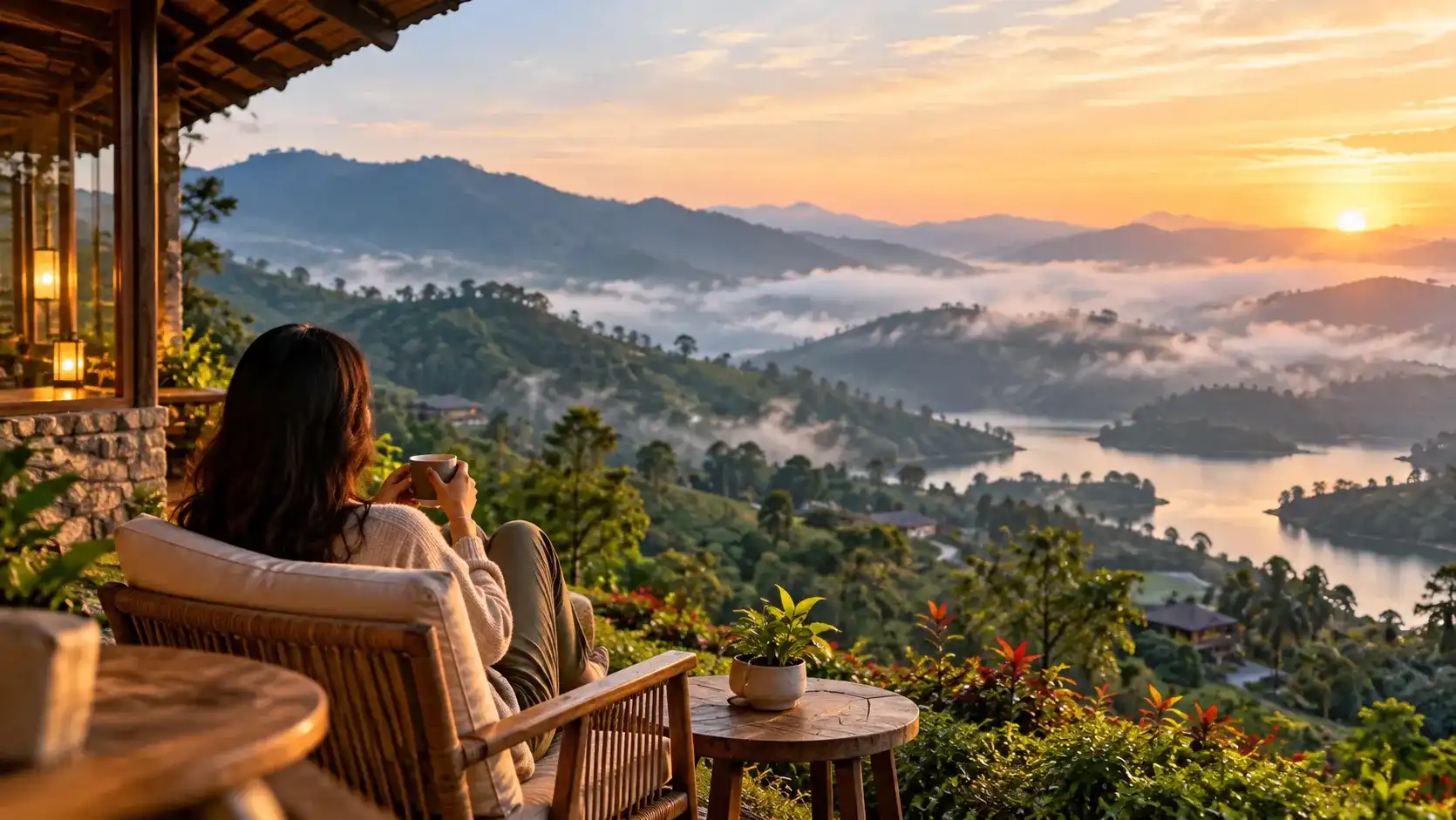
If Ammachi Kottaram in Kuttikanam is on your itinerary, a natural base for exploring this part of Kerala is Misty Mountain Plantation Resort, located close to it. Set amidst working tea and spice plantations, Misty Mountain offers guests an immersive experience. Waking up to plantation views, stepping out into cool mountain air, and knowing that a 225-year-old royal palace is just a short drive away makes for a heritage holiday that is both deeply historical and entirely memorable. 

People Also Search:

Best Resort in Kuttikkanam, Kuttikkanam Resorts, Peermade Resorts, Misty Mountain Resort
Kerala is often celebrated for its backwaters, spice-scented forests, and Ayurvedic traditions. But tucked behind those tea gardens and coastal shores lies a history as layered and compelling as any in India. The state was once a nerve centre of the ancient world's spice trade, attracting Arab merchants, Chinese admirals, Portuguese navigators, Dutch traders, and British colonisers, each leaving their mark in stone, timber, and mortar.

From cave walls etched by Neolithic hands to a summer palace abandoned in the mist-wrapped hills of Idukki, Kerala's historic places span centuries and civilisations. This list brings together the top 10 historic places in Kerala to visit, chosen for their depth of history, architectural distinction, and the stories they still have to tell.

1. Padmanabhapuram Palace

Location: Near Thuckalay, 64 km from Thiruvananthapuram

Timings: 9:00 AM to 4:30 PM (Closed Mondays)

If there is one palace that defines Kerala's architectural genius, it is Padmanabhapuram. Built around 1601 CE by Iravi Varma Kulasekhara Perumal, ruler of Venad, and later expanded magnificently by Marthanda Varma in the 18th century, this sprawling complex served as the capital of the erstwhile Travancore kingdom from around 1600 CE until the late 1700s.

The palace sits within a granite fortress covering 186 acres and comprises a complex of fourteen interconnected palaces spread over 6.5 acres. What makes Padmanabhapuram truly extraordinary is that it is built almost entirely in wood, following the traditional principles of Taccusastra, the ancient Kerala science of carpentry. 

The result is a masterwork of interlocking timber joints, carved rosewood ceilings, mica-panelled windows, and murals depicting scenes from Hindu epics. The Durbar Hall, the Saraswati temple, the 300-year-old clock tower that still keeps time, and a medicinal bed crafted from 64 types of herbal wood are among the palace's most celebrated features.

Padmanabhapuram is on the UNESCO tentative list for World Heritage recognition, and it is easy to see why. A visit here is among the most rewarding of any historic places in Kerala.

2. Bekal Fort

Location: Kasaragod district, northern Kerala

Timings: 8:00 AM to 6:00 PM

Standing at the edge of the Arabian Sea in Kasaragod, Bekal Fort is the largest fort in Kerala and one of the most dramatically situated in all of India. Built in the 1650s by Sivappa Naik of the Ikkeri dynasty as a strategic military outpost, the fort subsequently passed through the hands of Haider Ali, Tipu Sultan of Mysore, and finally the British East India Company.

The fort's keyhole shape, massive laterite walls, and subterranean observation tunnels speak of serious military engineering. From the top of the observation tower, visitors are rewarded with a panoramic sweep of the Arabian Sea on one side and a lush Kerala landscape on the other. 

An ancient temple dedicated to Lord Anjaneya stands within the fort's precincts. The adjacent Bekal Beach, with its dramatic backdrop of the fort walls meeting the sea, has made this one of the most photographed locations in the state. It is no surprise that the fort has served as a filming location for some of India's most celebrated movies.

3. Fort Kochi and St. Francis Church

Location: Kochi, Ernakulam district

Timings: St. Francis Church: 8:00 AM to 6:00 PM

Fort Kochi is less a single monument and more a living, breathing city that wears its history on every facade. The Portuguese arrived here in 1500 CE, establishing trade relations and fortifying the coastline. The Dutch ousted them in 1663. The British then took control in 1795. Each chapter left architecture, cemeteries, warehouses, and institutions that remain remarkably intact today.

The jewel of Fort Kochi is St. Francis Church, built in 1503 and widely regarded as the oldest European church in India. It was here that Vasco da Gama, the Portuguese explorer who first opened the sea route between Europe and India, was originally buried in 1524 after dying in Kochi. His remains were later transported to Portugal, but the tombstone and the church's history make this a remarkable pilgrimage for anyone interested in the age of exploration. 

The Dutch and British subsequently used the church themselves, and it passed between denominations over the centuries before becoming a Church of South India congregation. The Chinese fishing nets along the waterfront, another legacy of centuries of maritime trade, add yet another layer to Fort Kochi's remarkable story.

4. Edakkal Caves

Location: Wayanad district, atop Ambukutty Mala, near Ambalavalayal

Timings: 9:00 AM to 4:30 PM

High in the hills of Wayanad, roughly 1,200 feet above sea level, the Edakkal Caves contain something that few heritage sites in India can claim: petroglyphs, or rock engravings, believed to date back to the Neolithic and Chalcolithic periods, with some estimates placing certain carvings as far back as 5,000 years ago.

The caves are actually a natural rock fissure split into two chambers. The engravings found inside, discovered formally in 1895 by British official Fred Fawcett, depict human figures, animals including deer and elephants, a wheeled vehicle, symbols, and what appears to be a female figure interpreted as a tribal queen. 

These images represent some of the earliest evidence of human habitation and symbolic communication in peninsular India. Reaching the caves requires a steep uphill trek through forest, which itself adds to the sense of discovery. 

5. Mattancherry Palace (Dutch Palace)

Location: Mattancherry, Kochi

Timings: 10:00 AM to 5:00 PM (Closed Fridays)

Known colloquially as the Dutch Palace, Mattancherry Palace was actually built by the Portuguese around 1555 CE and gifted to Veera Kerala Varma, the Raja of Kochi. The Dutch later renovated it substantially in 1663, which is how the misleading name stuck. The palace follows the traditional Kerala Nalukettu layout, with four wings arranged around a central courtyard containing a small temple.

What elevates Mattancherry Palace into a truly unmissable historic site is its collection of murals. The paintings inside the palace are among the finest examples of Kerala's mural tradition, depicting scenes from the Ramayana, the Mahabharata, the Puranas, and the life of Lord Krishna with extraordinary colour and detail. 

The coronation hall, the royal bedchambers, and the palanquins, weapons, and royal regalia on display add to the experience. The palace also houses a fascinating collection of hand-painted Chinese tiles, portraits of the Cochin royal family, and copper plates recording land grants. Photography is not permitted inside, so visitors must commit the experience to memory.

6. Cheraman Juma Masjid

Location: Kodungallur, Thrissur district

Timings: Open daily; respectful dress required

The Cheraman Juma Masjid in Kodungallur holds a distinction that is almost impossible to overstate: it is regarded as the first mosque built in India, and one of the oldest mosques on the Indian subcontinent still in active use. According to tradition, it was founded in 629 CE by Malik Bin Dinar, a companion of the Prophet Mohammed, who came to Kerala at the invitation of the last Chera king, Cheraman Perumal.

The legend holds that Cheraman Perumal dreamed of the moon splitting in two, a sign interpreted by Arab traders as a miracle performed by the Prophet. The king subsequently abdicated his throne, travelled to Mecca, and embraced Islam before dying on the return journey. He sent word ahead asking for a mosque to be built in his homeland. The result was the Cheraman Juma Masjid. 

What makes this mosque visually and culturally remarkable is its architecture: rather than following the traditional domed mosque design, the structure uses sloping roofs, wooden pillars, and a Kerala-style oil lamp said to have been burning continuously for centuries. It is one of the few mosques in India that welcomes visitors of all faiths, reflecting the celebrated communal harmony of ancient Kerala.

7. Thalassery Fort

Location: Thalassery (Tellicherry), Kannur district

Timings: 9:00 AM to 6:00 PM

Thalassery Fort, built by the British East India Company in 1708 on a rocky promontory overlooking the Arabian Sea, served as one of the most important trading posts on the Malabar Coast for over a century. The Company established Thalassery as a pepper and cardamom trading centre, and the fort was designed to protect that commerce from rival European powers and local rulers.

The fort is a compact, well-preserved structure featuring a square plan with strong bastions at its corners and a lighthouse that still operates. Inside, visitors can explore the original British East India Company warehouse, a cemetery, and a prison. 

The fort also played a role in the Pazhassi Raja Rebellion, one of the earliest armed resistances against British colonial rule in India, with the legendary Kannur chieftain Kerala Varma Pazhassi Raja maintaining fierce opposition to Company authority in the surrounding region. 

8. Krishnapuram Palace

Location: Kayamkulam, Alappuzha district

Timings: 9:00 AM to 5:00 PM (Closed Mondays)

Built in the 18th century during the reign of Marthanda Varma, the powerful Maharaja who unified and modernised the Travancore kingdom, Krishnapuram Palace is a textbook example of Kerala's traditional architectural style. Its gabled roofs, dormer windows, and intricate wooden ceilings reflect the aesthetic refinement of Travancore's golden age.

Today the palace functions as an archaeological museum managed by the Kerala State Archaeology Department. Its most celebrated exhibit is the Gajendra Moksham, a 49-square-metre mural painting depicting the salvation of the elephant king from the Bhagavata Purana. This is one of the largest mural paintings in Kerala.

The museum also houses an impressive collection of sculptures, bronze artefacts, antique coins, portraits, Chinese and Japanese ceramics gifted to the Travancore royal family by foreign traders, and palm leaf manuscripts. Krishnapuram is often overlooked in favour of more famous heritage sites, but it rewards visitors with both artistic depth and historical context.

9. Hill Palace Museum, Tripunithura

Location: Tripunithura, near Kochi

Timings: 9:00 AM to 12:30 PM, 2:00 PM to 4:30 PM (Closed Mondays)

Built in 1865 as the official residence of the Maharaja of Cochin, Hill Palace in Tripunithura is the largest archaeological museum in Kerala, comprising 49 acres of grounds and 49 buildings across a magnificently landscaped hilltop campus. The palace complex was converted into a heritage museum by the Kerala State Archaeology Department, and today it houses one of the most comprehensive collections of royal artefacts in South India.

The collection spans royal thrones and ceremonial chairs, ivory and wooden carvings, antique manuscripts, stone inscriptions, palm leaf records, oil paintings, gold ornaments studded with precious stones, and the famous gold crown of the Cochin Maharaja. 

The museum also holds fascinating exhibits of ancient pottery gifted by Chinese and Japanese traders, chariots and horse-drawn carriages, and a prehistoric park with replicas of Iron Age monuments including dolmens, rock-cut caves, and hooded stones found across Kerala. The surrounding grounds are a pleasant deer park, popular with families and school groups.

10. Ammachi Kottaram, Kuttikanam

Location: Near Peermade, Kuttikanam, Idukki district

Altitude: Approximately 3,500 feet above sea level

Of all the historic places in Kerala featured on this list, Ammachi Kottaram in Kuttikanam is perhaps the most evocative and least known. Located in the highlands of Idukki district, surrounded by tea estates and dense forest, this 225-year-old palace was built during the reign of Maharaja Balarama Varma, who ruled Travancore between 1798 and 1810. It served as the summer residence for the royal consorts of the Travancore dynasty.

The name itself carries history: under the matrilineal traditions of Travancore, the king's wife was addressed by the honourable title Ammachi, and the palace she occupied became known as Ammachi Kottaram, the Ammachi's Residence. The structure follows the classic Nalukettu architectural layout, with four halls arranged around a central courtyard for ventilation, wooden ceilings, tiled floors, and wide verandahs that look out over spectacular hillside scenery.

The palace has been recognised by Kerala's State Archaeology Department as eligible for declaration as a protected historical monument under the Ancient Monuments and Archaeological Sites and Remains Act. 

Conclusion

Kerala's historic places represent a remarkable continuity of human civilisation. What is particularly striking about exploring the top 10 historic places in Kerala is how many of them lie in or close to Kerala's highlands. The Idukki region especially rewards heritage travellers, combining royal history, colonial architecture, and breathtaking natural scenery in a way that few places in India can match.

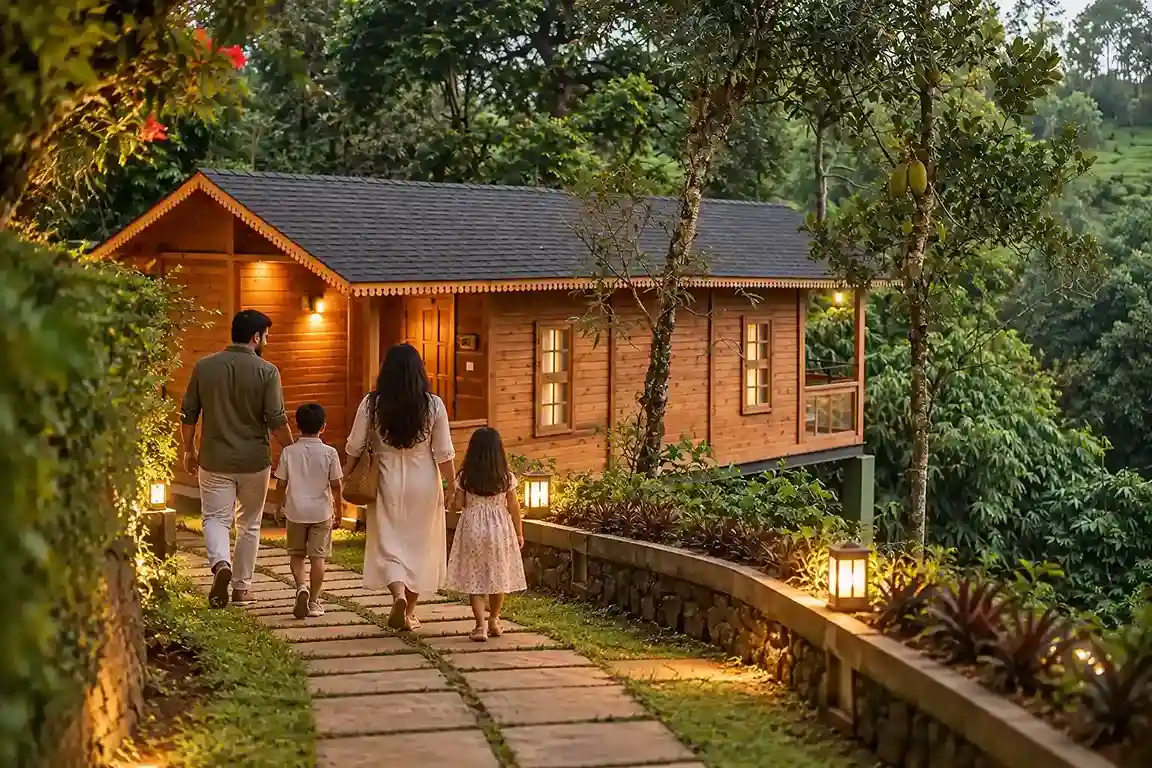
If Ammachi Kottaram in Kuttikanam is on your itinerary, a natural base for exploring this part of Kerala is Misty Mountain Plantation Resort, located close to it. Set amidst working tea and spice plantations, Misty Mountain offers guests an immersive experience. Waking up to plantation views, stepping out into cool mountain air, and knowing that a 225-year-old royal palace is just a short drive away makes for a heritage holiday that is both deeply historical and entirely memorable. 

People Also Search:

Best Resort in Kuttikkanam, Kuttikkanam Resorts, Peermade Resorts, Misty Mountain Resort