A Kerala tea plantation is not simply an agricultural site. It is a landscape in the truest sense. For nature lovers, the tea estates of Kerala's Western Ghats represent one of the most rewarding travel experiences in South India.
Kerala's tea industry dates to the mid-19th century, when British planters began cultivating Camellia sinensis across the high ranges of Idukki and Wayanad. Today the state produces some of India's finest teas, and the estates that produce them have become destinations in their own right. This guide covers the best Kerala tea plantation destinations for nature lovers, what to do at each, and how to plan your visit.
Quick Fact: The Western Ghats, which harbour most of Kerala's tea plantations, are a UNESCO World Heritage Site and one of the world's eight biodiversity hotspots. Tea estates within this range share space with shola forests, endemic bird species, and some of India's rarest wildlife.
What Makes Kerala Tea Plantations Special for Nature Lovers?
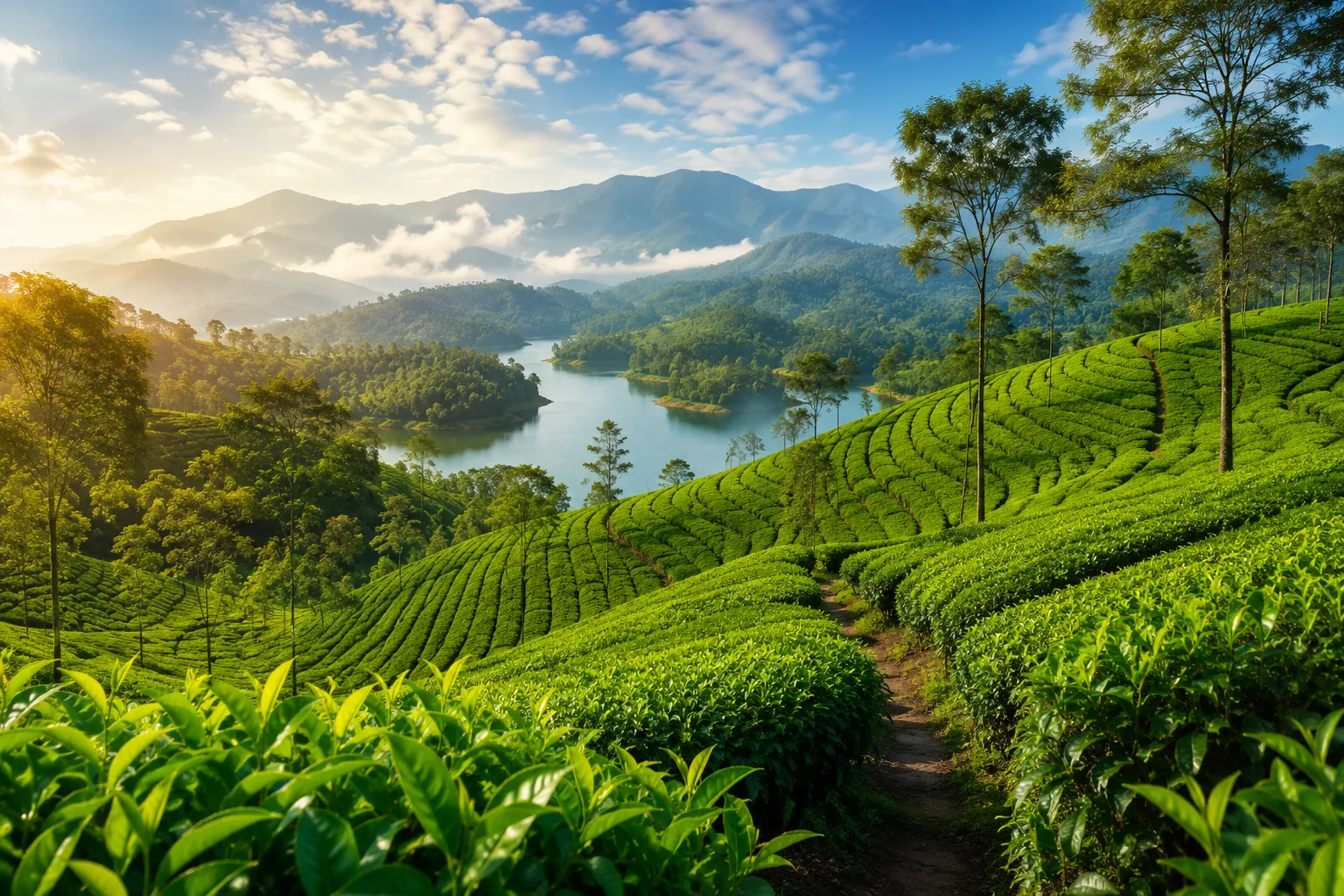
Kerala tea plantations occupy elevations between 1,000 and 2,600 metres above sea level, primarily across Idukki, Wayanad, and parts of Palakkad. This altitude creates a climate distinct from the rest of the state: cool mornings, consistent cloud cover, and an absence of the humidity that defines coastal Kerala. The terrain is dramatic in the specific way that plantation landscapes are: contoured slopes of uniform green interrupted by forest patches, rocky outcrops, and fast-moving streams.
What differentiates the Kerala tea plantation experience from other plantation tourism destinations is the diversity of activity available alongside the estates themselves. Birding, trekking, factory tours, tea tasting, and stays within working estates are all accessible from the same location. The combination makes Kerala's high-range tea country one of the most complete nature tourism destinations in peninsular India.
The state's Responsible Tourism Mission has also formalised plantation-based experiences through its farm tourism network, meaning many estates now offer guided experiences that support local communities directly.
Best Kerala Tea Plantation Destinations for Nature Lovers
1. Munnar, Idukki
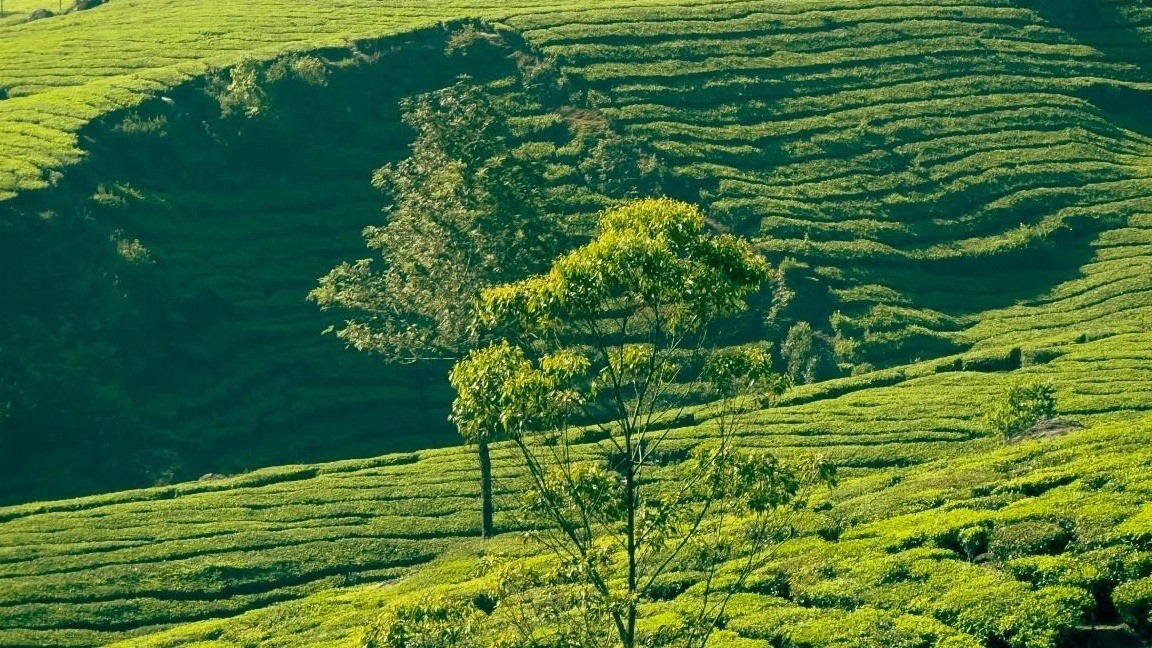
Munnar is the most established Kerala tea plantation destination and the largest tea-growing area in the state. Situated at approximately 1,600 metres above sea level in Idukki district, it was developed as a British summer retreat in the 1880s and is now home to thousands of hectares of continuous tea cover, including the Kanan Devan estate operated by Tata Consumer Products.
For nature lovers, Munnar offers a layered experience. Eravikulam National Park on the plateau above the town is home to the Nilgiri Tahr, a mountain goat species found nowhere else in the world. The Tea Museum at Nallathanni estate documents the full arc of Kerala's tea history with artefacts, photographs, and production machinery from the colonial period. Pothamedu viewpoint gives an unobstructed panorama of tea, coffee, and cardamom estates from a single vantage point. Kolukkumalai, at 7,900 feet, is the world's highest tea estate and accessible by jeep; the sunrise from its ridge is one of the most cited nature photography experiences in South India.
Guided walks through the estates allow visitors to observe plucking, understand the two-leaf-and-a-bud standard of quality harvesting, and visit processing factories where withering, rolling, oxidation, and drying convert fresh leaf into finished tea.
2. Wayanad
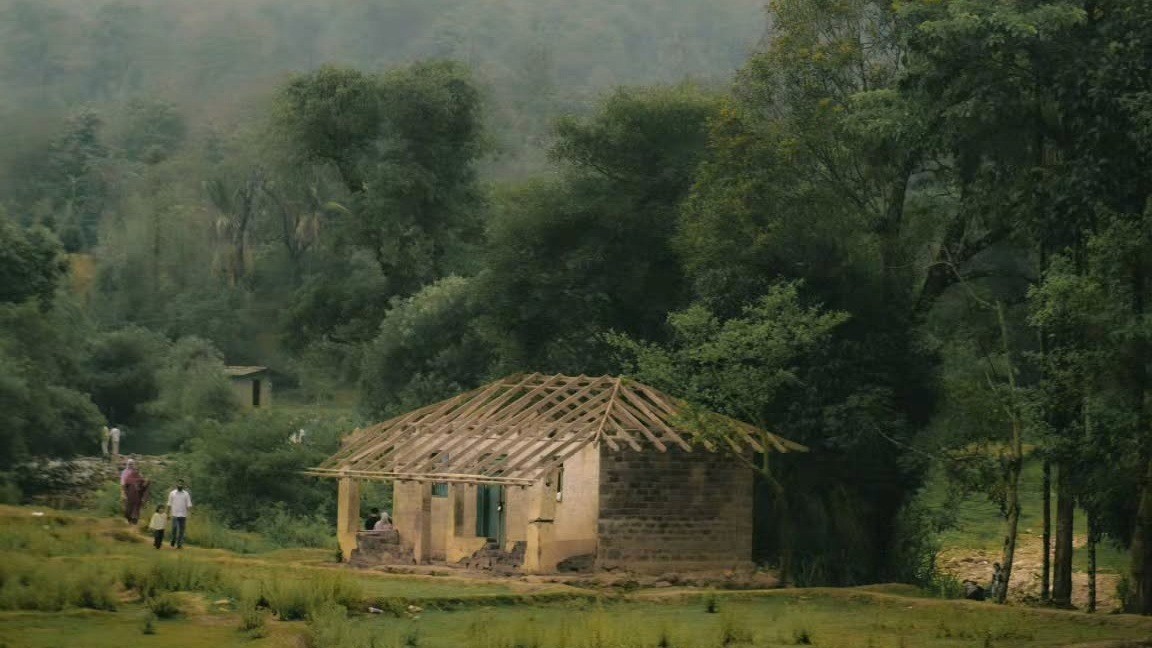
Wayanad's tea estates are less visited than Munnar's but offer a more forested and wildlife-rich setting. The plantations here sit at the northern edge of the Western Ghats, bordering Nagarhole National Park in Karnataka and Mudumalai Tiger Reserve in Tamil Nadu. This proximity means that plantation walks in Wayanad carry a genuinely wild dimension: elephant sightings near estate boundaries are not uncommon, and the birdlife includes species associated with evergreen forest rather than open agricultural land.
Vythiri, Kalpetta, and the areas around Sultan Bathery are the primary bases for tea plantation exploration in Wayanad. Several plantation resorts in the district offer guided nature walks through tea and coffee estates, and the district's extensive tribal heritage adds a cultural dimension to plantation visits that is distinct from the more commercialised Munnar circuit.
3. Vagamon, Idukki
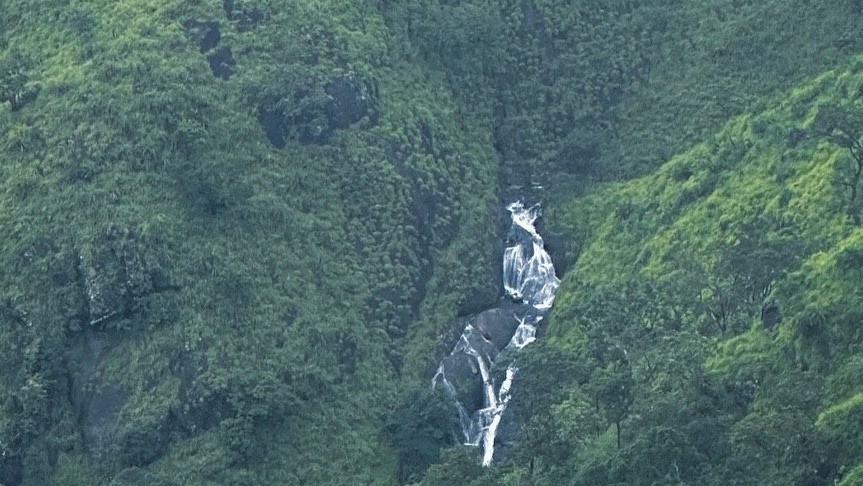
Vagamon sits at around 1,100 metres above sea level on the border of Idukki and Kottayam districts. The landscape here is a combination of rolling grasslands, pine forests, tea estates, and cloud-grazing meadows that give it a visual character quite different from the dense tea coverage of Munnar. The Vagamon plateau is frequently cited by hikers and paragliders as one of Kerala's most atmospheric high-altitude environments.
Tea estates in and around Vagamon offer walks through a cooler, quieter landscape with fewer visitors than Munnar. The combination of open meadows and plantation cover makes Vagamon a strong choice for nature photographers and birdwatchers in particular. The Vagamon Tea Estate itself is among the more accessible in the area, and nearby homestays offer overnight stays with plantation views.
4. Kuttikkanam, Idukki
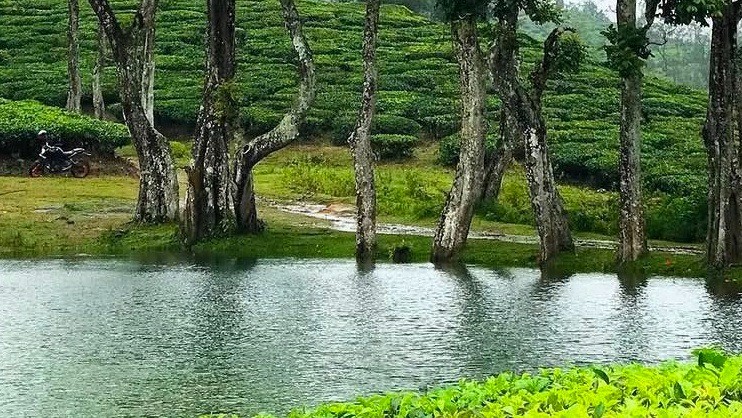
Kuttikkanam is a hill station in the Peermade territory of Idukki district, located at 3,500 feet above sea level along the Kottayam to Kumily route. The area has been a tea and coffee growing region since the late 18th century, when cultivation was first established under the Travancore kings and later expanded under British-era planters. Today, Kuttikkanam's hillsides are covered in a mix of tea, cardamom, coffee, and pepper estates that give the destination its characteristic layered agricultural landscape.
For nature lovers, Kuttikkanam offers access to plantation walking trails, high-canopy forest patches, birding routes, and mist-covered ridge views across a landscape that retains a quietness that more popular destinations have lost. The AVT tea plantations that define much of the area's visual character are among the most photographed in the Idukki high ranges The Misty Mountain Experience, which sits within a 600-acre working estate in Kuttikkanam, offers a tea factory tour as part of its guest experience, a rare opportunity to understand the complete journey from leaf to cup within a single working property.
5. Nelliampathy, Palakkad
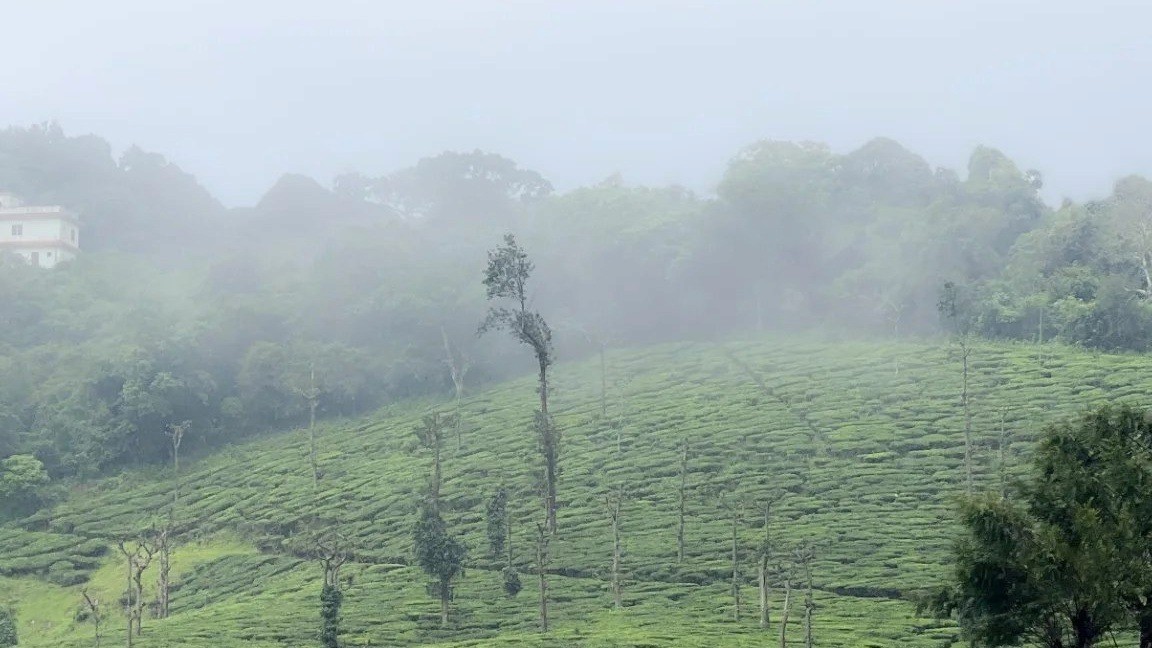
Nelliampathy is one of Kerala's least commercialised hill stations, located in Palakkad district at around 1,600 metres elevation. The area contains tea and coffee estates within a dense forest landscape that includes protected forest tracts with elephant corridors. The road to Nelliampathy from Palakkad town is considered one of Kerala's most scenic drives, ascending through hairpin bends above the plains before entering the plateau.
The tea plantations at Nelliampathy are smaller-scale than those at Munnar or Wayanad, and the experience of walking through them is more intimate. The plantation-forest interface here is particularly rich for birding, with species typical of both open plantation and closed-canopy forest present within walking distance of each other.
What to Do at a Kerala Tea Plantation
Nature lovers visiting a Kerala tea plantation have access to a range of activities beyond straightforward sightseeing:
Plantation walks: Guided and self-guided walks through tea fields, during which guides explain cultivation cycles, pruning schedules, and the differences between CTC and orthodox tea production methods.
Tea factory tours: Most major estates offer tours of processing facilities where visitors observe withering troughs, rolling machines, oxidation chambers, and drying units. Misty Mountain Plantation Resort in Kuttikkanam includes a factory tour with an explanation of the full processing cycle as part of its guest experience.
Tea tasting: Many estates and plantation resorts operate tasting sessions where guests sample multiple grades of tea, including speciality first-flush and orthodox varieties not commonly available in retail.
Birding: Kerala's plantation zones, particularly those adjacent to forest, are excellent birding environments. Nilgiri Flycatcher, White-bellied Shortwing, Kerala Laughingthrush, and various sunbird species are regularly recorded within estate boundaries.
Wildlife walks and night safaris: Estates bordering forest in Wayanad and Nelliampathy offer guided wildlife walks with possibilities of seeing gaur, spotted deer, and elephant in the early morning and at dusk.
Trekking: Several tea plantation destinations in Idukki and Wayanad have marked trekking routes through estate and adjacent forest terrain. Kuttikkanam's trails are particularly well-regarded for high-altitude forest and plantation walking.
Photography: The visual quality of Kerala's tea landscapes, especially at dawn and during the monsoon, makes plantation environments a strong draw for landscape photographers. Mist, layered slopes, and the geometric patterns of pruned tea bushes offer consistent compositional material.
Best Time to Visit Kerala Tea Plantations
The right time to visit depends on what kind of experience you are looking for:
September to February: This is the most popular window for visiting Kerala tea plantations. Post-monsoon greenery is at its peak, weather is cool and clear, and plantation activity is consistent. Birding is also excellent in this period as migratory species join resident birds from October onward.
March to May: Suitable for higher-altitude plantations like Munnar and Kuttikkanam, which remain cool while the lowlands heat up. Some tea estates conduct spring plucking (first flush) during this period, and factory activity is typically high.
June to August: Monsoon season transforms Kerala's plantations into intensely green, mist-heavy environments. Organised factory tours may be limited, and some trekking trails become slippery, but the visual drama of plantation landscapes in full monsoon cloud is unlike any other time of year. Travellers who are comfortable with rain will find this season offers the most atmospheric photography conditions.
Tips for Visiting Kerala Tea Plantations
Wear closed, sturdy footwear. Plantation paths are uneven, often wet, and occasionally steep.
Carry a light jacket or fleece regardless of season. High-altitude tea estates can be significantly cooler than the plains, particularly in the early morning.
Visit tea factories on weekdays where possible. Many factories reduce or pause operations on weekends.
Book plantation stays well in advance for the October to February peak season, particularly for properties within working estates.
Ask your accommodation about private estate walking access. Many plantation resorts, including those in Kuttikkanam, allow guests to walk through the estate independently or with a resident naturalist.
Purchase tea directly from estate shops or factory outlets where available. Estate-grade teas sold on-site are typically fresher and more traceable than commercial retail blends.
Stay at Misty Mountain Plantation Resort, Kuttikkanam
Kerala's tea plantation landscapes are among the most rewarding environments in South India for nature lovers. From the world-record elevations of Kolukkumalai above Munnar to the quieter mist-covered estates of Kuttikkanam and the wildlife-rich plantation belts of Wayanad and Nelliampathy, each destination in Kerala's tea country offers a different quality of experience shaped by its altitude, ecosystem, and community.
For those planning a Kerala tea plantation stay in the Idukki high ranges, Kuttikkanam is an ideal base.
The Misty Mountain Experience sits within a 600-acre working estate in Kuttikkanam, in the Sahyadri Hills of the Western Ghats. With over 40 years of history, the resort offers guests direct access to Kerala tea plantation life through guided tea factory tours, resident naturalist-led plantation walks, kayaking, mountain trails, and estate-produced teas served at the Teyla restaurant on the property.
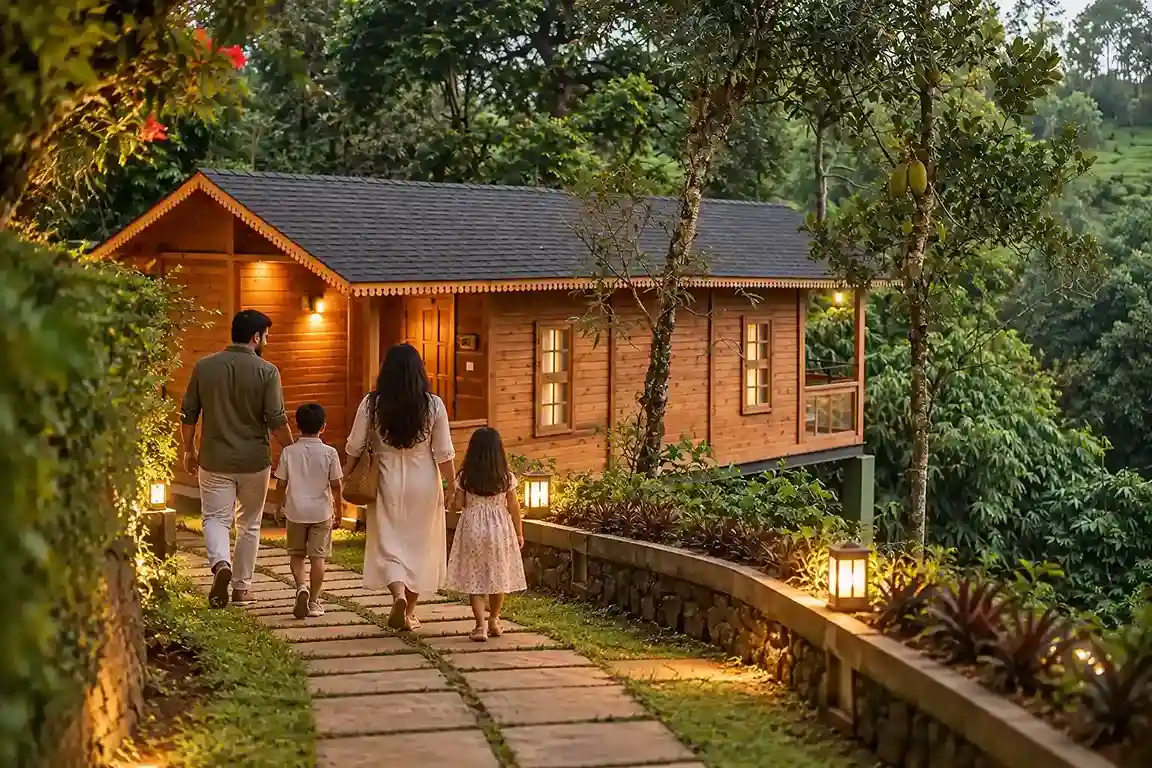
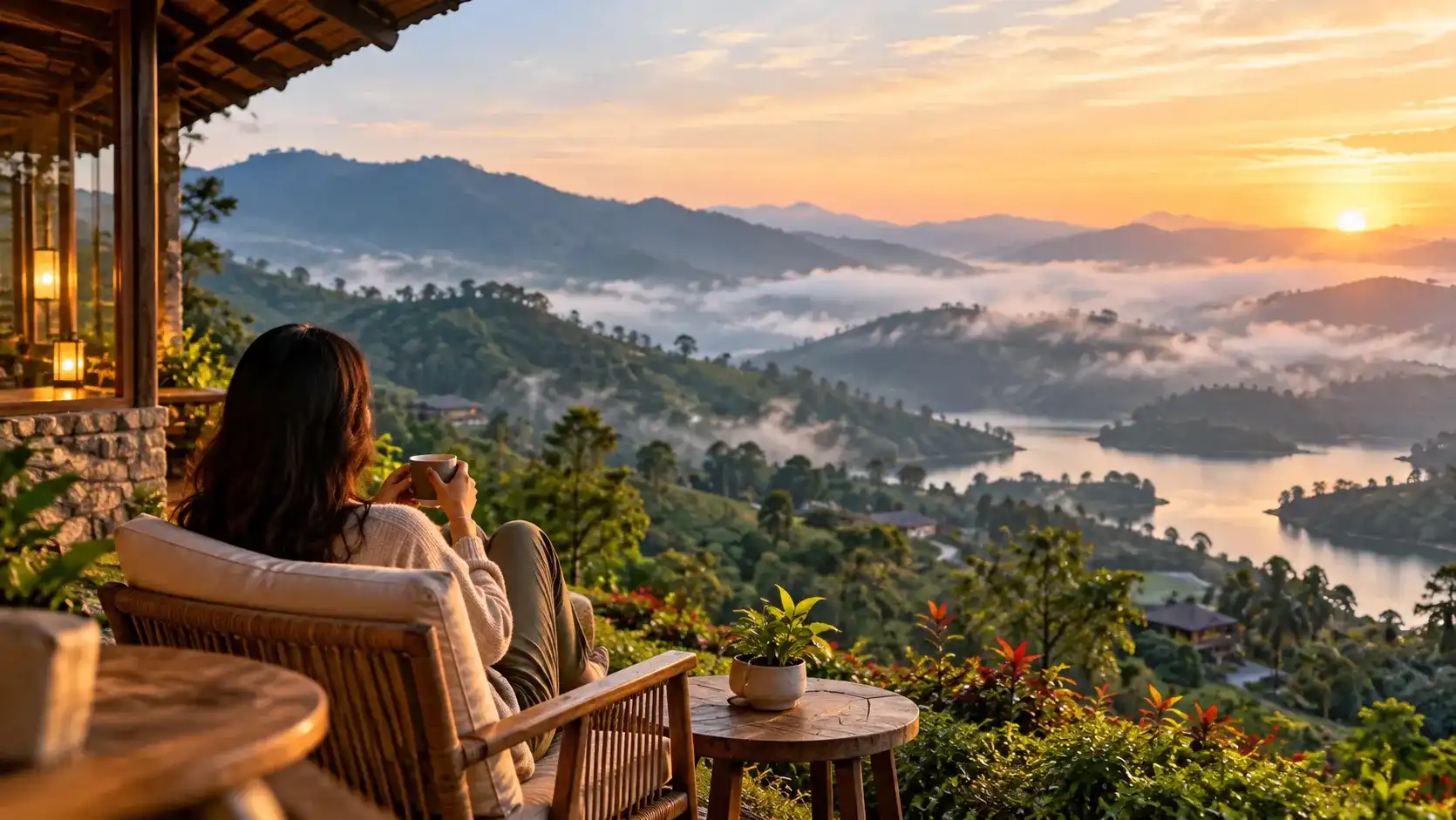
The estate spans tea, coffee, cardamom, and pepper cultivation across three distinct ecosystems, making it one of the most ecologically varied plantation stays in Idukki. Mornings bring mist across the ridge, afternoons open into long views over the high-range valley, and evenings are cool enough to require a wrap on the veranda.
Book your stay at Misty Mountain Experience, Kuttikkanam, and experience a working Kerala tea plantation from the inside.
Frequently Asked Questions About Kerala Tea Plantations
What is the best Kerala tea plantation destination for first-time visitors?
Munnar is the most accessible and well-developed Kerala tea plantation destination for first-time visitors. It has the widest range of accommodation, established factory tours, and a well-maintained visitor infrastructure. For travellers who prefer a quieter and less commercial introduction to plantation tourism, Kuttikkanam in Idukki offers a comparable landscape experience with fewer crowds.
Can I visit a Kerala tea plantation without a tour package?
Yes. Most Kerala tea plantation destinations are independently accessible by road and do not require a pre-booked tour. Individual plantation walks, factory tours, and tea tasting sessions can be arranged directly at estates or through accommodation providers on arrival. However, booking accommodation in advance is recommended during the October to February peak season, particularly for stays within working estate properties.
Which Kerala tea plantation is best for wildlife and birding?
Wayanad and Nelliampathy are the strongest Kerala tea plantation destinations for wildlife and birding because their estates border protected forest areas. Kuttikkanam and Vagamon in Idukki are also good options for birding, with estate-forest interfaces that support a range of endemic and migratory species. Eravikulam National Park adjacent to the Munnar plantations is the best location for seeing the Nilgiri Tahr.
What is the elevation of Kerala tea plantations?
Kerala tea plantations are cultivated at elevations broadly between 1,000 and 2,600 metres above sea level. Kolukkumalai near Munnar, at approximately 2,400 metres (7,900 feet), is the world's highest tea estate. Most visitor-facing plantations in Munnar sit between 1,400 and 1,800 metres. Kuttikkanam estates are at around 1,065 metres (3,500 feet), while Vagamon plantations range between 900 and 1,200 metres.
Is Kuttikkanam a good destination for tea plantation tourism?
Yes. Kuttikkanam is one of Idukki's most scenic and underrated Kerala tea plantation destinations. Located at 3,500 feet above sea level, it offers extensive tea and cardamom estate landscapes, mist-covered ridge views, and a quieter environment than Munnar. Misty Mountain Plantation Resort, set within a 600-acre working estate in Kuttikkanam, offers tea factory tours, guided plantation walks, and estate accommodation, making it one of the most complete plantation stays in the Idukki high ranges.
What are the different types of tea produced at Kerala tea plantations?
Kerala tea plantations produce both CTC (Crush, Tear, Curl) and orthodox varieties. CTC tea, which produces strong, fast-brewing leaf best suited to milk tea, dominates commercial production. Orthodox teas, processed using traditional rolling methods, produce more nuanced leaf grades including Flowery Orange Pekoe (FOP) and Broken Orange Pekoe (BOP). Some estates in Munnar and Kuttikkanam produce specialty green teas and white teas in smaller volumes, particularly on organically managed sections of the estate.
What should I pack for a Kerala tea plantation visit?
For a Kerala tea plantation visit, pack light, layered clothing suitable for cool mornings and mild afternoons. Include a waterproof jacket or poncho if visiting during or around the monsoon season. Sturdy, closed-toe walking shoes are essential for plantation trails. A pair of binoculars is useful for birding within and around estate boundaries. Carry cash for tea purchases at estate shops, as many plantation-level outlets do not accept card payments.