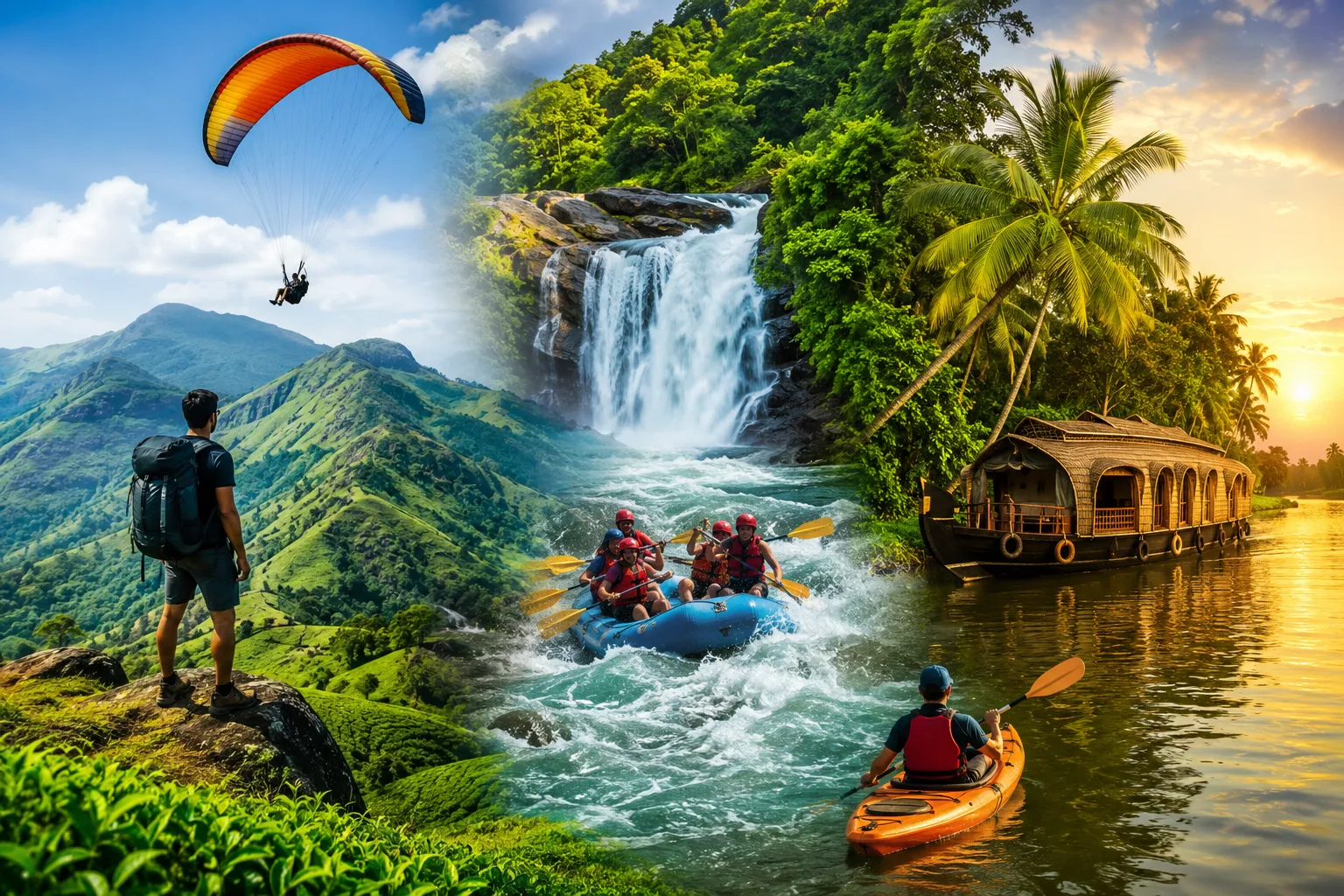
Kerala is far more than its celebrated backwater houseboats and spice-scented hill stations. Beneath its postcard beauty lies one of India's most diverse and accessible destinations for adventure tourism. Adventure tourism in Kerala spans an extraordinary range of terrain from the mist-covered peaks of the Western Ghats in the north and east, to the huge network of backwater channels in the south, and a 590-kilometre Arabian Sea coastline that remains largely untamed. From trekking and mountain biking to kayaking, paragliding, and white-water rafting, Kerala offers experiences that are genuinely thrilling rather than merely scenic.
What sets adventure tourism in Kerala apart from other Indian states is the proximity of these diverse landscapes to one another. Within a single weekend, a traveller based in Kochi can go from a white-water rafting session on the Periyar River to a houseboat kayak trip through the Vembanad backwaters, or from a high-altitude trek in the Munnar cardamom estates to a sea kayak launch off Marari beach. This density of opportunity, combined with a year-round tourism infrastructure that is more developed than in most parts of peninsular India, makes Kerala a compelling destination for both first-time adventure travellers and experienced outdoor enthusiasts.
Trekking the Western Ghats: Trails from Easy Walks to Serious Expeditions
The Western Ghats, designated a UNESCO World Heritage Site in 2012, form the backbone of adventure tourism in Kerala. Stretching across the eastern edge of the state, the Ghats contain some of the most biodiverse tropical forests in the world and offer trekking terrain that ranges from accessible half-day nature walks to multi-day wilderness traverses.
Munnar and the High-Range Trails
At an elevation of around 1,600 metres above sea level, Munnar sits at the centre of Kerala's high-altitude trekking landscape. Chokramudi Peak (1,640 m), Meesapulimala (2,640 m, the second highest peak in South India), and Anamudi (2,695 m, the highest peak in South India) are all accessible from Munnar with varying levels of permit requirements and physical demand. Anamudi lies within Eravikulam National Park and requires a permit from the Kerala Forest Department. The Shola grassland ecosystem encountered on these trails is found nowhere else in the world and gives high-altitude Kerala trekking a visual character that is entirely distinct from Himalayan routes.
Wayanad: Forests, Caves, and Waterfalls
Wayanad district in northern Kerala offers a denser, more forested trekking experience. Chembra Peak (2,100 m), famous for the heart-shaped lake near its summit, is one of the most photographed trekking destinations in South India. Banasura Hill, the second highest peak in Wayanad, and the trails around Thirunelli are equally rewarding. Edakkal Caves, though a heritage site rather than a wilderness trek, adds archaeological depth to a Wayanad adventure itinerary. Wildlife encounters including elephant, gaur, and leopard are documented regularly in Wayanad, making forest treks here simultaneously exhilarating and requiring experienced local guide accompaniment at all times.
Kuttikkanam: The Emerging Hub for Adventure Tourism in Kerala's Midlands
Kuttikkanam, has emerged in recent years as one of the most versatile adventure tourism hubs in Kerala. Unlike the better-known high-altitude destinations of Munnar and Wayanad, Kuttikkanam occupies a midland position that makes it accessible from both the lowland coast and the high ranges, giving it a unique catchment of terrain for outdoor activities.
The area around Kuttikkanam encompasses plantation forests of cardamom, coffee, and tea. The cool climate, which is reliable even in summer months when lower Kerala grows uncomfortably hot, makes it a preferred base for multi-activity weekend itineraries from cities like Kochi, Thiruvananthapuram, and Kozhikode.
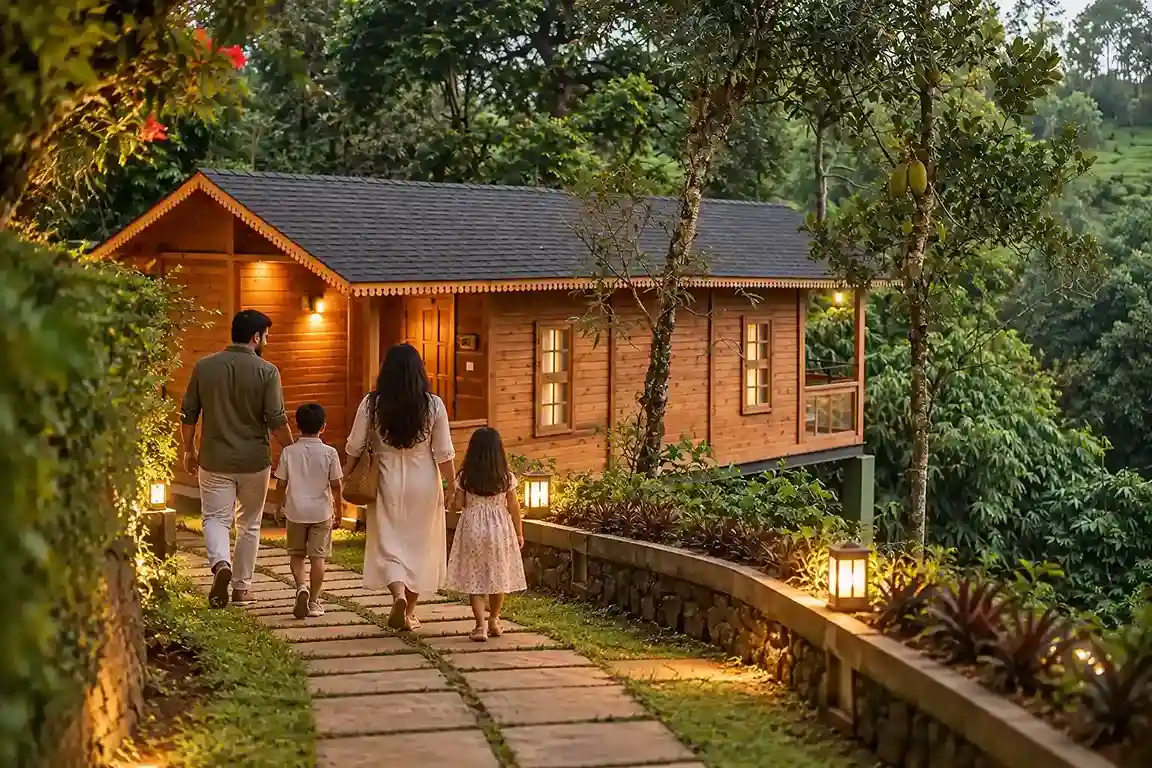
If Kuttikkanam is on your adventure tourism itinerary, Misty Mountain Plantation Resort offers an exceptional base for your highland explorations. Nestled within a working plantation estate, the resort combines comfortable accommodation with direct access to the trails, streams, and forest paths that make Kuttikkanam one of Kerala's most exciting emerging adventure destinations.
Water-Based Adventures: Rivers, Backwaters, and the Arabian Sea
White-Water Rafting on the Periyar and Chaliyar
White-water rafting is among the most popular forms of adventure tourism in Kerala, and the rivers that descend from the Western Ghats to the coastal plains provide consistently exciting rapids during and immediately after the monsoon season (June to October). The Periyar River near Thekkady and the section near Kallar offer Grade 2 to Grade 3 rapids suitable for beginners and intermediate rafters. The Chaliyar River near Nilambur in Malappuram district provides a longer stretch of navigable rapids with stretches of Grade 3 intensity. Both rivers pass through dense riparian forest, making the visual experience as memorable as the physical one.
Kayaking and Canoeing in the Backwaters
Adventure tourism in Kerala's backwaters goes well beyond passive houseboat cruises. The Vembanad Lake and the connected canal systems of Alleppey (Alappuzha), Kumarakom, and Kuttanad offer some of the finest kayaking terrain in South Asia. Solo kayakers and canoeing groups can navigate narrow village canals that motorised houseboats cannot access, arriving at fishing villages, paddy islands, and bird-nesting sites that remain largely undisturbed by mainstream tourism. Sunrise and early morning kayak departures from Alleppey are particularly rewarding, as the light on the paddy fields and the activity of local fishermen provide a richly textured adventure experience.
Sea Kayaking and Surfing on the Malabar Coast
The northern Malabar coast around Bekal and Kannur, and the stretches near Varkala and Kovalam in the south, are steadily developing a sea kayaking and surfing culture. Varkala's cliff-backed cove has hosted the Kerala Surf Fest, and several surf schools operate there year-round. Bekal's sheltered bay is a less-known but rewarding venue for coastal kayaking. For advanced sea kayakers, the exposed headlands around Kannur offer conditions equivalent to moderate coastal touring in Scotland or New Zealand during post-monsoon months.
Cycling and Mountain Biking: Plantation Roads and Forest Tracks
Adventure tourism in Kerala has expanded significantly into cycling in recent years. The plantation roads of Munnar, Vagamon, and Kuttikkanam are ideal for both road cycling and moderate mountain biking, with little motorised traffic, consistent gradient changes, and the visual backdrop of rolling tea and cardamom estates. Several cycling tour operators now offer guided rides that include off-road descents on forest tracks alongside tarmac ascents, creating a genuinely mixed-terrain cycling experience.
The Great Kerala Cycle Challenge, held annually, draws hundreds of amateur and competitive cyclists to route stages across the Ghats and coastal lowlands. For independent cyclists, the route from Munnar to Thekkady via Top Station and the forest roads of Periyar Tiger Reserve offers one of the most scenic and physically demanding long-distance cycling routes in South India.
Paragliding, Zip-Lining, and Rock Climbing
Aerial adventure tourism in Kerala is centred on sites in the Western Ghats that offer consistent thermal updrafts from the valley floors below. Vagamon, a high plateau in Idukki district, is the most established paragliding destination in the state, with tandem flights operated by certified instructors for beginners and independent soaring sessions for licensed pilots during the cooler dry months of November through February. The views from altitude over the Pathanamthitta and Kottayam valley systems below are among the most spectacular in peninsular India.
Rock climbing is offered on natural granite outcrops near Malampuzha in Palakkad and on the rocky escarpments around Bekal Fort in Kasaragod. Artificial climbing walls exist at several urban adventure centres in Kochi and Thiruvananthapuram for training and warm-up. Zip-lining operations are widespread across Wayanad, Athirapally, and the hills around Kuttikkanam, offering accessible aerial experiences for families and first-time adventure tourists.
Best Time for Adventure Tourism in Kerala
Timing is important for adventure tourism in Kerala because the monsoon season, while ecologically vital, affects accessibility and safety across many activities:
October to February: The peak season for most land-based adventure activities including trekking, cycling, paragliding, and rock climbing. Trails are clear, rivers are at navigable post-monsoon levels, and temperatures at altitude are cool and comfortable.
March to May: Acceptable for high-altitude trekking (Munnar, Wayanad) before the pre-monsoon heat builds. Backwater kayaking and coastal activities remain viable. Kuttikkanam and Vagamon are pleasant given their elevation.
June to September: Active monsoon season. White-water rafting reaches its peak intensity and is at its most exciting. Trekking in dense forest can be rewarding but requires experienced guides and water-resistant gear. Many aerial activities are suspended due to cloud and wind conditions.
Responsible Adventure Tourism in Kerala
As adventure tourism in Kerala grows, pressure on fragile ecosystems in protected areas like Eravikulam, Periyar Tiger Reserve, and Silent Valley has increased measurably. The Kerala Forest Department and Kerala Tourism together enforce permit systems, group size limits, and designated trail protocols to manage this impact. Responsible adventure tourists should:
Book trekking permits in advance through official Kerala Forest Department channels for all protected area trails
Use certified local guides who understand both trail safety and ecological sensitivity
Follow Leave No Trace principles, particularly in sensitive Shola and grassland ecosystems
Choose operators who employ local staff and contribute economically to the communities surrounding their operating areas
Avoid single-use plastic on trails and in waterways, where waste accumulation has become a documented problem in popular trekking zones
Kerala Is Built for Adventure
Adventure tourism in Kerala is not a niche add-on to the state's mainstream tourism offer. It is woven into the geography itself. From the Himalayan-scale biodiversity of the Western Ghats to the serene but physically engaging backwater paddling routes of the coastal lowlands, Kerala delivers adventure experiences that are genuine, varied, and available across a broad range of fitness levels and budgets.
Whether you are planning a high-altitude trek to Meesapulimala, a multi-day kayak through Kuttanad's paddy canals, a white-water run on the monsoon-fed Chaliyar, or a paragliding session over the Vagamon plateau, Kerala's terrain will meet your ambition.
And if your adventure itinerary takes you through the highlands of Kuttikkanam, one of Kerala's most exciting emerging destinations for outdoor exploration, make Misty Mountain Plantation Resort your base. With plantation trails, cool misty mornings, and the authentic atmosphere of Kerala's working hill estates, it is the ideal place to rest, recharge, and plan your next day's adventure.
Plan Your Kerala Adventure from Kuttikkanam
Misty Mountain Plantation Resort in Kuttikkanam is your gateway to the best of adventure tourism in Kerala's midland highlands. Surrounded by plantation estates and within reach of the region's finest trekking, cycling, and nature trails, the resort gives you everything you need to make your Kerala adventure holiday truly unforgettable.
Contact Misty Mountain Plantation Resort today to book your stay and start planning your Kerala adventure.
Kerala is far more than its celebrated backwater houseboats and spice-scented hill stations. Beneath its postcard beauty lies one of India's most diverse and accessible destinations for adventure tourism. Adventure tourism in Kerala spans an extraordinary range of terrain from the mist-covered peaks of the Western Ghats in the north and east, to the huge network of backwater channels in the south, and a 590-kilometre Arabian Sea coastline that remains largely untamed. From trekking and mountain biking to kayaking, paragliding, and white-water rafting, Kerala offers experiences that are genuinely thrilling rather than merely scenic.
What sets adventure tourism in Kerala apart from other Indian states is the proximity of these diverse landscapes to one another. Within a single weekend, a traveller based in Kochi can go from a white-water rafting session on the Periyar River to a houseboat kayak trip through the Vembanad backwaters, or from a high-altitude trek in the Munnar cardamom estates to a sea kayak launch off Marari beach. This density of opportunity, combined with a year-round tourism infrastructure that is more developed than in most parts of peninsular India, makes Kerala a compelling destination for both first-time adventure travellers and experienced outdoor enthusiasts.
Trekking the Western Ghats: Trails from Easy Walks to Serious Expeditions
The Western Ghats, designated a UNESCO World Heritage Site in 2012, form the backbone of adventure tourism in Kerala. Stretching across the eastern edge of the state, the Ghats contain some of the most biodiverse tropical forests in the world and offer trekking terrain that ranges from accessible half-day nature walks to multi-day wilderness traverses.
Munnar and the High-Range Trails
At an elevation of around 1,600 metres above sea level, Munnar sits at the centre of Kerala's high-altitude trekking landscape. Chokramudi Peak (1,640 m), Meesapulimala (2,640 m, the second highest peak in South India), and Anamudi (2,695 m, the highest peak in South India) are all accessible from Munnar with varying levels of permit requirements and physical demand. Anamudi lies within Eravikulam National Park and requires a permit from the Kerala Forest Department. The Shola grassland ecosystem encountered on these trails is found nowhere else in the world and gives high-altitude Kerala trekking a visual character that is entirely distinct from Himalayan routes.
Wayanad: Forests, Caves, and Waterfalls
Wayanad district in northern Kerala offers a denser, more forested trekking experience. Chembra Peak (2,100 m), famous for the heart-shaped lake near its summit, is one of the most photographed trekking destinations in South India. Banasura Hill, the second highest peak in Wayanad, and the trails around Thirunelli are equally rewarding. Edakkal Caves, though a heritage site rather than a wilderness trek, adds archaeological depth to a Wayanad adventure itinerary. Wildlife encounters including elephant, gaur, and leopard are documented regularly in Wayanad, making forest treks here simultaneously exhilarating and requiring experienced local guide accompaniment at all times.
Kuttikkanam: The Emerging Hub for Adventure Tourism in Kerala's Midlands
Kuttikkanam, has emerged in recent years as one of the most versatile adventure tourism hubs in Kerala. Unlike the better-known high-altitude destinations of Munnar and Wayanad, Kuttikkanam occupies a midland position that makes it accessible from both the lowland coast and the high ranges, giving it a unique catchment of terrain for outdoor activities.
The area around Kuttikkanam encompasses plantation forests of cardamom, coffee, and tea. The cool climate, which is reliable even in summer months when lower Kerala grows uncomfortably hot, makes it a preferred base for multi-activity weekend itineraries from cities like Kochi, Thiruvananthapuram, and Kozhikode.
If Kuttikkanam is on your adventure tourism itinerary, Misty Mountain Plantation Resort offers an exceptional base for your highland explorations. Nestled within a working plantation estate, the resort combines comfortable accommodation with direct access to the trails, streams, and forest paths that make Kuttikkanam one of Kerala's most exciting emerging adventure destinations.
Water-Based Adventures: Rivers, Backwaters, and the Arabian Sea
White-Water Rafting on the Periyar and Chaliyar
White-water rafting is among the most popular forms of adventure tourism in Kerala, and the rivers that descend from the Western Ghats to the coastal plains provide consistently exciting rapids during and immediately after the monsoon season (June to October). The Periyar River near Thekkady and the section near Kallar offer Grade 2 to Grade 3 rapids suitable for beginners and intermediate rafters. The Chaliyar River near Nilambur in Malappuram district provides a longer stretch of navigable rapids with stretches of Grade 3 intensity. Both rivers pass through dense riparian forest, making the visual experience as memorable as the physical one.
Kayaking and Canoeing in the Backwaters
Adventure tourism in Kerala's backwaters goes well beyond passive houseboat cruises. The Vembanad Lake and the connected canal systems of Alleppey (Alappuzha), Kumarakom, and Kuttanad offer some of the finest kayaking terrain in South Asia. Solo kayakers and canoeing groups can navigate narrow village canals that motorised houseboats cannot access, arriving at fishing villages, paddy islands, and bird-nesting sites that remain largely undisturbed by mainstream tourism. Sunrise and early morning kayak departures from Alleppey are particularly rewarding, as the light on the paddy fields and the activity of local fishermen provide a richly textured adventure experience.
Sea Kayaking and Surfing on the Malabar Coast
The northern Malabar coast around Bekal and Kannur, and the stretches near Varkala and Kovalam in the south, are steadily developing a sea kayaking and surfing culture. Varkala's cliff-backed cove has hosted the Kerala Surf Fest, and several surf schools operate there year-round. Bekal's sheltered bay is a less-known but rewarding venue for coastal kayaking. For advanced sea kayakers, the exposed headlands around Kannur offer conditions equivalent to moderate coastal touring in Scotland or New Zealand during post-monsoon months.
Cycling and Mountain Biking: Plantation Roads and Forest Tracks
Adventure tourism in Kerala has expanded significantly into cycling in recent years. The plantation roads of Munnar, Vagamon, and Kuttikkanam are ideal for both road cycling and moderate mountain biking, with little motorised traffic, consistent gradient changes, and the visual backdrop of rolling tea and cardamom estates. Several cycling tour operators now offer guided rides that include off-road descents on forest tracks alongside tarmac ascents, creating a genuinely mixed-terrain cycling experience.
The Great Kerala Cycle Challenge, held annually, draws hundreds of amateur and competitive cyclists to route stages across the Ghats and coastal lowlands. For independent cyclists, the route from Munnar to Thekkady via Top Station and the forest roads of Periyar Tiger Reserve offers one of the most scenic and physically demanding long-distance cycling routes in South India.
Paragliding, Zip-Lining, and Rock Climbing
Aerial adventure tourism in Kerala is centred on sites in the Western Ghats that offer consistent thermal updrafts from the valley floors below. Vagamon, a high plateau in Idukki district, is the most established paragliding destination in the state, with tandem flights operated by certified instructors for beginners and independent soaring sessions for licensed pilots during the cooler dry months of November through February. The views from altitude over the Pathanamthitta and Kottayam valley systems below are among the most spectacular in peninsular India.
Rock climbing is offered on natural granite outcrops near Malampuzha in Palakkad and on the rocky escarpments around Bekal Fort in Kasaragod. Artificial climbing walls exist at several urban adventure centres in Kochi and Thiruvananthapuram for training and warm-up. Zip-lining operations are widespread across Wayanad, Athirapally, and the hills around Kuttikkanam, offering accessible aerial experiences for families and first-time adventure tourists.
Best Time for Adventure Tourism in Kerala
Timing is important for adventure tourism in Kerala because the monsoon season, while ecologically vital, affects accessibility and safety across many activities:
October to February: The peak season for most land-based adventure activities including trekking, cycling, paragliding, and rock climbing. Trails are clear, rivers are at navigable post-monsoon levels, and temperatures at altitude are cool and comfortable.
March to May: Acceptable for high-altitude trekking (Munnar, Wayanad) before the pre-monsoon heat builds. Backwater kayaking and coastal activities remain viable. Kuttikkanam and Vagamon are pleasant given their elevation.
June to September: Active monsoon season. White-water rafting reaches its peak intensity and is at its most exciting. Trekking in dense forest can be rewarding but requires experienced guides and water-resistant gear. Many aerial activities are suspended due to cloud and wind conditions.
Responsible Adventure Tourism in Kerala
As adventure tourism in Kerala grows, pressure on fragile ecosystems in protected areas like Eravikulam, Periyar Tiger Reserve, and Silent Valley has increased measurably. The Kerala Forest Department and Kerala Tourism together enforce permit systems, group size limits, and designated trail protocols to manage this impact. Responsible adventure tourists should:
Book trekking permits in advance through official Kerala Forest Department channels for all protected area trails
Use certified local guides who understand both trail safety and ecological sensitivity
Follow Leave No Trace principles, particularly in sensitive Shola and grassland ecosystems
Choose operators who employ local staff and contribute economically to the communities surrounding their operating areas
Avoid single-use plastic on trails and in waterways, where waste accumulation has become a documented problem in popular trekking zones
Kerala Is Built for Adventure
Adventure tourism in Kerala is not a niche add-on to the state's mainstream tourism offer. It is woven into the geography itself. From the Himalayan-scale biodiversity of the Western Ghats to the serene but physically engaging backwater paddling routes of the coastal lowlands, Kerala delivers adventure experiences that are genuine, varied, and available across a broad range of fitness levels and budgets.
Whether you are planning a high-altitude trek to Meesapulimala, a multi-day kayak through Kuttanad's paddy canals, a white-water run on the monsoon-fed Chaliyar, or a paragliding session over the Vagamon plateau, Kerala's terrain will meet your ambition.
And if your adventure itinerary takes you through the highlands of Kuttikkanam, one of Kerala's most exciting emerging destinations for outdoor exploration, make Misty Mountain Plantation Resort your base. With plantation trails, cool misty mornings, and the authentic atmosphere of Kerala's working hill estates, it is the ideal place to rest, recharge, and plan your next day's adventure.
Plan Your Kerala Adventure from Kuttikkanam
Misty Mountain Plantation Resort in Kuttikkanam is your gateway to the best of adventure tourism in Kerala's midland highlands. Surrounded by plantation estates and within reach of the region's finest trekking, cycling, and nature trails, the resort gives you everything you need to make your Kerala adventure holiday truly unforgettable.
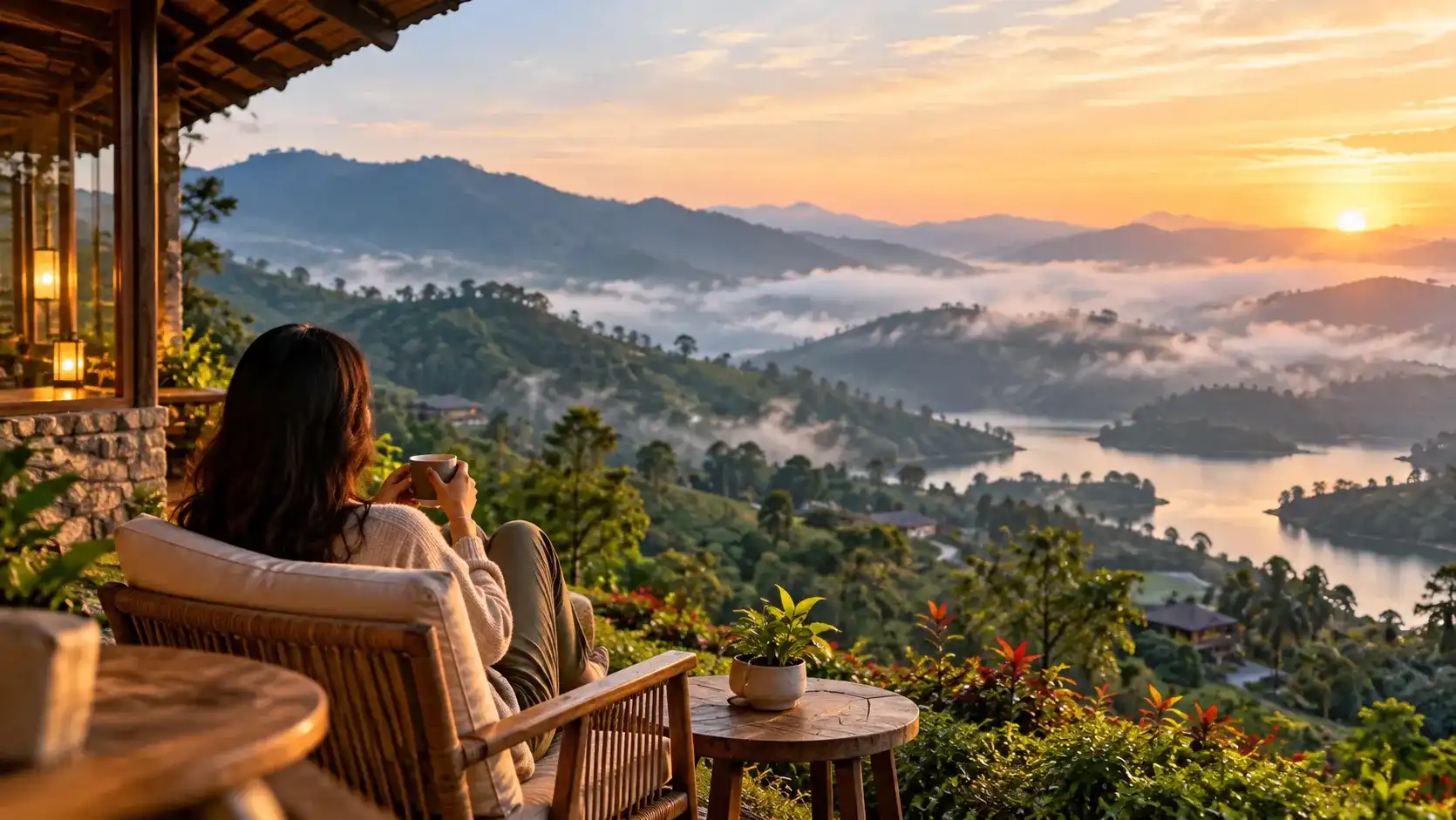
Contact Misty Mountain Plantation Resort today to book your stay and start planning your Kerala adventure.