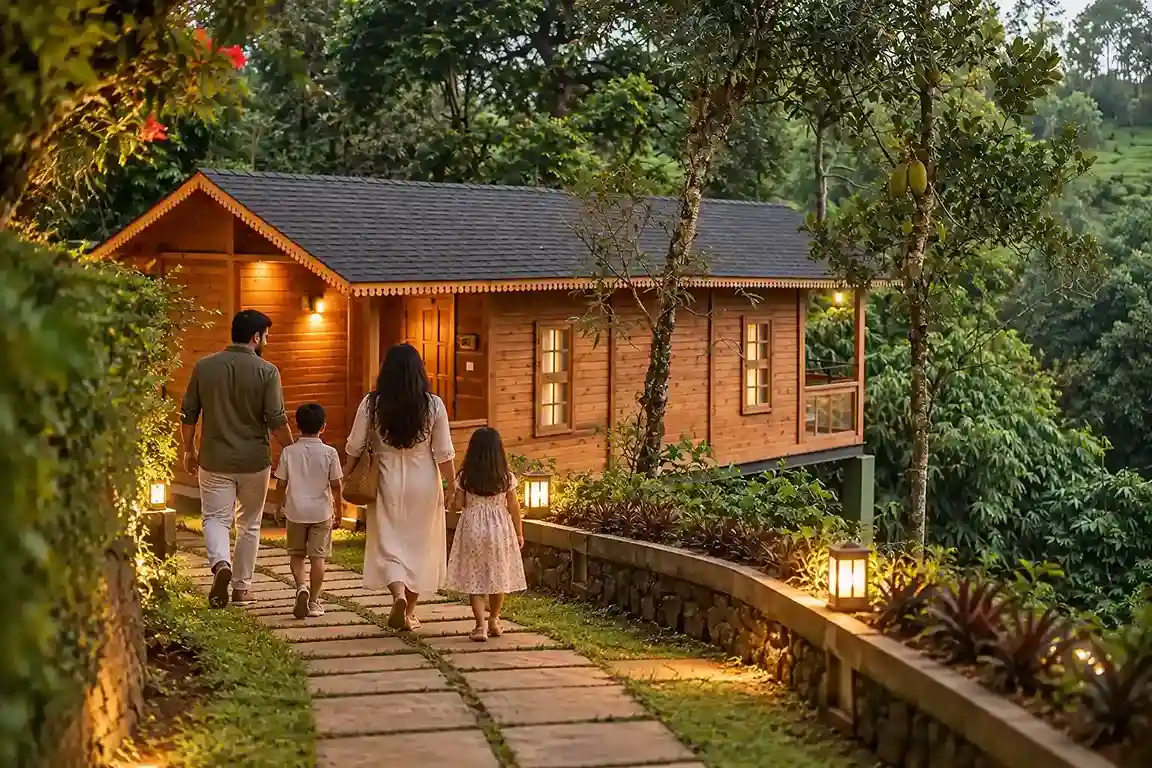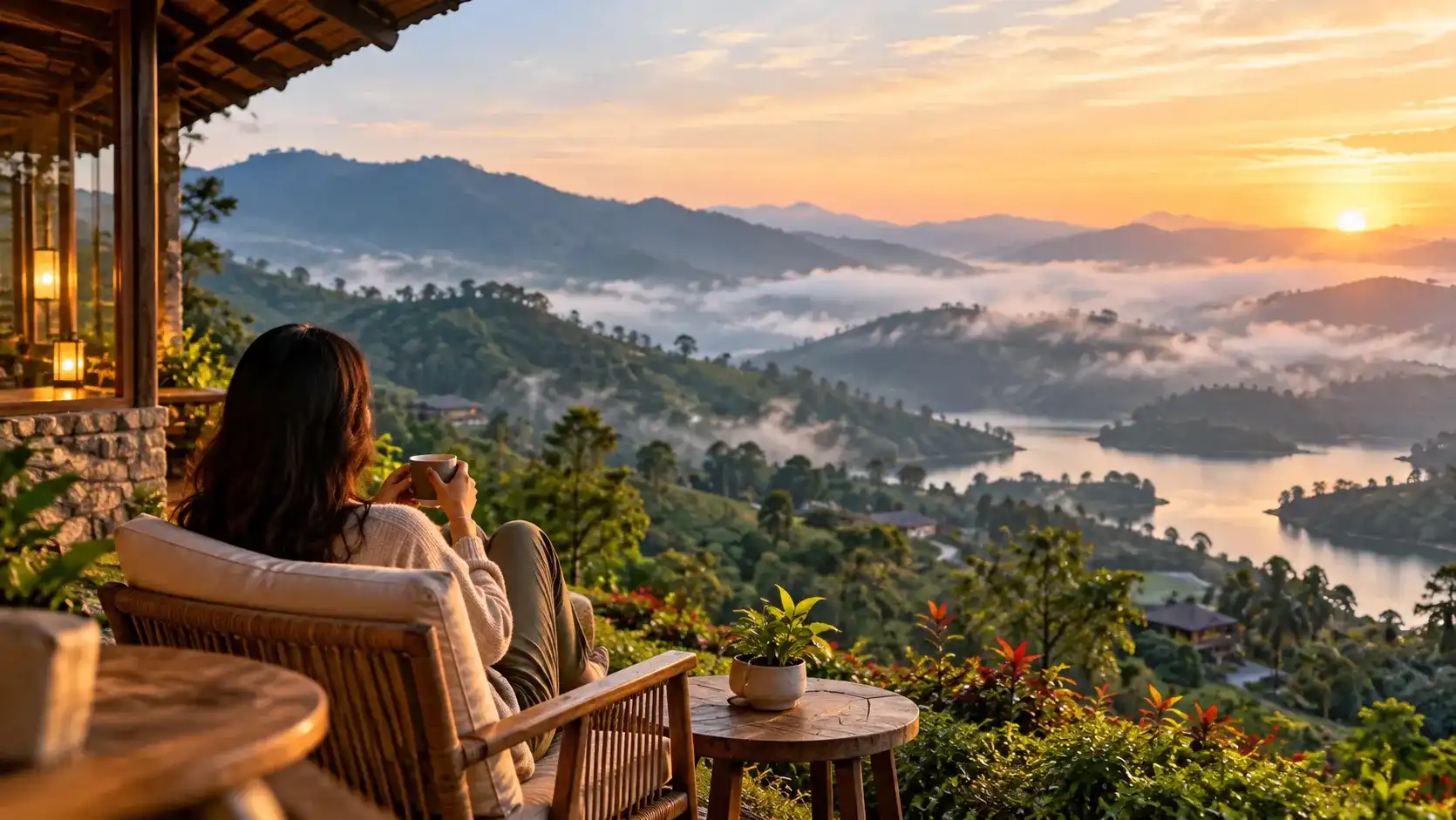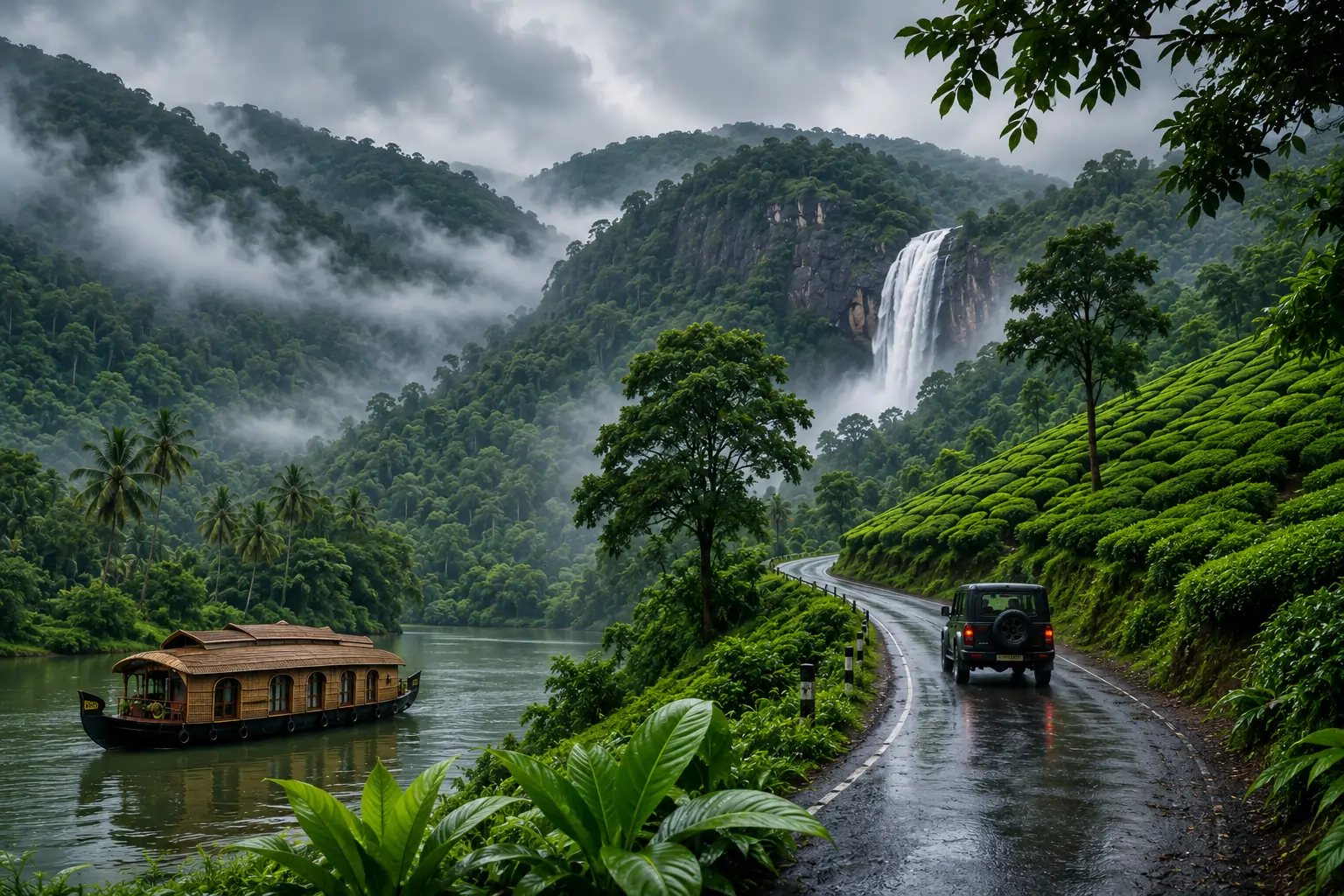
Monsoon tourism in Kerala occupies a category of its own in Indian travel. Between June and September, the southwest monsoon transforms the state into something that resists easy description. Then, from October through November, the northeast monsoon arrives, extending the season with a gentler, steadier rain that reshapes the coast and backwaters in its own way.Kerala during monsoon offers travellers a unique opportunity to experience the state's landscapes, culture, and natural beauty in their most vibrant form.
For most of its history, the monsoon season was considered Kerala's off-season for tourism. That perception has shifted decisively. Monsoon tourism in Kerala is now a defined and growing travel segment, drawing travellers who specifically want the drama of rain-fed landscapes, the affordability of off-peak rates, and the Ayurvedic tradition that considers the monsoon the optimal window for therapeutic treatment.
Kerala's Two Monsoon Seasons
Kerala is one of the few states in India that experiences two distinct monsoon seasons, and understanding both is essential for planning a monsoon visit.
Southwest Monsoon (June to September): Kerala receives the southwest monsoon first among Indian states, typically arriving around June 1. This is the primary and most dramatic monsoon season, characterized by sustained, heavy rainfall across hill stations, forests, and the coast. Waterfalls are at peak flow, tea estates are at their deepest green, and Ayurveda practitioners consider this the optimal window for Karkidakam rejuvenation therapies.
Northeast Monsoon (October to November): The northeast monsoon, known as the retreating monsoon, arrives after the southwest season withdraws. It brings moderate and often intermittent rainfall, primarily affecting the eastern districts and the coast. The landscape retains its post-monsoon richness, rivers remain full, and accommodation rates continue to offer off-peak value. This season is particularly suitable for backwater trips, coastal travel, and Ayurveda that extends into the cooler months.
Why Monsoon Is a Best Time to Visit Kerala
Landscape quality: Tea estates, paddy fields, forest canopy, and rivers are at maximum intensity of colour and flow.
Waterfalls: Most of Kerala's waterfalls are seasonal or depleted outside the monsoon. Between June and September they reach full flow.
Ayurveda: Kerala's traditional practitioners consider the monsoon (Karkidakam) the most effective period for panchakarma and rejuvenation therapies.
Pricing and crowds: Monsoon is classified as off-peak, meaning accommodation, houseboats, and packages run 30 to 50 percent lower than peak season.
Agricultural calendar: Paddy sowing during the early monsoon produces some of Kerala's most atmospheric rural images.
Quick Reference: Kerala's Best Monsoon Destinations
Destination | Ideal For | Must-Visits | Top Activities | Best Months | Monsoon Vibe |
|---|---|---|---|---|---|
Munnar | Nature lovers, photographers | Attukal Falls, Tea estates | Estate walks, photography | June-Sep | Misty tea country |
Wayanad | Adventurers, nature seekers | Soochipara, Meenmutty Falls | Forest walks, cave visits | July-Sep | Dense rainforest |
Alleppey | Couples, families | Punnamada Lake, backwaters | Houseboat stays, Boat Race | June-Sep | Rain on backwaters |
Vagamon | Couples, backpackers | Vagamon Meadows, Pine Hill | Hiking, meadow walks | June-Aug | Cloud-covered meadows |
Kuttikkanam | Couples, retreat seekers | Valanjanganam Falls, estates | Jeep safari, estate walks | June-Sep | Plantation immersion |
Thekkady | Wildlife enthusiasts | Periyar Lake, spice gardens | Boat safaris, plantation tours | June-Sep | Periyar in the rain |
Kumarakom | Couples, luxury travellers | Vembanad Lake, backwaters | Houseboat, birdwatching | June-Sep | Still lake monsoon |
Kovalam | Wellness seekers, couples | Lighthouse Beach, Ayurveda centres | Panchakarma, beach walks | June-Sep | Ayurveda peak season |
Varkala | Solo travellers, yogis | Cliff Beach, Papanasam | Yoga, cliff walks, Ayurveda | June-Aug | Cliff coast drama |
Athirappilly | Families, nature lovers | Athirappilly Falls, Vazhachal | Waterfall trekking, birding | July-Sep | India's Niagara at peak |
Best Destinations for Monsoon Tourism in Kerala
1. Munnar, Idukki

Munnar is one of the most visited destinations in Kerala year-round, but the monsoon transforms it into a different kind of experience. The tea estates absorb the rain and produce a shade of green that photographers travel specifically to capture. Waterfalls that are dry or reduced in summer, including Attukal and Lakkam Falls, return to full flow. Valleys fill with cloud, and mornings bring mist so dense that visibility drops to metres.
The town slows during the heavy monsoon, but that is part of the appeal. Eravikulam National Park closes for the season, but plantation walks, factory visits, and estate road drives are fully accessible and more scenic in rain conditions. Accommodation rates drop significantly from peak-season highs.
Ideal for: Nature lovers, photographers, and couples seeking misty hill country.
Must-Visits: Attukal Falls, Lakkam Falls, Mattupetty Dam, Tea Museum, estate roads.
Monsoon Activities: Tea estate walks, photography drives, factory tours, misty valley viewpoints.
Best Months: June to September (southwest monsoon); October for post-monsoon colour.
2. Wayanad

Wayanad in the monsoon is the closest Kerala gets to a genuine rainforest experience. The district's forests, bordering Nagarhole and Mudumalai reserves, receive heavy and sustained rainfall that transforms the landscape into dense, dripping green. Soochipara Falls and Meenmutty Falls, among the most impressive waterfalls in the state, are at their most powerful and visually dramatic between July and September.
Chembra Peak trek and most forest trails close during peak monsoon, but guided plantation walks, heritage village visits, and Edakkal Caves remain accessible. Wayanad's tribal cultural heritage adds a dimension that goes beyond scenery, with several communities here having harvest and rain-related traditions active during this period.
Ideal for: Adventure seekers, nature lovers, and those interested in tribal culture.
Must-Visits: Soochipara Falls, Meenmutty Falls, Edakkal Caves, Pookode Lake.
Monsoon Activities: Waterfall hikes, plantation walks, cave visits, heritage village tours.
Best Months: July to September for peak waterfall flow; October for calmer exploration.
3. Alleppey (Alappuzha)

Alleppey's backwaters have a specific character in the monsoon. The rain fills the paddy fields that border the canal network, blurring the line between water and land, and the overcast skies reduce the harsh midday light that makes summer photography difficult. Houseboat stays during the monsoon offer an intimate, atmospheric experience distinct from the busy peak-season circuit.
The Nehru Trophy Boat Race takes place on Punnamada Lake in August, making it one of the most culturally significant dates in the Kerala monsoon calendar. Alleppey also has a strong Ayurveda infrastructure with certified centres offering monsoon packages at accessible rates.
Ideal for: Honeymoon couples, families, and Ayurveda seekers.
Must-Visits: Punnamada Lake, Alleppey Beach, Krishnapuram Palace, backwater canals.
Monsoon Activities: Houseboat stays, Nehru Trophy Boat Race (August), Ayurvedic treatments, canal boat rides.
Best Months: June to September; August specifically for the Nehru Trophy Boat Race.
4. Vagamon, Idukki

Vagamon is a plateau at around 1,100 metres in Idukki district that combines open grasslands, pine forests, and tea estates. The monsoon changes its character completely: the grass meadows that are yellow-brown in summer turn vivid green, periodic mist covers the plateau and lifts to reveal sweeping valley views, and the streams that are dry for most of the year run fast and clear.
Vagamon is one of the least commercially developed hill station destinations in Kerala, which makes the monsoon experience quieter and more personal than Munnar. Paragliding pauses during the monsoon, but hiking through rain-soaked meadows and visiting tea estates in full-cloud conditions more than compensates.
Ideal for: Couples, backpackers, and those seeking off-the-beaten-path hill experiences.
Must-Visits: Vagamon Meadows, Pine Forest, Thangal Hill, Kurisumala Ashram.
Monsoon Activities: Meadow hiking, stream walks, photography, tea estate exploration.
Best Months: June to August for dramatic mist; September for clearer views between showers.
5. Kuttikkanam, Idukki

Kuttikkanam is a hill station in the Peermade territory of Idukki district, at 3,500 feet above sea level on the Kottayam to Kumily route. During the monsoon, it becomes one of the most atmospheric destinations for hill country tourism in the state. The tea, cardamom, and coffee estates deepen in colour, mist rolls thick across the ridges from morning to evening, and the Valanjanganam Waterfalls, a 75-foot seasonal cascade near NH 183 about 5 kilometres from the town, flows at full volume only between June and September.
The Misty Mountain Experience, set within a 600-acre working tea, coffee, and cardamom estate, is one of the few plantation stays where the monsoon experience is fully integrated into the property. Jeep safaris access hidden waterfalls active only during the rains, and the Teyla restaurant serves estate-grown meals with the sound of rain on the hillside.
Ideal for: Couples, retreat seekers, and nature lovers wanting a plantation immersion.
Must-Visits: Valanjanganam Waterfalls, Misty Mountain estate, tea factory, Peermade viewpoints.
Monsoon Activities: Jeep safaris to hidden waterfalls, estate walks, tea factory tours, dining at Teyla restaurant.
Best Months: June to September; July and August for peak mist and waterfall flow.
6. Thekkady (Periyar)

Thekkady during the monsoon offers a wildlife and spice plantation experience that is genuinely different from the peak-season visit. The Periyar Tiger Reserve receives heavy rainfall that fills the lake and rejuvenates the forest, increasing wildlife activity in the areas around water. Guided boat safaris on Periyar Lake continue through most of the monsoon and offer sightings of elephant, gaur, and deer coming to the lakeside.
The spice estates around Thekkady are at their most fragrant and visually dramatic during the rains. Cardamom and pepper flourish in the monsoon conditions, and guided spice garden walks take on an added sensory intensity when the air is cool and moist.
Ideal for: Wildlife enthusiasts, nature lovers, and spice plantation visitors.
Must-Visits: Periyar Lake, Periyar Tiger Reserve, Kumily spice markets, Abraham's Spice Garden.
Monsoon Activities: Boat safaris, bamboo rafting, spice plantation walks, village visits.
Best Months: June to September; wildlife activity peaks as the forest fills with water.
7. Kumarakom

Kumarakom sits on the banks of Vembanad Lake, the largest lake in Kerala, and the monsoon gives this backwater destination a quiet, cinematic quality that is absent in the busier peak season. The lake surface reflects overcast skies, the surrounding paddy fields fill to their edges, and the bird sanctuary draws migratory and resident species that are active through the rains.
Kumarakom is one of Kerala's premium backwater destinations, and the monsoon is when its properties offer their most significant value, with rates considerably lower than the December to February peak. Houseboat stays on Vembanad Lake during the monsoon offer seclusion and atmosphere that are unavailable at any other time of year.
Ideal for: Couples, luxury travellers, and birdwatching enthusiasts.
Must-Visits: Vembanad Lake, Kumarakom Bird Sanctuary, Pathiramanal Island.
Monsoon Activities: Houseboat stays, birdwatching, canoe trails, Ayurvedic retreats.
Best Months: June to September; October for the northeast monsoon extension.
8. Kovalam

Kovalam is Kerala's most internationally recognised coastal destination, and the monsoon transforms its purpose entirely. Rough seas make swimming unsuitable, but this is precisely when Kovalam's extensive Ayurveda infrastructure comes into its own. Karkidakam, the Malayalam month roughly corresponding to mid-July to mid-August, is considered the most auspicious and therapeutically effective period for panchakarma and rejuvenation treatments.
The open pores of the monsoon climate, the cool moist air, and the lower physiological stress of the season enhance the absorption of herbal oils according to traditional Ayurvedic science. Reputable centres in Kovalam fill their Karkidakam capacity months in advance. The dramatic monsoon sea from the cliffs above Lighthouse Beach is itself a spectacle worth the visit.
Ideal for: Wellness seekers, Ayurveda patients, and couples on retreat.
Must-Visits: Lighthouse Beach, Hawa Beach, Kovalam Ayurveda centres, Vizhinjam fishing harbour.
Monsoon Activities: Panchakarma treatments, Karkidakam rejuvenation packages, cliff walks, sunset viewing.
Best Months: Mid-July to mid-August for Karkidakam; June to September for off-peak Ayurveda.
9. Varkala

Varkala is Kerala's cliff-coast destination, and the monsoon gives it a dramatic, stripped-back character that is entirely different from its peak-season beach resort identity. The red laterite cliffs that define the Varkala shoreline are most striking when monsoon clouds hang low over the Arabian Sea. The beach is largely empty, the cliff-top path is quiet, and the town takes on a calm that attracts long-stay travellers seeking retreat.
Varkala has a well-established yoga and wellness scene, and the monsoon is when these studios and Ayurveda centres offer their best value and most focused programmes. The Papanasam Beach, considered sacred by Hindu tradition, maintains its ritual significance through the monsoon season.
Ideal for: Solo travellers, yoga practitioners, and those seeking quiet coastal retreat.
Must-Visits: Varkala Cliff, Papanasam Beach, Janardana Swami Temple, cliff-top cafes.
Monsoon Activities: Yoga retreats, Ayurvedic treatments, cliff walks, temple visits.
Best Months: June to August for dramatic seas; September as the coast begins to calm.
10. Athirappilly Falls

Athirappilly Falls on the Chalakudy River in Thrissur district is the largest waterfall in Kerala and one of the most spectacular in India. During the monsoon, it reaches its maximum volume and roar, with the full width of the falls active and the surrounding Vazhachal forest at peak green. It is one of the few destinations where the monsoon experience is objectively superior to any other time of year.
The Vazhachal Falls, located about 5 kilometres from Athirappilly, is also at full flow through the monsoon. The forest between the two falls is among the best birdwatching territory in Kerala, with several hornbill species, Malabar giant squirrel, and other wildlife visible through the season. The route from Thrissur passes through the Sholayar ranges, which are themselves atmospheric in monsoon cloud.
Ideal for: Families, nature lovers, waterfall chasers, and birdwatchers.
Must-Visits: Athirappilly Falls, Vazhachal Falls, Charpa Falls, Sholayar Dam viewpoint.
Monsoon Activities: Waterfall viewing, birdwatching, forest walks, photography.
Best Months: July to September for maximum waterfall volume; visit on weekdays to avoid crowds.
Places to Avoid or Skip in Monsoon
Although Kerala during monsoon offers lush landscapes and memorable experiences, heavy rainfall can make certain destinations and activities less suitable during periods of intense weather. Rather than avoiding these places throughout the season, check local weather forecasts, road conditions, and official safety advisories before including them in your itinerary.
High-altitude trekking routes: Trails such as Chembra Peak in Wayanad and exposed routes in the Western Ghats can become slippery and dangerous during heavy rain. Trekking routes may close temporarily because of landslide risks or poor visibility. Choose guided walks on approved trails instead.
Beaches with rough seas: Avoid swimming at Kovalam, Varkala, and other coastal beaches when the sea is rough. Strong currents and high waves can make entering the water dangerous, even when the beach appears calm.
Waterfalls with restricted access: Athirappilly, Vazhachal, Soochipara, and other waterfalls can experience sudden increases in water flow. Skip viewpoints or trails that authorities have closed, and never enter the water near a waterfall during heavy rainfall.
Landslide-prone hill roads: Routes through Munnar, Wayanad, and Idukki can be affected by landslides, falling rocks, and waterlogging during intense rainfall. Avoid unnecessary travel during severe weather alerts and follow official road closures.
Remote forest trails and isolated viewpoints: Heavy rain, slippery paths, poor visibility, and limited mobile connectivity can make remote areas difficult to navigate. Avoid exploring these locations alone or without local guidance.
Outdoor adventure activities during severe weather: Paragliding, exposed hikes, and certain outdoor excursions may be suspended during the monsoon. Confirm operating conditions with authorised operators before booking.
Long outdoor sightseeing itineraries: If heavy rain is forecast, avoid planning a full day of outdoor activities across multiple destinations. Keep indoor alternatives, flexible timings, and extra travel time in your itinerary.
Travel tip: Check weather alerts from the Kerala State Disaster Management Authority and confirm the latest access restrictions with local authorities or your accommodation provider. Monsoon conditions can change quickly, so prioritise safety over sightseeing plans.
Practical Tips for Monsoon Tourism in Kerala
Carry waterproof gear for every excursion. A compact waterproof jacket and a dry bag for electronics are essential regardless of the daily forecast.
Book Ayurveda centres well in advance. Reputable centres in Kovalam, Varkala, and Thrissur fill their Karkidakam (July-August) slots months ahead.
Check road conditions before travelling to high-range destinations like Munnar, Kuttikkanam, and Wayanad during heavy rain periods. Monitor alerts from the Kerala State Disaster Management Authority.
Pack footwear suited to wet terrain. Plantation and forest walks require closed, grippy shoes. Sandals are unsuitable on wet paths.
Choose accommodation with covered outdoor areas. A veranda or balcony transforms rain from an inconvenience into a feature of the stay.
Visit waterfalls with caution. Monsoon-active falls can be powerful and surrounding terrain is slippery. Never enter water bodies near active falls.
Leverage off-peak pricing. Rates across Kerala typically run 30 to 50 percent lower during June to September compared to the November to February peak.
Plan around both monsoon seasons. If visiting in October or November, focus on backwaters, the coast, and destinations in eastern Idukki that benefit from the northeast monsoon.
Spend Your Monsoon at Misty Mountain Experience, Kuttikkanam
From the forested hills of Wayanad to the backwater canals of Alleppey, from the Ayurveda retreats of Kovalam to the spectacular roar of Athirappilly in full flow, every destination in Kerala offers a distinct and rewarding monsoon character. For travellers planning a high-range monsoon experience, Kuttikkanam in Idukki remains one of the state's most compelling choices: accessible from the Kottayam to Kumily route, high enough for genuine mist and cool air, and planted thickly in tea, cardamom, and coffee that give the rain a specific fragrance and drama.
The Misty Mountain Experience sits within a 600-acre working estate in the Sahyadri Hills of Kuttikkanam, at an elevation that keeps the property inside the monsoon cloud for much of June to September. Jeep safaris access waterfalls on the property that are active only in the monsoon season, and the Teyla restaurant serves estate-produced tea and freshly prepared Kerala food with the sound of rain on the hillside.
Book your monsoon stay at Misty Mountain Experience, Kuttikkanam, and experience Kerala's rain season from inside a working plantation estate.
Frequently Asked Questions About Monsoon Tourism in Kerala
When is the monsoon season in Kerala?
Kerala experiences two monsoon seasons. The southwest monsoon arrives around June 1, making Kerala the first state in India to receive it, and runs through September with peak intensity in July and August. The northeast monsoon follows in October and November, bringing lighter but sustained rainfall to parts of the state, particularly the coast and eastern districts.
Is monsoon a good time to visit Kerala?
Yes. Monsoon tourism in Kerala is a well-established and growing travel category. The season offers the state's most dramatic landscapes, active waterfalls, optimal conditions for Ayurvedic treatment, and the lowest accommodation rates of the year. The main limitations are that some trekking routes and certain wildlife areas close during peak monsoon, and sea swimming is not possible on the coast due to rough seas.
Which is the best destination for monsoon tourism in Kerala?
The best destination depends on what you are looking for. Munnar and Kuttikkanam are the strongest choices for hill country monsoon scenery and plantation landscapes. Alleppey and Kumarakom are best for backwater houseboat experiences. Wayanad offers the most immersive rainforest character. Kovalam and Varkala are ideal for Ayurvedic treatment. Athirappilly is the best choice for waterfall seekers. Thekkady suits wildlife and spice plantation visitors.
What is Karkidakam and why is it significant for monsoon tourism?
Karkidakam is the final month of the traditional Malayalam calendar, corresponding roughly to mid-July to mid-August. It is considered the most auspicious and therapeutically effective period for Ayurvedic treatment in Kerala, as the monsoon environment of cool temperatures, high humidity, and open skin pores is believed to maximise the effect of herbal oil treatments. Many Ayurveda resorts specifically market Karkidakam packages and fill their capacity months in advance.
Are Kerala's backwaters accessible during the monsoon?
Yes. Houseboat and boat tour operations on the Alleppey and Kumarakom backwaters continue through most of the monsoon. The rain enhances the experience with cooler temperatures, dramatic skies, and a quieter water network. Some smaller canals may have restricted access during very heavy rainfall, but the main backwater circuits operate normally.
Is Kuttikkanam a good monsoon destination?
Kuttikkanam is one of the best-suited destinations for monsoon tourism in Kerala. Located at 3,500 feet in Idukki's Peermade region, its tea and cardamom estates are at their visual peak during the rains, the Valanjanganam Waterfalls flows at full volume only between June and September, and the mist that covers the high-range valley is at its most dramatic in monsoon months. The Misty Mountain Experience within Kuttikkanam specifically draws monsoon visitors seeking an immersive estate experience with jeep safaris to monsoon-active waterfalls and estate walks through rain-soaked plantation landscape.
What should I pack for monsoon tourism in Kerala?
Pack lightweight waterproof or quick-dry clothing, a compact waterproof jacket or poncho, and closed-toe shoes with grip suitable for wet paths. A dry bag or waterproof pouch for your phone and camera is essential. Insect repellent is recommended for forest and plantation areas. For hill stations, include a light fleece or warm layer for evenings, which can be significantly cooler than the plains during the monsoon.