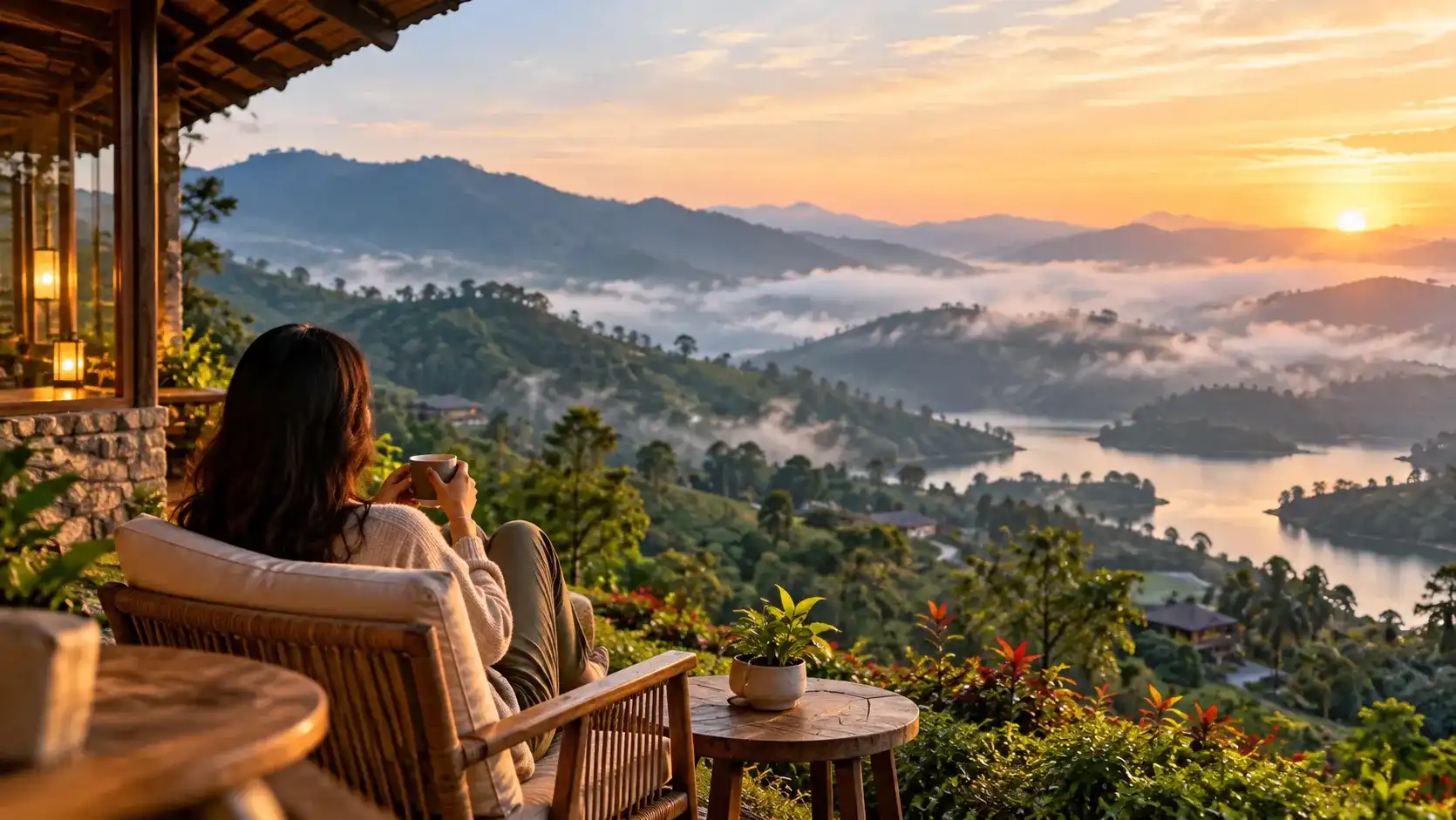
Think of the last holiday that left you needing another holiday. Six cities in nine days, a spreadsheet of bookings, a camera roll full of places you cannot quite remember standing in. Now think of the opposite: one hillside, an unhurried week, and a clear memory of how the mist smelled at six in the morning. That second kind of trip has a name, and in 2026 it is the one travellers keep saying they want.
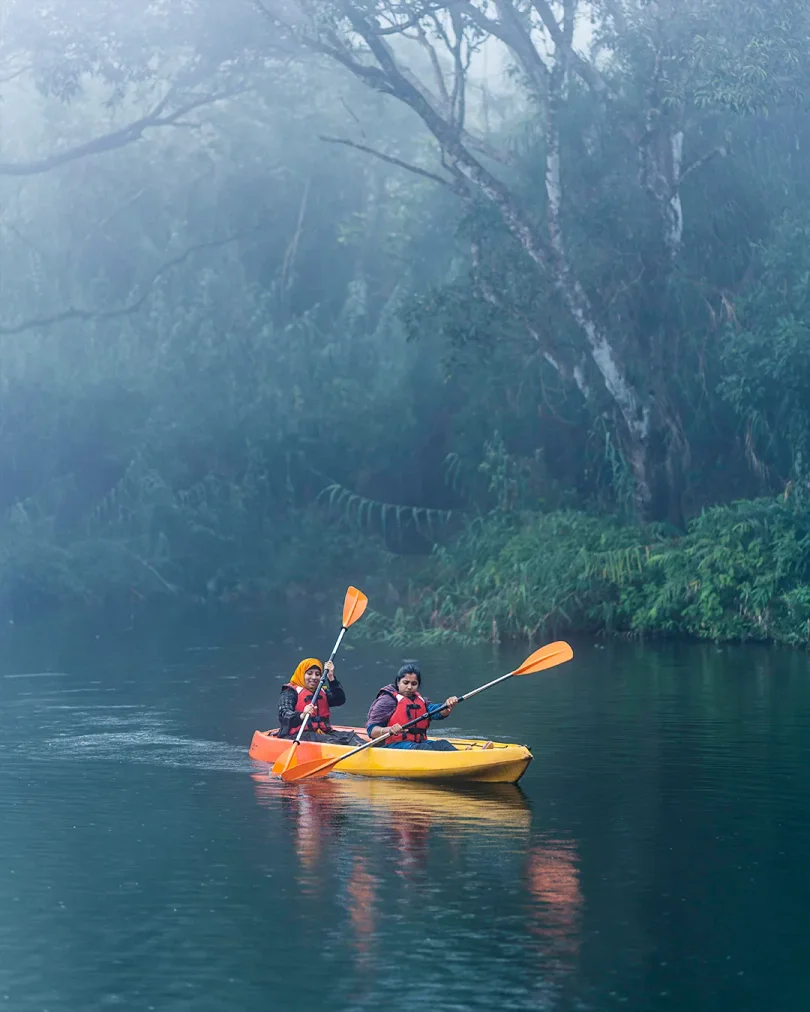
Slow travel in Kuttikkanam means choosing one place and letting it set the pace. You stay several nights instead of one, do fewer things with more attention, and spend your time with the land, the food and the people who work it, rather than ticking off sights. In this Western Ghats hill town, that looks like plantation walks, tea tasting, paddling a quiet reservoir, long meals and early nights.
It helps to say what slow travel is not. It is not laziness, and it is not a budget version of a holiday. It is a decision about where your attention goes.
Why Travellers Are Slowing Down
The shift is measurable. A Vrbo survey found that 91% of travellers are interested in slower, simpler trips built around rest and nature, and 84% said they want to stay on or near a farm in 2026. The European Travel Commission's long-haul barometer shows interest in slow travel rising from 22% in 2025 to 26% in 2026, while Booking.com research found that 67% of travellers want to visit less crowded places.
Much of this data comes from Western markets, yet the appetite for quieter, rural, nature-led stays is easy to recognise closer to home. The common thread is fatigue with the checklist holiday, and a growing belief that going deeper beats going wider.
Why Kuttikkanam, of All Places

Most people meet Kuttikkanam through a car window. It sits on the Kottayam-Kumily road, the route to Thekkady and Vagamon, so it is usually a tea stop on the way to somewhere more famous. That is exactly its advantage. At roughly 3,500 feet the town stays cool and green, and the estates around it were built for working, not for show. Slow travel rewards places like this, where the main attraction is the rhythm of the place itself.
It also helps that the setting is genuinely significant. These hills belong to the Western Ghats, one of the world's great biodiversity hotspots, so a slow stay here quietly teaches you something about the landscape you are sleeping in.
A Slow Day, Hour by Hour
A slow day is not an empty one. It has a few anchors and plenty of space between them. The rhythm below is one you could follow at Misty Mountain Plantation Resort, a 600-acre working estate in the Sahyadri Hills. Treat it as a mood rather than a timetable.
When | What a slow version looks like | What you take from it |
|---|---|---|
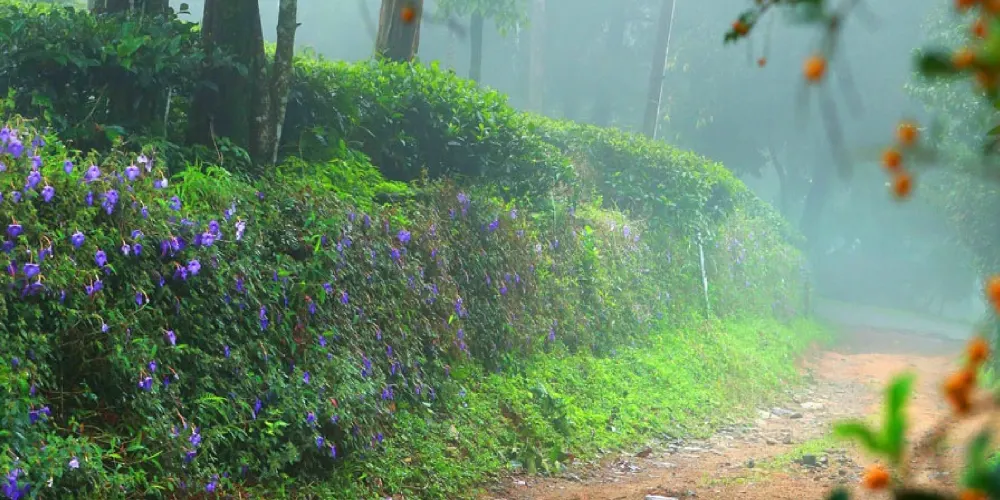
First light | Tea on the balcony while the mist lifts, then an unhurried walk between rows of tea and cardamom. | You watch the estate wake up, which no itinerary can schedule. |
Mid-morning | A guided look at orthodox tea making, from fresh leaf to the cup in your hand. | Tea stops being a product and becomes a process you understand. |
Midday | A long lunch at Teyla, the estate's in-house bistro, with nowhere to be afterwards. See the dining options. | Food eaten slowly is remembered, and it tastes of where you are. |
Afternoon | Kayaking on the quiet dam reservoir, or a bicycle ride along plantation trails. | Movement without hurry, with birdsong and still water for company. |
Dusk | A jeep ride up the estate tracks as the light drops, or simply a warm drink outdoors while the hills go dark. | Evening becomes something you watch, not something you photograph. |
Night | Dinner, a book, and an early night in one of the wooden chalets or cottages. | Sleep deepens when the day has had a shape. |
Five Things Slow Travellers Do Differently
1.They stay put. Every transfer you skip is an hour you get to spend looking at something. Slow travellers pick one base, here a single estate, and let the surrounding hills come to them.
2.They watch how things are made. A tea factory, a kitchen, a plantation trail: seeing a process from start to finish is the quickest route to caring about it. The estate experiences are built around exactly this idea.
3.They eat where they sleep and ask what grew nearby. Meals tied to the land around you turn every plate into a small lesson in place, and they save you the daily negotiation of where to eat.
4.They leave gaps. An unplanned hour is where you notice the bird you would have walked past. If every slot is filled, nothing has room to surprise you.
5. They tread lightly. Choosing a stay that protects the landscape is part of slowing down. Shade-grown tea, a plastic-free guest policy and local-stone cottages all mean your visit leaves the hills as it found them. The estate's own thinking on this is set out in its post on living with nature.
What to pack for a slow stay:
A paperback or notebook you will actually finish, since quiet evenings reward unhurried reading and writing.
Comfortable walking shoes with good grip, because plantation trails stay damp and uneven for much of the year.
A light jacket, as the altitude keeps mornings and evenings cool even when afternoons feel warm.
Patience with your phone, which may lose signal in the folds of the hills.
How Long Is Long Enough?
There is no official answer, but these rules of thumb come close. They are guidance rather than usual peermade resort packages, so adapt them to your own calendar.
Length of stay | What it realistically gives you |
|---|---|
Two nights | A proper pause. You get one full day on the estate and just enough quiet to feel the pace change by the second morning. |
Four nights | The sweet spot for most people. There is time to repeat a favourite walk, try kayaking and tea, and leave one day entirely empty. |
Seven nights | A genuine reset. Routines form, you start recognising birds and faces, and the place stops feeling like a destination. |
Meaningful, Not Just Pretty
A slow trip is only meaningful if it connects you to something real. On a working estate that connection is built in: the people who pick, process and serve are largely from the surrounding villages, and the farming is organic-leaning and designed to keep native forest cover alive. For a look at how a stay unfolds in practice, read what a day at Misty Mountain feels like.
The care has been noticed. Misty Mountain was named Hospitality Brand of the Year at the Spice Coast Excellence Awards 2026, and its Teyla restaurant won Best Café & Casual Dining at Manorama Online's Golden Clove Awards. Those honours matter less than the fact that the quiet things, a warm welcome, a good meal, a clear morning, are done well.
Before You Book
If this sounds like the trip you keep meaning to take, begin slowly. Pick one estate, pick a number of nights, and resist the urge to fill them. Misty Mountain Plantation Resort offers cottages and guided experiences that are happy to be done in any order, or not at all.
Book your stay at Misty Mountain Plantation Resort and give the hills a few unhurried days to work on you.