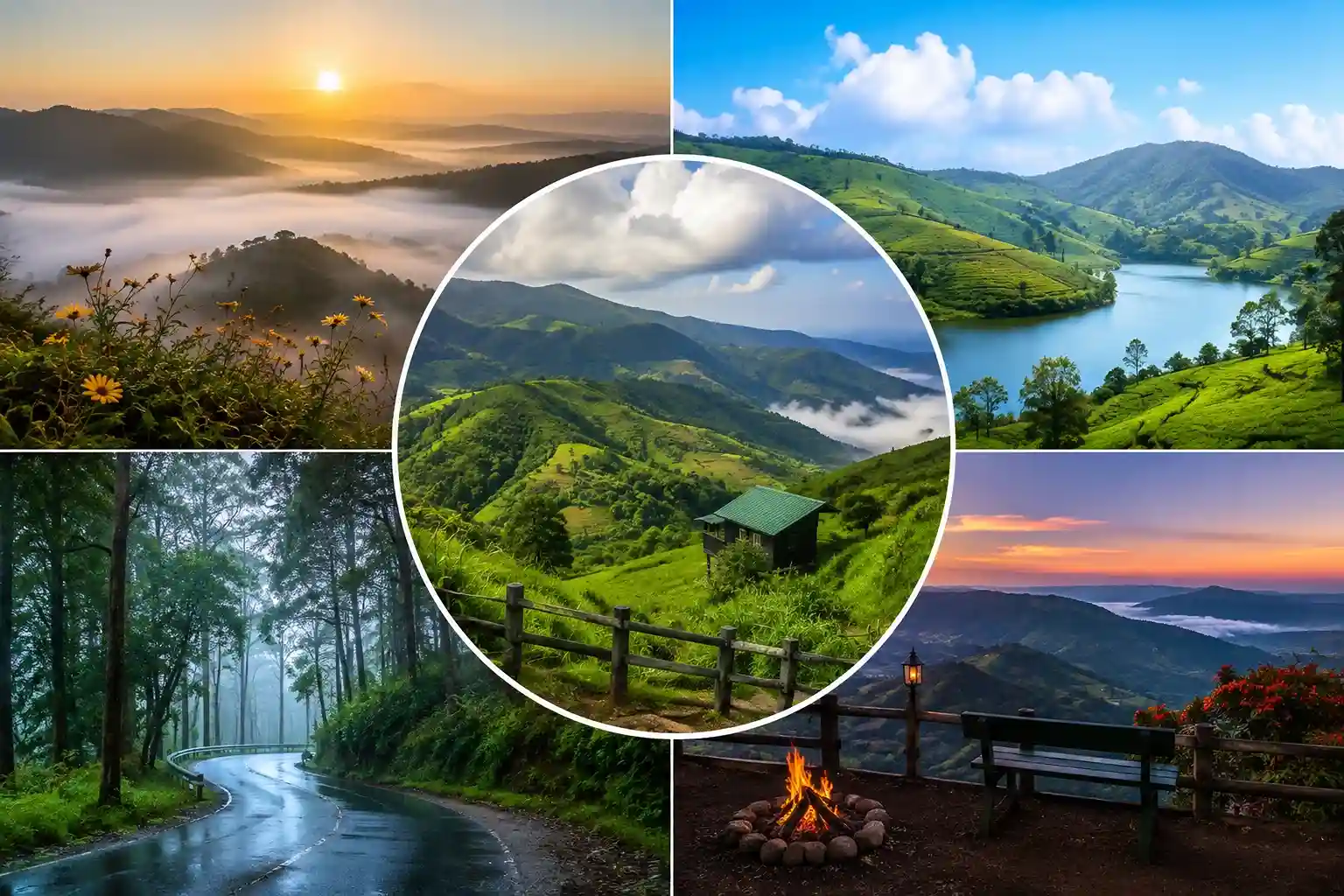
There is no single best time to visit Kuttikkanam; it depends on what you want from the trip. October to February is best for clear skies and sightseeing, June to September is best for full waterfalls and misty green landscapes, and March to May suits travellers who want warm, dry days without monsoon rain. Each season in this Western Ghats hill station rewards a different kind of traveller.
Perched at roughly 3,500 feet in Kerala's Western Ghats, Kuttikkanam stays cool and green through most of the year, which is exactly why picking the best time to visit Kuttikkanam is less about avoiding bad weather and more about matching the season to what you actually want to do. A honeymoon couple chasing misty balconies wants a very different month from a family planning a jeep safari or a photographer chasing clear valley views. Instead of walking through twelve months one by one, this guide sorts Kuttikkanam's seasons by purpose, so you can pick the window that fits your trip.
Kuttikkanam's Climate in Brief
Kuttikkanam has three broad seasons. Winter, from December to February, is cool and dry with daytime temperatures in the mid-twenties and nights that can drop close to 15 degrees Celsius. Summer, from March to May, is warmer but still mild compared to Kerala's coast, with occasional pre-monsoon showers by April. Monsoon, from June to September, brings heavy rainfall, strong winds, and the region's most dramatic scenery, while October and November act as a lush, gradually clearing transition back into winter.
Best Time to Visit Kuttikkanam, By What You Want to Experience
For Clear Skies, Sightseeing, and Viewpoints: December to February
If your trip revolves around photography, viewpoint hopping, or simply wanting dry, dependable weather, winter is the safest bet. Rainfall is minimal, skies stay clear for most of the day, and the crisp air makes early-morning walks genuinely comfortable. This is also peak season for hill-station stays, so book your accommodation and any guided tours well ahead of your travel dates.
For Waterfalls and Deep Green Landscapes: June to September
Travellers who want to see the Western Ghats at their most dramatic should plan around monsoon. Streams swell into waterfalls, the tea and cardamom plantations turn a saturated green, and thick mist rolls through the estate for much of the day. It is not the season for dry sightseeing, but it is unmatched for atmosphere, moody photography, and the sound of rain against a plantation rooftop.
For Plantation Walks, Tea Tours, and Jeep Safaris: October to February
Estate activities depend heavily on dry trails and good visibility, which makes the post-monsoon and winter stretch the most reliable window. A guided jeep safari through the plantation covers rugged estate roads that are far easier to navigate once the heaviest rain has passed, and an orthodox tea-making tour is more enjoyable without a downpour interrupting the walk between factory and field.
For a Honeymoon or Romantic Getaway: October to February
Cool evenings, misty mornings, and clear balcony views make winter and late autumn the most popular stretch for couples. Private cottage stays, bonfire evenings, and quiet plantation walks all work better without monsoon rain interrupting outdoor plans, though a well-designed cottage stay can feel just as romantic during a rainy afternoon indoors.
For Family Trips with Children: December to February
Families generally do best with predictable, dry weather that allows for flexible outdoor plans. Winter offers comfortable daytime temperatures, low rain risk, and enough daylight hours for a full day of activities such as nature walks, farm visits, and easy hikes without worrying about sudden downpours.
For Fewer Crowds and Better Rates: September and October
Just before and after the monsoon peak, Kuttikkanam sees noticeably fewer tourists than the December to February high season. Rain is lighter than mid-monsoon, the landscape is still vividly green from months of rainfall, and accommodation is generally easier to book on short notice. This window is a strong pick for travellers who prioritise a quieter trip over guaranteed dry weather.
For Rain Lovers and Slow, Indoor-Focused Getaways: Any Monsoon Month
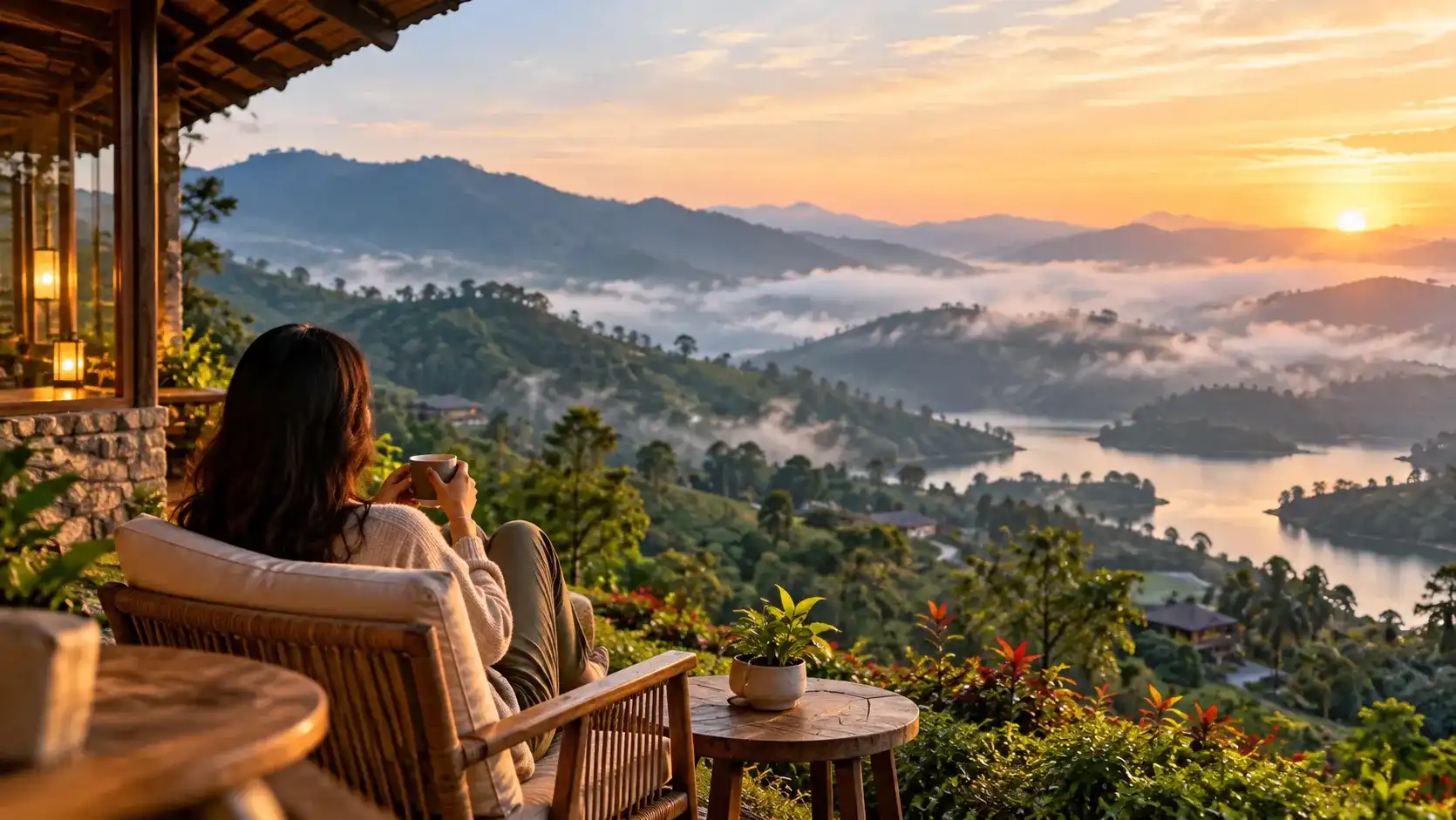
Not every trip needs sunshine. If your idea of a good holiday is watching fog drift over tea gardens from a covered balcony, with a hot cup of estate-grown tea in hand, monsoon months offer a kind of stillness that the dry season simply cannot match. Just plan indoor-friendly days and pack accordingly.
What to Pack, Whatever Season You Choose
Because Kuttikkanam sits at altitude, nights stay cool even in warmer months, so it helps to pack for temperature swings rather than a single season.
Carry a light jacket or sweater for cool mornings and evenings throughout the year.
Pack a rain jacket and quick-dry clothing if travelling between April and September.
Bring sturdy, closed shoes for plantation walks and hill trails in any season.
Add sunscreen and a light hat for the sunnier stretches between December and March.
Plan Your Visit at Misty Mountain Plantation Resort
Whichever season fits your trip, where you stay shapes the experience as much as the weather does. Set across a 600-acre working estate in the Sahyadri Hills, Misty Mountain Plantation Resort is one of the most established Kuttikkanam resorts, built around decades-old tea, coffee, and cardamom plantations, native forest trails, and a hidden waterfall.
Choose from cosy wooden chalets and reverie cottages, spend your days on guided estate experiences like jeep safaris and plantation walks, and wind down over a meal at one of the resort's in-house restaurants. To understand more about what a stay here actually looks like day to day, take a look at what a day at Misty Mountain feels like.
Ready to pick your season and book your stay? Plan your visit with Misty Mountain Plantation Resort and experience Kuttikkanam exactly the way you want to see it.